 Pyeongye
At a glance
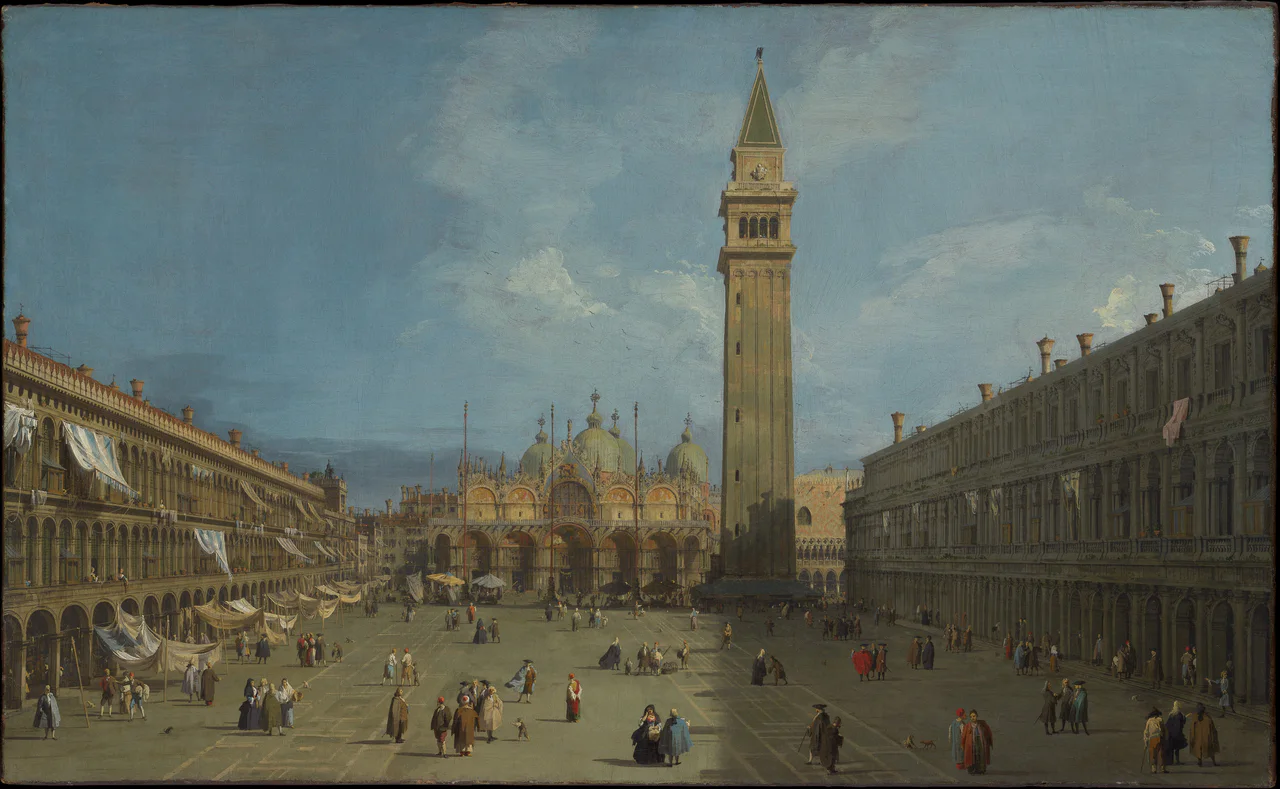
- This is Piazza San Marco in Venice, seen from its western end, with the Basilica of San Marco and its tall bell tower straight ahead.
- The Venetian painter Canaletto made it in the late 1720s.
- You can study the clothes of people who stood in the square almost 300 years ago, along with market tents and cloths hung from the windows.
Reading the picture
5 places to look closer
Tap a number on the painting to jump to its note, or a close-up to see that spot in the whole picture.
Zoom in on the front of the basilica. Under the green domes, gold pictures glitter in every arch. Above the big central arch, can you see a gold winged lion on a blue ground? It stands for Saint Mark and is also the symbol of Venice. In front of the church, red flagpoles rise high.
Climb to the top of the bell tower. Below the green spire, a round carving is fixed to the wall, and lower down a row of arched openings marks the bell chamber. This tower collapsed all at once in 1902. The one standing today was rebuilt in its old form and finished in 1912. The tower in this painting is the original.
Zoom in on the windows of the building at left. A striped blue-and-white cloth hangs at a slant outside one window. It is an awning to keep out the sun. Cloths that look like laundry hang from a few upper windows too. People lived and worked in these long buildings around the square.
Look at the arcade at lower left. Tents of cloth stretched over wooden poles stand in a row. Between them stroll men in black three-cornered hats and cloaks, and people in red. The square was a grand public space, but it was also a place for everyday buying and selling.
Come down to the bottom center. A woman in a black hood stands holding a basket, and a man in a blue cloak faces her. Behind them, two round baskets sit on the pavement. What do you think they are buying or selling?
When it was painted
Around 1719, a young man of about twenty named Giovanni Antonio Canal was in Rome with his father. Bernardo Canal painted scenery for opera productions, and his son helped him. Back in Venice, the young man stopped painting make-believe palaces for the stage and began painting the real city. People called him Canaletto, which means little Canal.
By the late 1720s, when he made this picture, he was around thirty and well known for his views of Venice. He painted Piazza San Marco again and again in the 1720s and 1730s. This version holds a clue to its own date. The Met points out that it carefully records one stage of the repaving of the square, work that went on between 1725 and 1727.
His best customers came from Britain. Young English aristocrats finished their education with a long tour of Italy, and they wanted to bring Venice home with them. Joseph Smith, an English merchant living in Venice, connected these visitors with Canaletto. Smith later became British consul in Venice, and his own Canaletto collection was sold to King George III. It is still part of the British Royal Collection.
In the 1740s war cut the flow of travelers. So in 1746 Canaletto went to find his customers himself and moved to London. He stayed in England for close to ten years, painting the Thames and the city. This painting was bought by The Met in 1988.
Look at the pavement again. At the lower left, pale lines cross the stone in a grid, but toward the middle the plain, unmarked ground spreads wider. A square caught in the middle of being rebuilt, nearly three hundred years ago, is still there underfoot.
More by the same painter
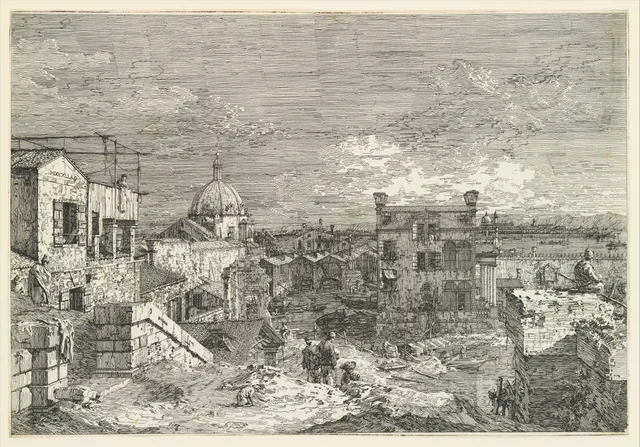 Imaginary View of Venice, houses at left with figures on terraces, a domed church at center in the background, boats and boat-sheds below, and a seated man observing from a wall at right in the foreground, from "Views" (Vedute altre prese da i luoghi altre ideate da Antonio Canal)1741
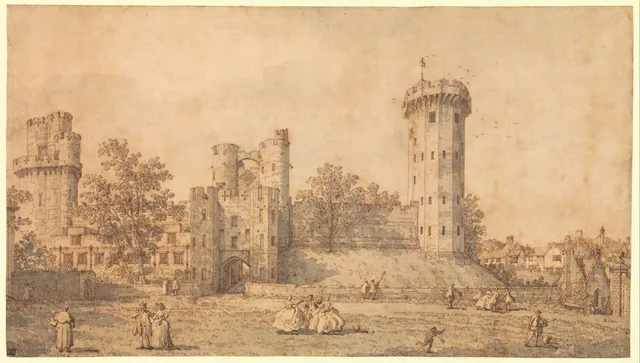 Warwick Castle: The East Front1752
Hidden stories in this painting
Questions to think about
- Look for itCan you find the gold winged lion on the basilica and the striped awning hanging from a window?
- Why?Why do you think Canaletto painted not just famous buildings but also tents, laundry, and shoppers?
- What about you?When the bell tower fell, Venetians rebuilt it just as it had been. Which place in your own city would you want to rebuild if it were lost?
Same period
Painted around the same time,
somewhere else
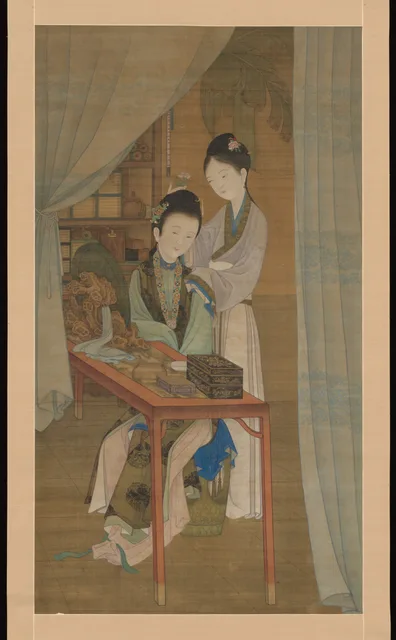 Woman at her dressing tableLeng Meiearly 18th century
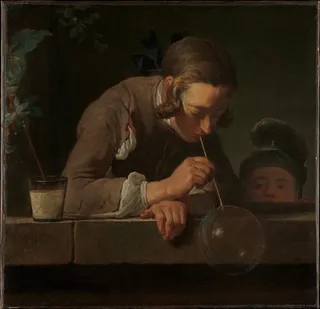 Soap BubblesJean Siméon Chardinca. 1733–34
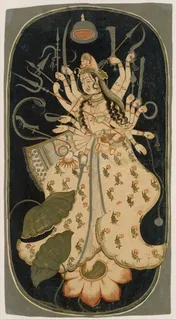 Mahadevi, the Great GoddessUnknown artist · India (Rajasthan, Bikaner)ca. 1725
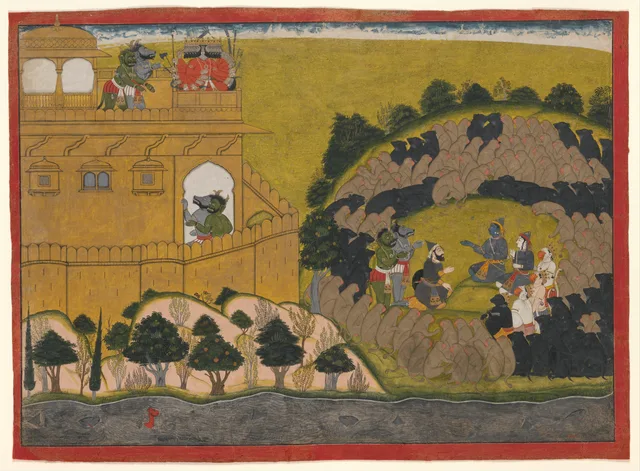 Rama Releases the Demon Spies Shuka and Sarana: Folio from the Siege of Lanka seriesManakuca. 1725
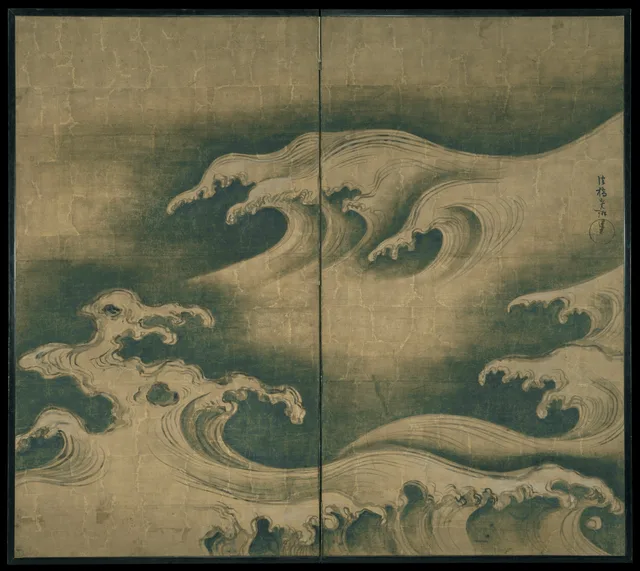 Rough WavesOgata Kōrinca. 1704–9
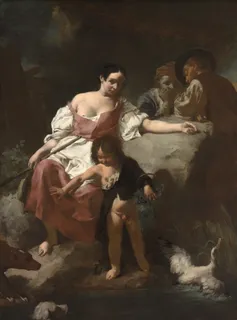 Pastoral SceneGiovanni Battista Piazzetta1740
Too good to keep to yourself
This painting,
for someone who comes to mind
They open it at full size
and see every brushstroke.
About this work
- Artist
- Canaletto · 1697–1768
- Date
- late 1720s
- Medium
- Oil on canvas
- Size
- 68.6 × 112.4 cm
- Collection
- The Metropolitan Museum of Art
- Image
- Original long edge 3971px · shown at 2560px
- Original
- View on the museum's website ↗