 Pyeongye
Artwork · 15th century · Martin Schongauer
LeoTurn on Magnifier at the lower right and move slowly across the painting.
Full screen opens it edge to edge.Tap the painting to fill the screen.
Spread two fingers to look closer.
At a glance
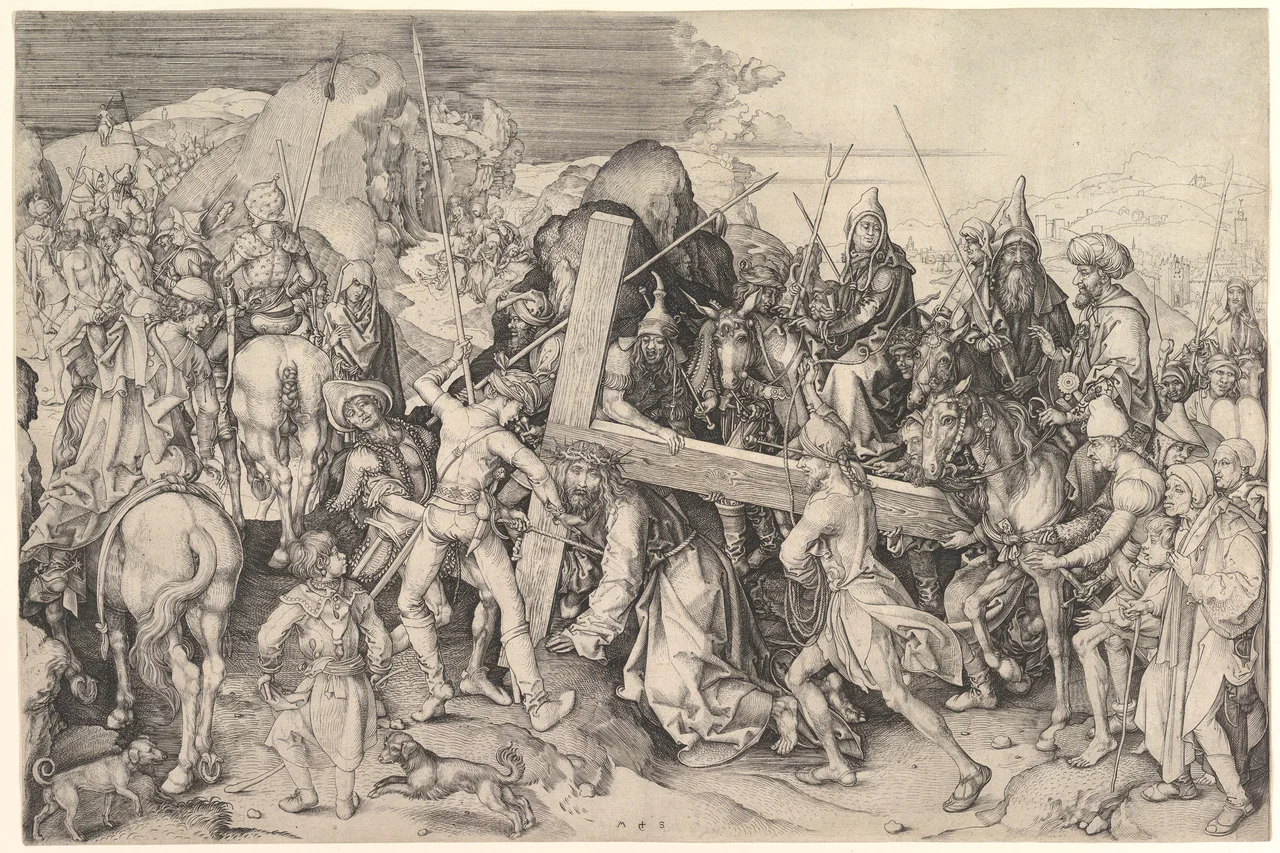
- In the middle of a long, crowded procession of soldiers, onlookers, horses and dogs, Christ in a crown of thorns has fallen under the weight of the cross.
- Martin Schongauer, a painter and engraver from Colmar, cut it into a copper plate and printed it around 1475 to 1480.
- The Metropolitan Museum of Art calls it the largest of Schongauer's prints: dozens of figures on a sheet about 17 inches wide, made of nothing but fine lines.
Reading the picture
5 places to look closer
Tap a number on the painting to jump to its note, or a close-up to see that spot in the whole picture.
Zoom in on Christ's face at the center. Long hair falls from beneath a spiky crown of thorns, and his tired eyes look quietly out toward us. In front of him, a man yanks on a rope tied around Christ's body. Schongauer engraved every twist of that rope.
Look down at the ground. A shaggy dog lies with its front paws stretched out and its head raised. Beside it pass a child's feet and a soldier's boots.
Zoom in behind the rocks near the top. Women with cloths over their heads have gathered, and one of them sags, her head dropped, held up by the others. Behind them a young man with a round halo raises a hand to his face in grief. Away from the noise up front, this small group is quietly falling apart.
Look at the far hills on the upper left. A rider with a lance heads away over the crest, and a tiny figure stands on the hilltop. The sky is made only of tight horizontal lines. The procession stretches all the way over those hills toward the place of execution.
Zoom in on the ground at bottom center. You will find the letters M and S with a small cross-shaped mark between them. Schongauer never dated his prints. He signed them with this monogram alone.
When it was painted
Martin Schongauer was born in Colmar, in Alsace, the son of the goldsmith Caspar Schongauer. Records are so thin that his birth year can only be placed somewhere between about 1435 and 1450. In 1473 he painted the large altarpiece Madonna of the Rose Bower for the church of Saint Martin in Colmar.
He was a painter, but his engravings carried his name much farther. He cut lines into copper with the sharp tools of a goldsmith's workshop, and his prints traveled across Europe. The Cleveland Museum of Art suggests that the large size and composition of this print likely echo a lost painting of the same subject by Jan van Eyck, now known only through copies.
One story shows just how far those prints went. The sixteenth-century biographer Giorgio Vasari wrote that the young Michelangelo copied Schongauer's engraving The Temptation of Saint Anthony as a painting.
Schongauer died in 1491 in Breisach, on the Rhine. The next year, the young Albrecht Dürer came to Colmar hoping to meet him, but he was too late, and Schongauer's brothers welcomed him instead. This impression of the print entered the Metropolitan Museum in 1935.
Look again at Christ's face and the rope. With no brush and no color, only lines dug into copper, Schongauer has carried this heavy moment across more than five hundred years.
More by the same painter
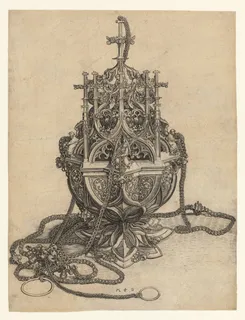
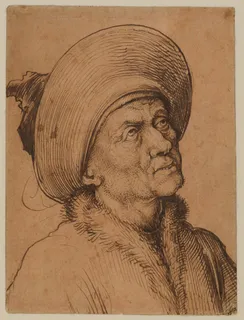
Questions to think about
- Look for itCan you find someone in this print who is helping or grieving for Christ, and someone who is hurting him?
- Why?Why do you think Schongauer packed so many people and animals around Christ?
- What about you?Many people in this print are just watching someone suffer. When I see someone in trouble today, am I closer to a watcher or a helper?
Same period
Painted around the same time,
somewhere else
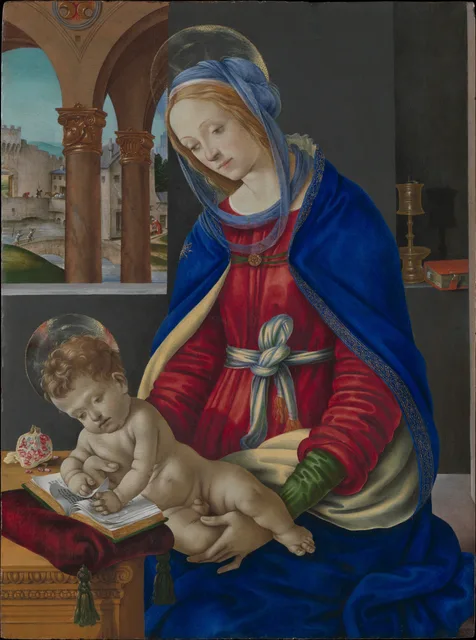 Madonna and ChildFilippino Lippica. 1483–84
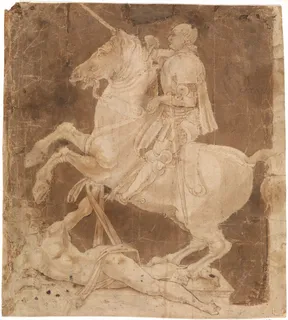 Study for the Equestrian Monument to Francesco SforzaAntonio Pollaiuoloearly to mid 1480s
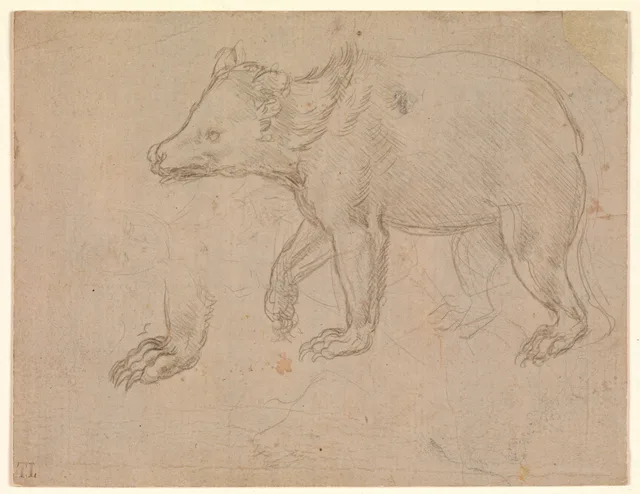 A Bear WalkingLeonardo da Vincica. 1482–85
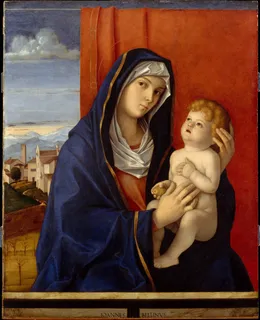 Madonna and ChildGiovanni Bellinilate 1480s
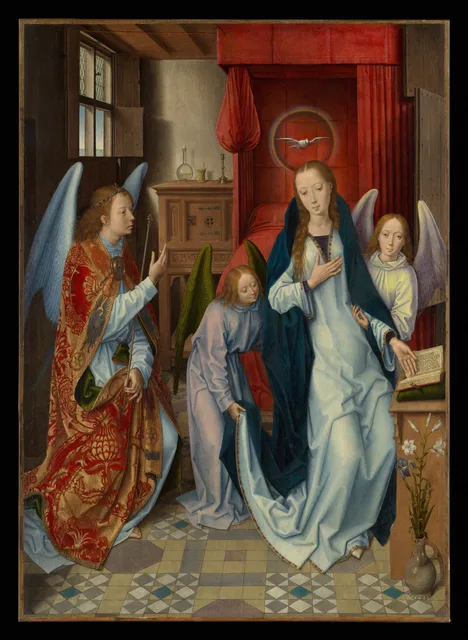 The AnnunciationHans Memling1480–89
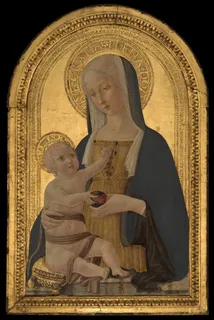 Madonna and ChildBenvenuto di Giovannica. 1475–85
Too good to keep to yourself
This painting,
for someone who comes to mind
They open it at full size
and see every brushstroke.
About this work
- Artist
- Martin Schongauer · 1435–1491
- Date
- ca. 1475–80
- Medium
- Engraving
- Size
- 28.9 × 42.9 cm
- Collection
- The Metropolitan Museum of Art
- Image
- Original long edge 3734px · shown at 2560px
- Original
- View on the museum's website ↗