 Pyeongye
Artwork · 15th century · Hans Memling
LeoTurn on Magnifier at the lower right and move slowly across the painting.
Full screen opens it edge to edge.Tap the painting to fill the screen.
Spread two fingers to look closer.
At a glance
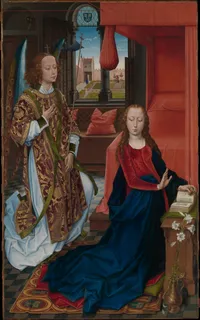
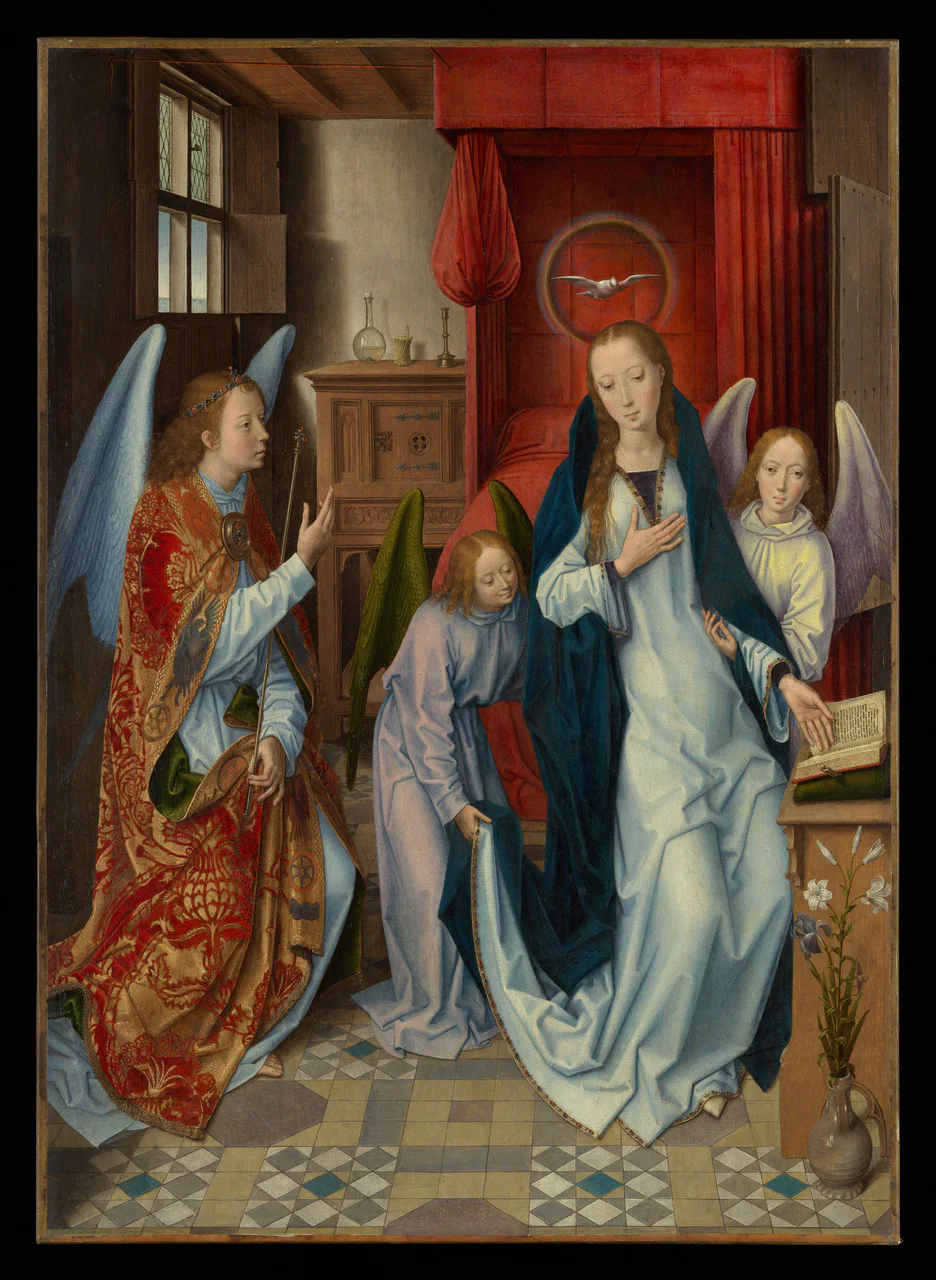
- The angel Gabriel steps into a bedroom with a red canopy bed and tells Mary she will bear a son.
- Hans Memling painted it in Bruges in the 1480s.
- Every object in the room, from a water carafe to the floor tiles, is painted so crisply that the picture rewards slow looking.
Reading the picture
5 places to look closer
Tap a number on the painting to jump to its note, or a close-up to see that spot in the whole picture.
Look just above Mary's head. A white dove hangs in the air with its wings spread wide. Around it floats a faint ring of light, tinted like a rainbow. In Christian art the dove stands for the Holy Spirit.
Zoom in on Gabriel at the left. He wears a jeweled band in his hair and a round metal clasp on his chest. One hand holds a thin staff tipped with jewels. The other is raised with two fingers lifted, as if he is in the middle of speaking.
Now look at the cabinet in the back. On top sit a glass carafe half full of water, a yellow candle, and a brass candlestick with no candle in it. Memling even painted the water line and the shadows on the wall. Light passes through glass without breaking it, so a clear carafe in scenes like this often points to Mary's purity.
Look at the figures right beside Mary. An angel with green wings bends low and lifts the edge of her cloak. Another angel, on the right, holds her by the arm. Mary rests one hand on her chest and lowers her eyes.
Drop down to the vase in the lower right. White lilies rise from it, with a single purple iris among them. The lily is a sign of Mary's purity and appears again and again in pictures of this moment.
When it was painted
By the 1480s Hans Memling was doing very well in Bruges. Born in Germany, he had become a citizen of the city in 1465 and set up a workshop. A tax list from 1480 puts him among the town's wealthier citizens. Even Italian merchants living in Bruges came to him for pictures.
Many scholars think that before Bruges, Memling trained in Brussels near Rogier van der Weyden. You can see that debt here. Memling modeled this Annunciation on the left wing of Rogier's Saint Columba Altarpiece, now in Munich.
But he changed one big thing. Rogier's Mary kneels to hear the news. Memling's Mary does not kneel. She stands, seeming to go weak, and an angel steadies her.
These years brought sorrow at home, too. Memling's wife, Anna, died in 1487, leaving him with their three sons. He kept working in Bruges until his own death in 1494.
Centuries later, the New York banker Philip Lehman bought it, and in 1975 it came to the Metropolitan Museum of Art with the Robert Lehman Collection. Along the way, the paint was moved from its wooden panel onto canvas.
Now look again at the angel on the right, holding Mary by the arm. Instead of a kneeling Virgin, this is the moment Memling chose to paint.
Questions to think about
- Look for itCan you find the patch of blue sky showing through the window at the upper left?
- Why?Why do you think Memling set this heavenly message in an ordinary bedroom, with a bed, a cabinet, and a candlestick, instead of a palace or a church?
- What about you?Mary has two angels holding her steady. When life-changing news arrives, who would you want standing beside you?
Same period
Painted around the same time,
somewhere else
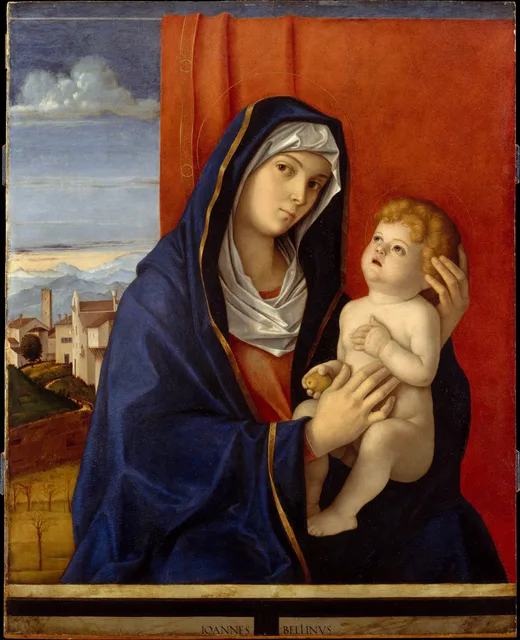 Madonna and ChildGiovanni Bellinilate 1480s
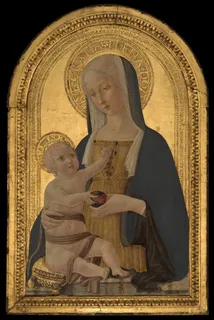 Madonna and ChildBenvenuto di Giovannica. 1475–85
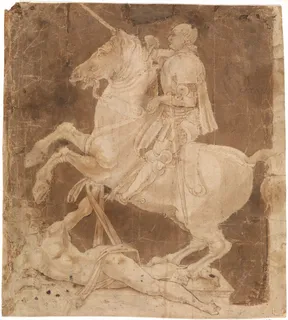 Study for the Equestrian Monument to Francesco SforzaAntonio Pollaiuoloearly to mid 1480s
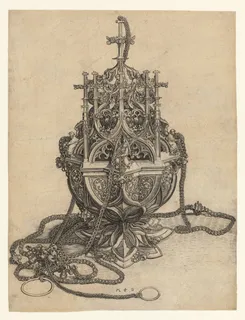 The CenserMartin Schongauer1470–91
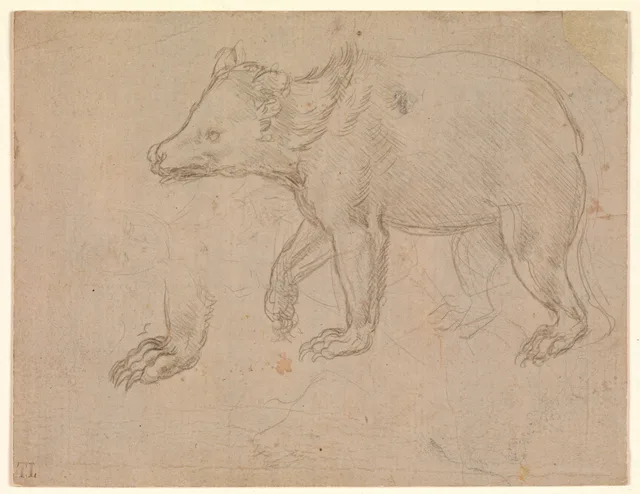 A Bear WalkingLeonardo da Vincica. 1482–85
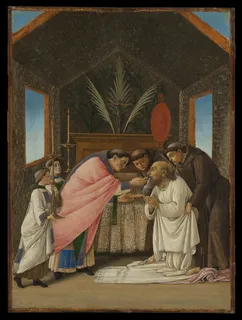 The Last Communion of Saint JeromeBotticelliearly 1490s
Too good to keep to yourself
This painting,
for someone who comes to mind
They open it at full size
and see every brushstroke.
About this work
- Artist
- Hans Memling · 1465–1494
- Date
- 1480–89
- Medium
- Oil on panel, transferred to canvas
- Size
- 76.5 × 54.6 cm
- Collection
- The Metropolitan Museum of Art
- Image
- Original long edge 4000px · shown at 2560px
- Original
- View on the museum's website ↗