 Pyeongye
Artwork · 19th century · Alfred Sisley
LeoTurn on Magnifier at the lower right and move slowly across the painting.
Full screen opens it edge to edge.Tap the painting to fill the screen.
Spread two fingers to look closer.
At a glance
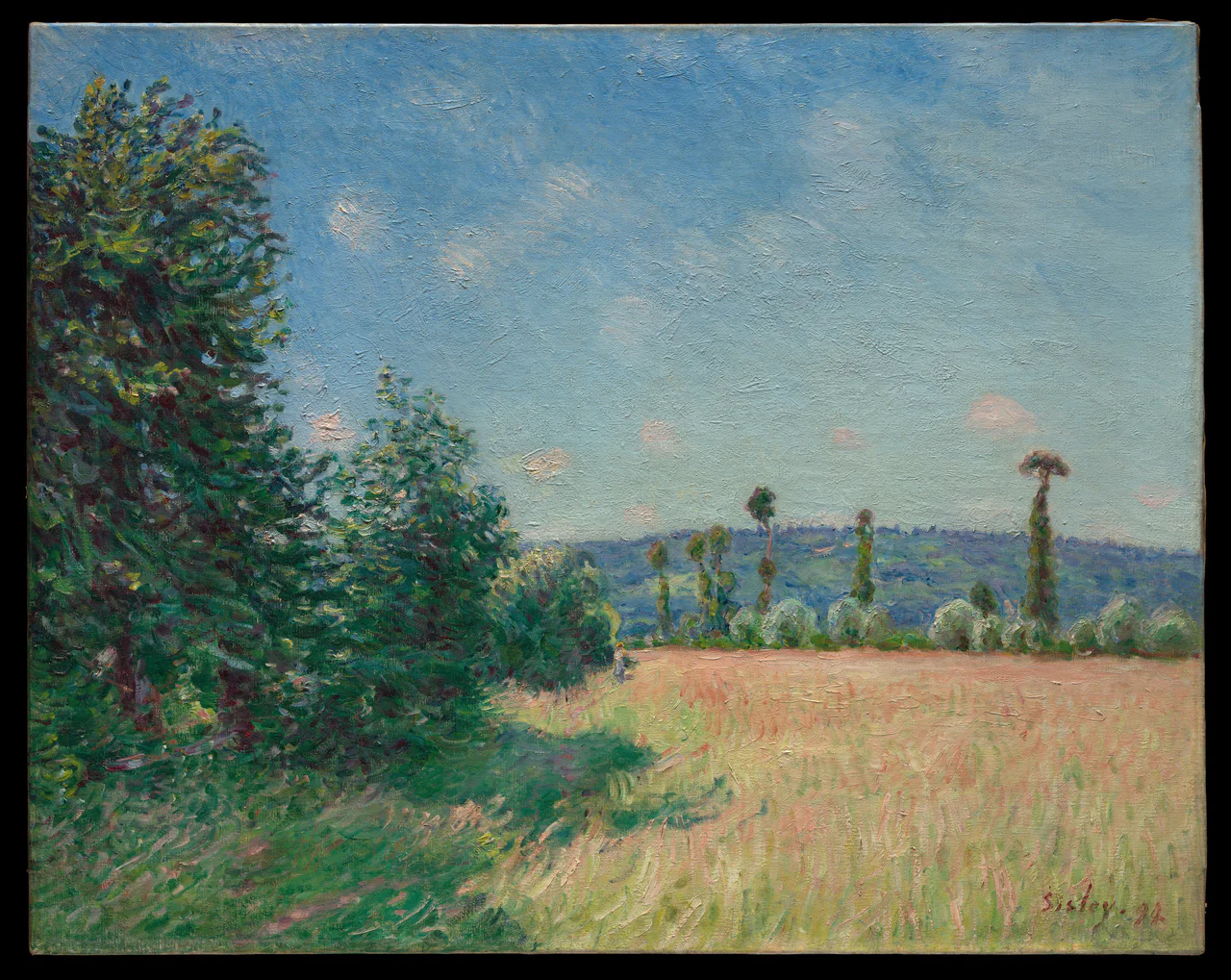
- A pinkish-gold meadow glows in morning sun, with a dark stand of trees on the left and tall poplars and blue hills in the distance.
- Alfred Sisley painted it in the summer of 1894, at about fifty-four, in the meadows of Sahurs near Rouen in Normandy.
- It is one of seven views he made while staying with a patron near Rouen, with thick strokes that catch clear light before midday.
Reading the picture
5 places to look closer
Tap a number on the painting to jump to its note, or a close-up to see that spot in the whole picture.
Zoom in where the meadow meets the trees. A tiny figure in a yellow hat stands at the edge of the shade. Face, hat and clothes are just a few dabs of paint. That small person shows you just how wide the meadow is.
Look at the tall poplar on the right. Its leaves bunch up at the very top, like an umbrella, while green and reddish brown climb the thin trunk. Behind it, the hills lie low and blue-violet. The tall tree and the low hills make each other stand out.
Zoom in at the bottom center, where the shadow ends. Over the dark green shade cast from the left, the sunlit grass is laid down in slanting strokes of pink, pale green and cream. The paint stands up thick and bumpy on the canvas. It looks like grass brushed flat by the wind.
Look at the leaves of the big tree on the left. Among the dark greens are single touches of deep red, yellow and sky blue. In places the blue sky shows through the branches. Up close they are scraps of color. Step back, and they become a tree shivering in the sun.
Zoom in on the grass at lower right. The name Sisley is painted in red among the blades. Beside it comes 94, for 1894.
When it was painted
In the summer of 1894 Alfred Sisley was fifty-four. He lived near Moret-sur-Loing, southeast of Paris, and his paintings still did not sell for much, so money stayed tight. That summer he left home and headed north to Normandy.
The invitation came from his friend and patron François Depeaux. According to the Metropolitan Museum of Art, Depeaux was a wealthy Norman industrialist, and Sisley spent the summer at his estate at Le Mesnil-Esnard, near Rouen. There Sisley painted seven views of the hills at La Bouille and the meadows at Sahurs.
Depeaux bought five of those pictures himself, and this was one of them. He collected Impressionist paintings on a large scale, and in 1909 he gave a great many of them to the museum in Rouen.
Five years after this summer, in 1899, Sisley died in Moret-sur-Loing without ever seeing real success. Much later the painting belonged to the American collector Janice H. Levin, and it came to the Metropolitan Museum as a gift from Levin in 1991.
Look again at the yellow hat at the edge of the meadow. During that summer at a friend's house, Sisley caught a whole field of morning light and pinned it to the canvas with one small yellow dot.
The painter
Alfred Sisley
1839–1899
When painting this, the artist was about 55 years old
All paintings by Alfred Sisley →More by the same painter
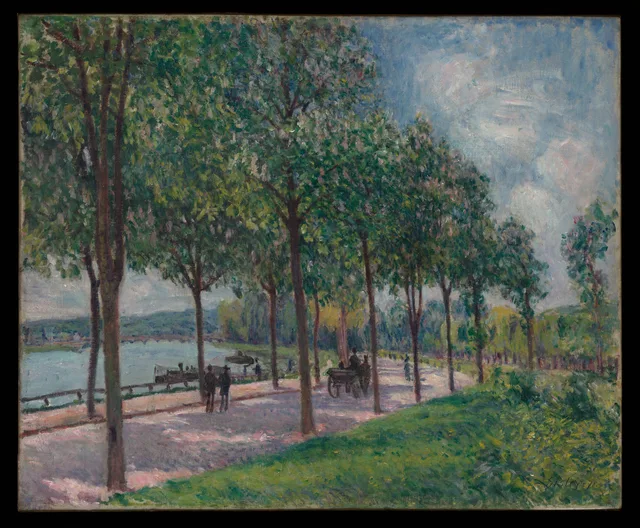
Questions to think about
- Look for itCan you trace the line where the shade ends and the sunlight begins?
- Why?Why do you think Sisley left almost half the picture as open sky?
- What about you?Depeaux hosted a struggling painter and bought his work. What are some ways I could support an artist or writer I love today?
Same period
Painted around the same time,
somewhere else
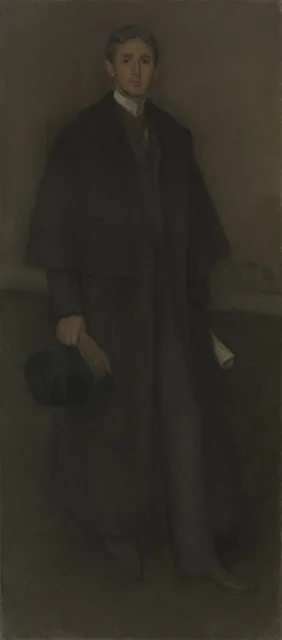 Arrangement in Flesh Color and Brown: Portrait of Arthur Jerome EddyJames McNeill Whistler1894
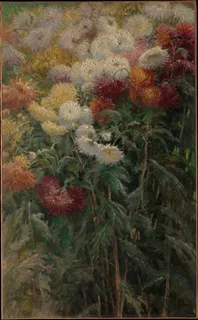 Chrysanthemums in the Garden at Petit-GennevilliersGustave Caillebotte1893
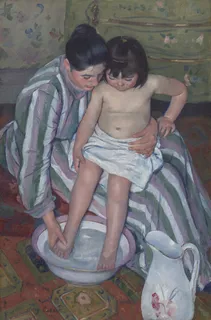 The Child's BathMary Cassatt1893
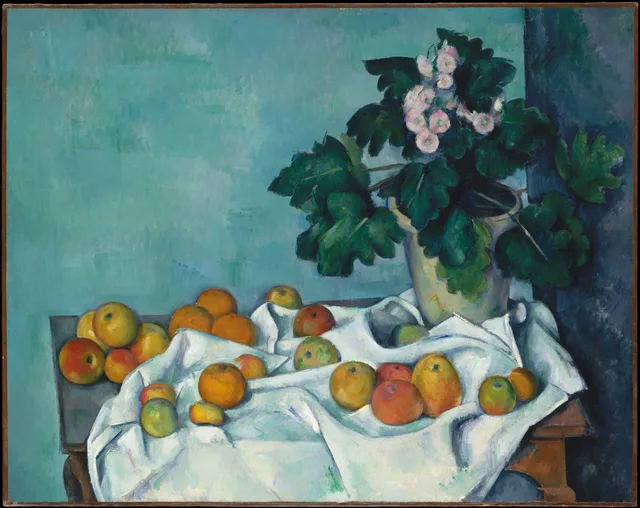 Still Life with Apples and a Pot of PrimrosesPaul Cézanneca. 1890
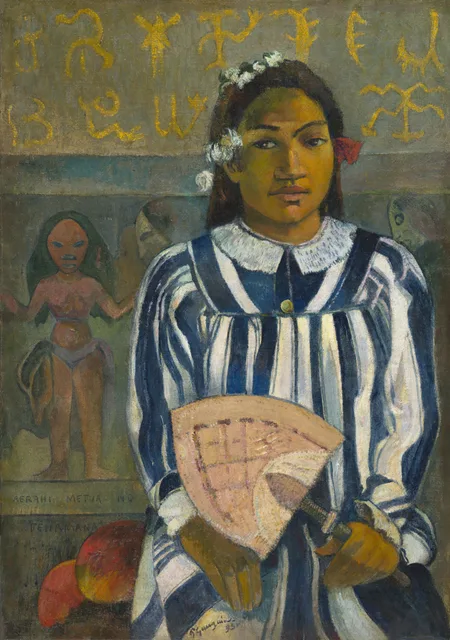 Merahi metua no Tehamana (Tehamana Has Many Parents or The Ancestors of Tehamana)Paul Gauguin1893
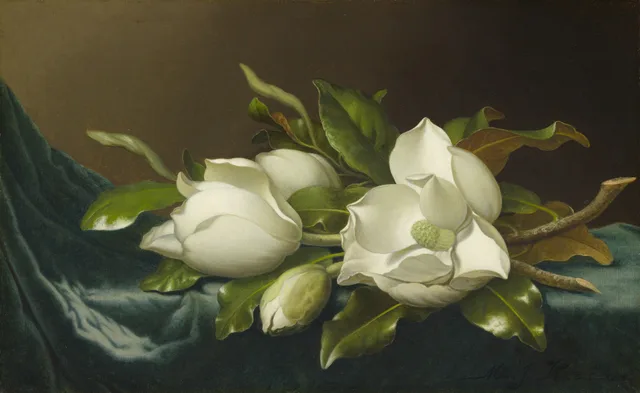 Magnolias on Light Blue Velvet ClothMartin Johnson Heade1885–95
Too good to keep to yourself
This painting,
for someone who comes to mind
They open it at full size
and see every brushstroke.
About this work
- Artist
- Alfred Sisley · 1839–1899
- Date
- 1894
- Medium
- Oil on canvas
- Size
- 73 × 92.1 cm
- Collection
- The Metropolitan Museum of Art
- Image
- Original long edge 4000px · shown at 2560px
- Original
- View on the museum's website ↗