 Pyeongye
Artwork · 19th century · James McNeill Whistler
LeoTurn on Magnifier at the lower right and move slowly across the painting.
Full screen opens it edge to edge.Tap the painting to fill the screen.
Spread two fingers to look closer.
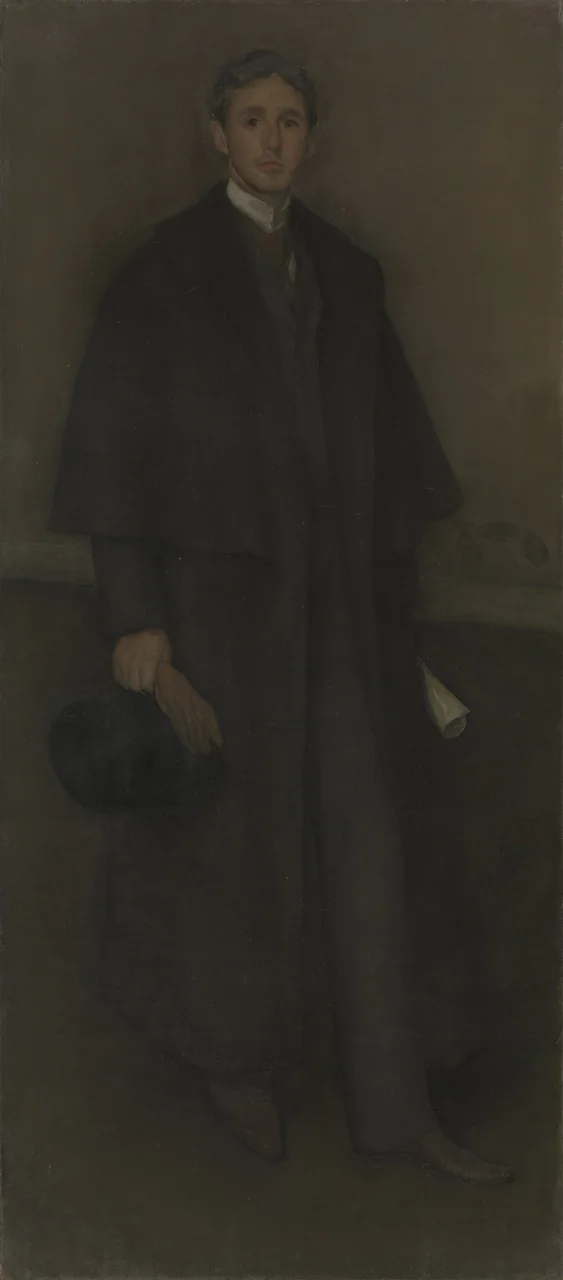
Arrangement in Flesh Color and Brown: Portrait of Arthur Jerome Eddy
James McNeill Whistler1894Oil on canvas210.7 × 93.3 cm
At a glance
- A full-length portrait of a man in a long, cape-like brown coat, holding a hat against a dark brown background.
- The American-born painter James McNeill Whistler painted the Chicago lawyer Arthur Jerome Eddy in Paris in 1894.
- The canvas is nearly the height of a person, yet it uses only a few shades of flesh and brown, treating a portrait as an arrangement of color.
Reading the picture
4 places to look closer
Tap a number on the painting to jump to its note, or a close-up to see that spot in the whole picture.
Zoom into the face at the top. A man with short curly hair, dark brows, and closed lips looks straight at us. His face and white collar glow out of the canvas. That flesh tone is the first color named in the title.
Come down to the middle left. Two hands overlap, and below them a black hat hangs like a round shadow. The hands are just a few strokes that touch in the knuckles. The hat almost melts into the background, leaving only its edge.
Zoom toward the right edge of his coat. A pale cone shape hangs at an angle. It could be a rolled glove or a piece of paper, but Whistler never spells it out. In the dark, this small bright spot forms a triangle of light with the face and the hands.
Look at the very bottom. The tips of his shoes peek out faintly beneath the coat. Even the line between floor and wall has almost disappeared. He seems less to stand on the ground than to float in a brown haze.
When it was painted
In 1894 Whistler was sixty and living in Paris, having left London. A few years earlier the French state had bought his portrait of his mother. After years of mockery, his art was finally receiving official respect.
That year a young Chicago lawyer named Arthur Jerome Eddy came to see him. Eddy had fallen for Whistler's paintings at the 1893 World's Columbian Exposition in Chicago. He then traveled all the way to the artist's Paris studio for one reason: to sit for this portrait. Instead of the painter coming to the client, the client crossed an ocean to the painter.
Whistler liked to call pictures like this arrangements rather than portraits. What mattered to him was how colors and shapes worked together, not simply who or what was shown. That is why the title names flesh color and brown before it names Eddy. He spread the paint thinly, keeping the surface flat and quiet.
The sittings turned the two men into lasting friends. After Whistler died in 1903, Eddy published a book about him. Eddy went on to become a bold collector of new art. He died in 1920, and in 1931 this portrait entered the Art Institute of Chicago.
Now trace a line from the face to the hands, and then to the small cone at the right. Whistler turned a visitor who crossed an ocean into three points of light in a brown dusk.
The painter
James McNeill Whistler
1834–1903
When painting this, the artist was about 60 years old
All paintings by James McNeill Whistler →More by the same painter
Questions to think about
- Look for itWhere are the three brightest spots in this painting?
- Why?Why do you think Whistler put the colors before the man's name in the title?
- What about you?Eddy crossed an ocean to get a portrait from an artist he admired. How far would you go today to support a creator you love?
Same period
Painted around the same time,
somewhere else
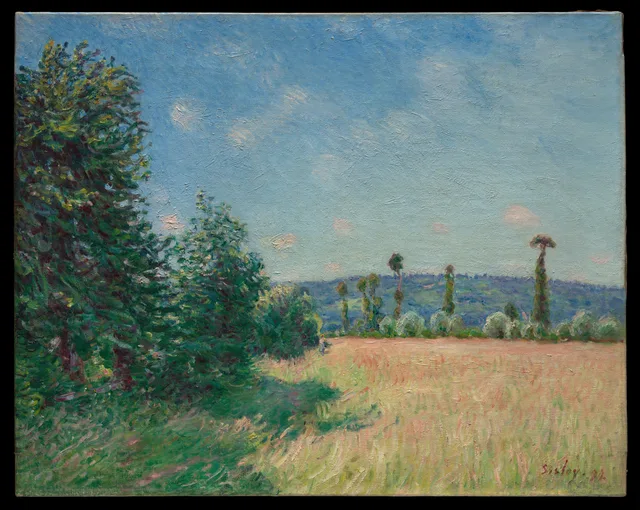 Sahurs Meadows in Morning SunAlfred Sisley1894
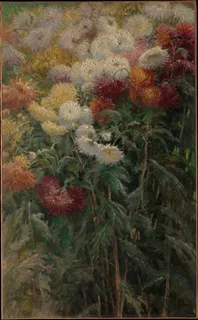 Chrysanthemums in the Garden at Petit-GennevilliersGustave Caillebotte1893
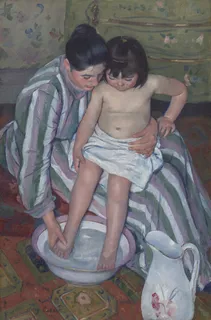 The Child's BathMary Cassatt1893
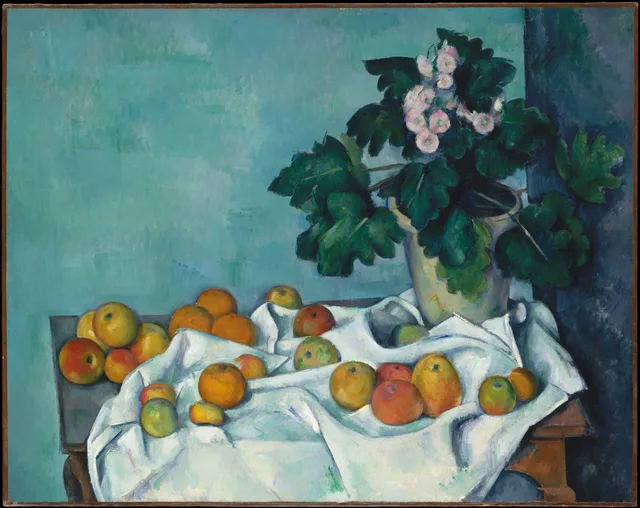 Still Life with Apples and a Pot of PrimrosesPaul Cézanneca. 1890
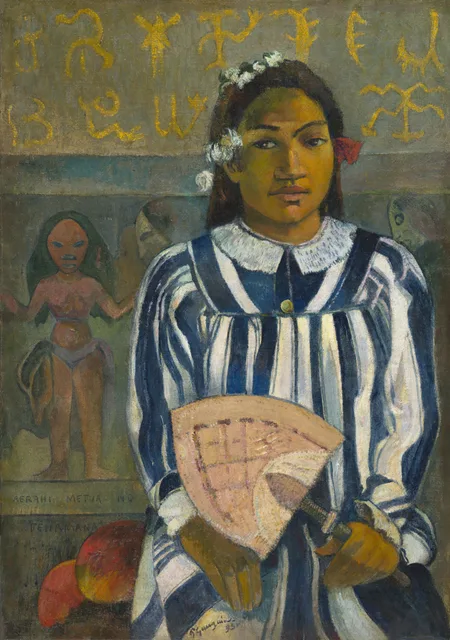 Merahi metua no Tehamana (Tehamana Has Many Parents or The Ancestors of Tehamana)Paul Gauguin1893
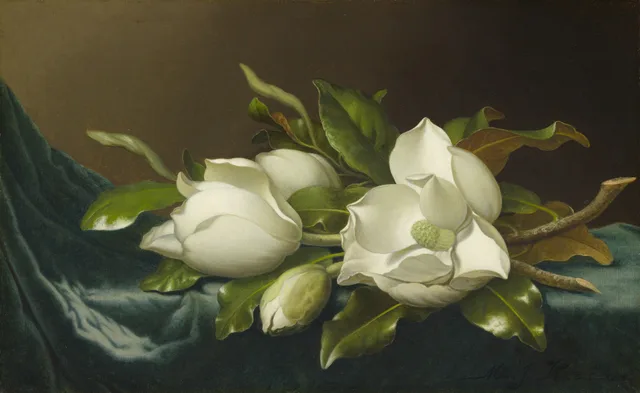 Magnolias on Light Blue Velvet ClothMartin Johnson Heade1885–95
Too good to keep to yourself
This painting,
for someone who comes to mind
They open it at full size
and see every brushstroke.
About this work
- Artist
- James McNeill Whistler · 1834–1903
- Date
- 1894
- Medium
- Oil on canvas
- Size
- 210.7 × 93.3 cm
- Culture
- Paris
- Collection
- The Art Institute of Chicago
- Image
- Original long edge 14715px · shown at 2560px
- Original
- View on the museum's website ↗