 Pyeongye
At a glance
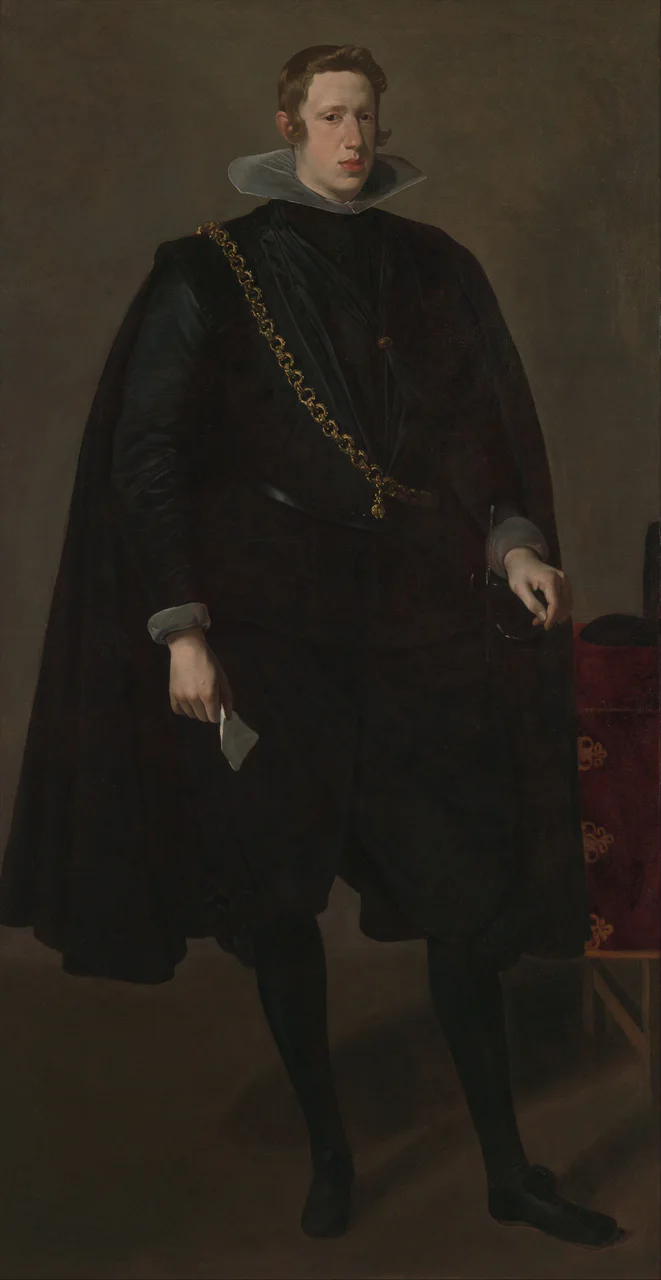
- Philip IV, King of Spain, stands in black from head to toe, at about nineteen years old.
- Diego Velázquez painted him in oil on canvas, probably in 1624, soon after joining the court in Madrid.
- The canvas is over six and a half feet tall, so the king appears at life size, yet there is almost no jewelry and no crown.
Reading the picture
4 places to look closer
Tap a number on the painting to jump to its note, or a close-up to see that spot in the whole picture.
Get close to the face. Pale skin, light brown hair, a long chin, and a full red lower lip. That long jaw runs through the Habsburg family. Around the neck sits a flat, stiff white collar, the plain style Philip ordered in 1623 when his new laws against luxury replaced the big ruffs of earlier fashion.
A single gold chain hangs across the black coat, from shoulder to waist. Zoom in and you can see that each link is just a few quick dabs of yellow paint. In all that black, it is nearly the only ornament on his body.
Look at his right hand. Between his fingers he holds a folded sheet of white paper. Against the dark cloak, only the hand and the paper catch the light. The picture does not tell us what is written on it.
His left hand rests lightly on the hilt of a sword, where a thin line of light curves along the round guard. Beside him stands a table draped in red cloth, with what looks like a black hat lying on top. The wall and floor melt into one brown space, which makes the standing figure stand out even more.
When it was painted
In 1623, a twenty-four-year-old painter from Seville arrived in Madrid. Velázquez had trained under Francisco Pacheco, who was also his father-in-law. That August he got the chance to paint the eighteen-year-old king, Philip IV.
The king liked the result. In October Velázquez was named a painter to the king. Pacheco later wrote that it was ordered that from then on only Velázquez should paint the royal portrait.
This canvas repeats that first portrait of the king. The original is now in the Prado in Madrid, and a few years later Velázquez painted over it and changed it. The Met says Velázquez was paid for this picture in December 1624, and his signed receipt survives.
Then the story takes a turn. The painting came to the Met in 1913 with the collection of Benjamin Altman, the New York department store owner. But in 1973 the museum downgraded it, calling it a product of Velázquez's workshop rather than his own hand.
Starting in the summer of 2009, Met conservator Michael Gallagher spent more than a year treating it. One eye had been badly damaged, so he placed a tracing of a related portrait over the canvas to find exactly where it belonged before repainting it. In late 2010 the picture went back on view with Velázquez's name restored.
So look at the king's face once more. Of the two eyes gazing back at you, one was brought back by a conservator nearly four centuries after Velázquez first painted it.
More by the same painter
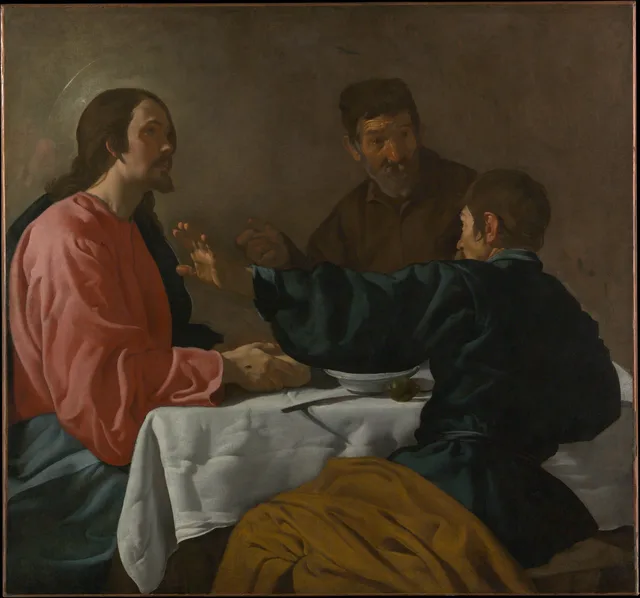
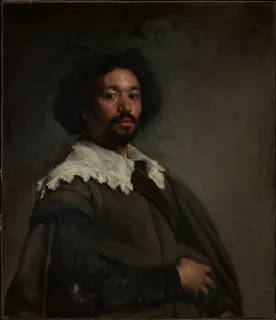
Questions to think about
- Look for itHow many spots of gold light can you find in the whole painting?
- Why?Why might Velázquez have painted a king almost entirely in black, instead of in rich colors and jewels?
- What about you?When today's leaders are photographed, which do you trust more, simple clothes or grand ones, and why?
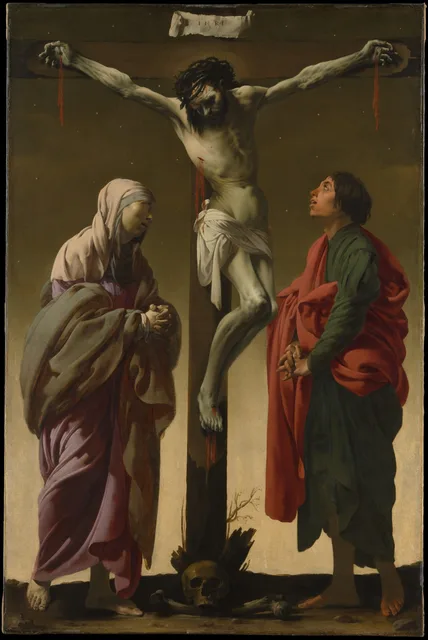
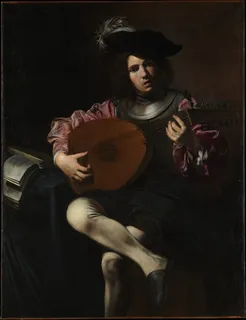
Same period
Painted around the same time,
somewhere else
Too good to keep to yourself
This painting,
for someone who comes to mind
They open it at full size
and see every brushstroke.
About this work
- Artist
- Velázquez · 1599–1660
- Date
- probably 1624
- Medium
- Oil on canvas
- Size
- 200 × 102.9 cm
- Collection
- The Metropolitan Museum of Art
- Image
- Original long edge 3869px · shown at 2560px
- Original
- View on the museum's website ↗