 Pyeongye
At a glance
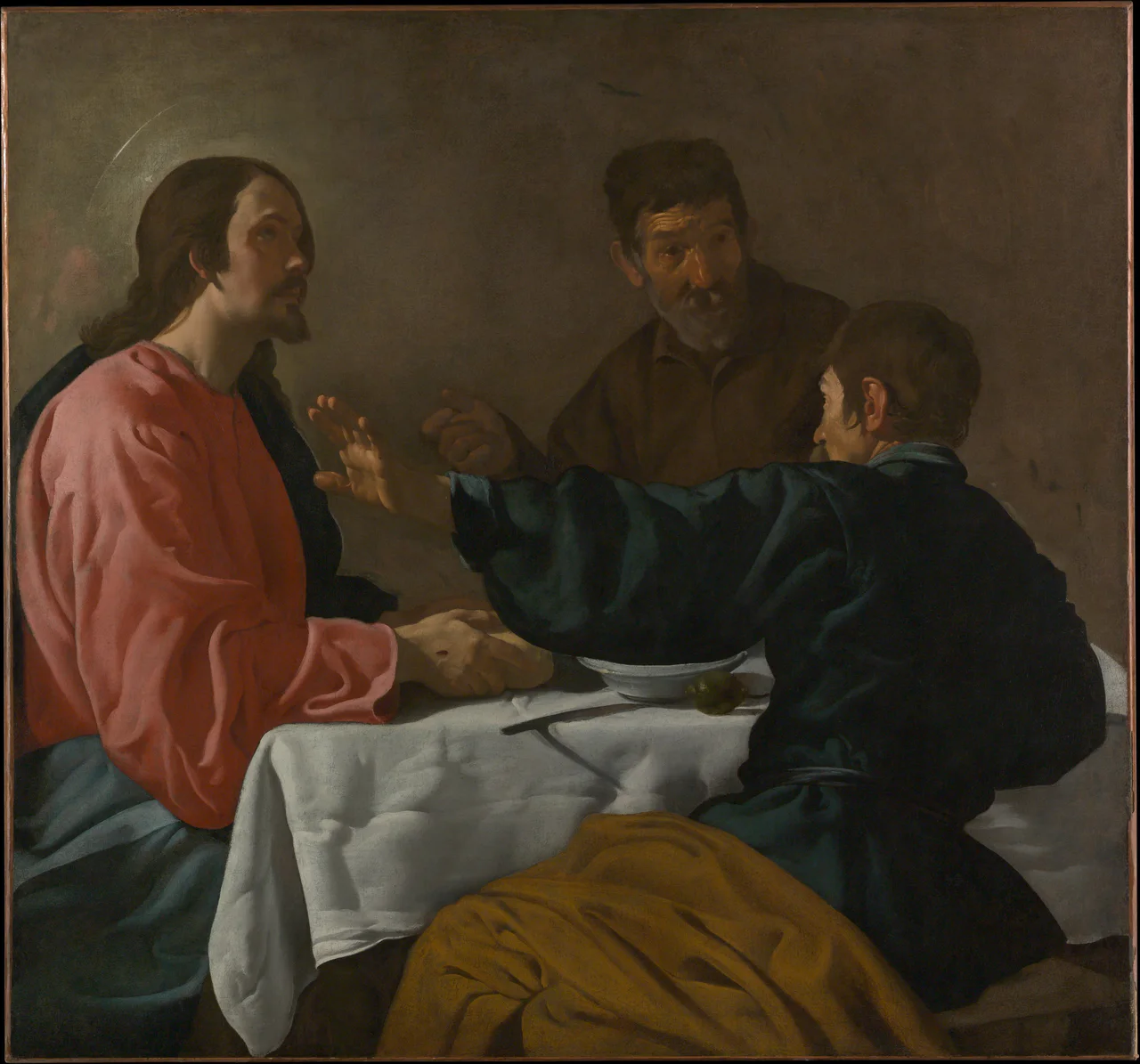
- Two disciples at a supper table suddenly realize that the stranger who walked with them is the risen Jesus.
- The Spanish painter Diego Velázquez painted it in oil on canvas in 1622–23, when he was about twenty-three.
- Light falls from one side into a dark room and picks out hands, faces, and a white tablecloth one by one.
Reading the picture
5 places to look closer
Tap a number on the painting to jump to its note, or a close-up to see that spot in the whole picture.
Look first at Jesus's hands, folded on the table. On the back of one hand there is a small red wound. It is the mark of the nails from the cross. This is the clue that tells the disciples who he really is.
The young disciple on the right has his back to us and lunges forward. His open palm and the hand of the older man behind him hang side by side in the air. Velázquez caught the split second when both men throw up their hands in surprise. Light glows on the fingertips.
Zoom in on the older disciple standing behind. His forehead is creased with deep lines, and his eyes are wide as he stares at Jesus. Bright paint touches only his nose and brow. Everything else sinks into shadow, and his beard is a rough scrub of gray.
Check the table. One white bowl with a chipped rim, one round green fruit, one dark knife. That's all. In the Bible story the disciples recognize Jesus when he breaks the bread, yet no bread is visible here. The rumpled cloth is painted in shifting grays and whites.
Look closely above and to the left of Jesus's head. A very thin white line curves through the dark. It is a halo. Instead of a golden disk, Velázquez marked him as holy with one faint stroke you could almost miss.
When it was painted
In the spring of 1622, Velázquez, twenty-two years old, left his hometown of Seville for his first trip to Madrid, the capital. He was already a rising young painter in Seville. At home he had a wife and two small daughters. His wife, Juana, was the daughter of his teacher, the painter Francisco Pacheco, and the two had married in 1618.
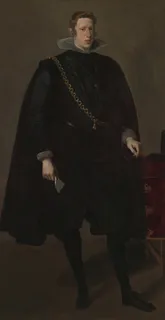
That first trip did not win him a post at court. He came home with a portrait of the poet Luis de Góngora instead. Then, in 1623, the king's powerful favorite, Olivares, called him back. Velázquez painted a portrait of the young King Philip IV, and the king made him his own painter. At twenty-four, a painter from the provinces had stepped into the royal court.
This picture was made in the space between those two years. In Seville he had painted kitchens, meals, and ordinary people in strong light and deep shadow. The Met sees in this canvas the influence of Caravaggio, the Italian painter whose dramatic lighting spread across Europe in those years.
The date of this picture was argued over for a long time. Some scholars placed it later, toward the end of the 1620s. In 2005 the Met's own journal published a whole article on dating this one painting, and the museum now places it in 1622–23. The canvas belonged to the New York department store owner Benjamin Altman, and it came to the Met through his bequest in 1913.
Look again. The two disciples throw up their hands in shock, but Jesus alone keeps a calm, still face. A young painter caught between a Seville kitchen table and a king's court put that quiet face and those startled hands into one picture.
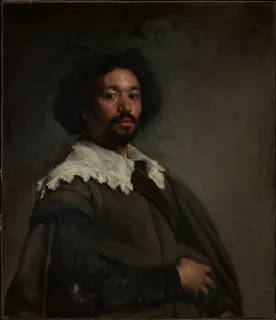
More by the same painter
Hidden stories in this painting
Questions to think about
- Look for itHow many objects are on the table, and what are they?
- Why?Why do you think Velázquez gave the disciples the faces of ordinary working men instead of saints?
- What about you?Sometimes we only realize later who has been walking beside us. How well do we really see the people close to us?
Same period
Painted around the same time,
somewhere else
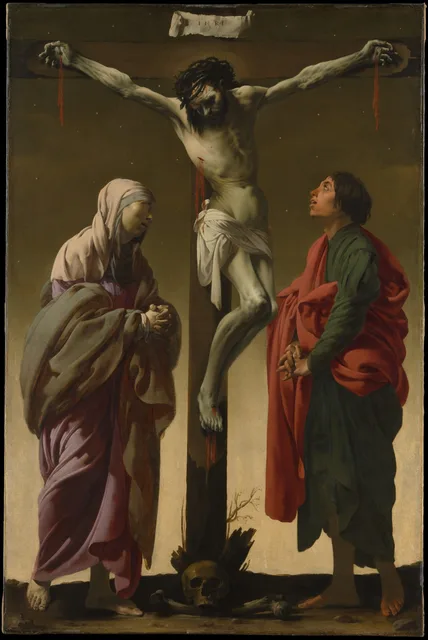 The Crucifixion with the Virgin and Saint JohnHendrick ter Brugghenca. 1624–25
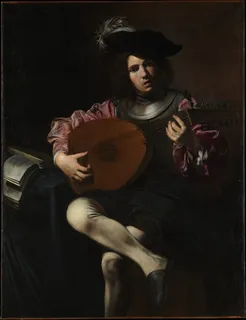 Lute PlayerValentin de Boulogneca. 1625–26
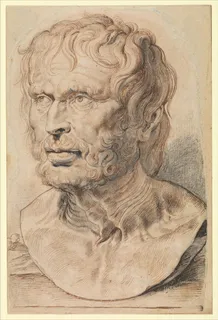 Bust of Pseudo-SenecaPeter Paul Rubens1600–1626
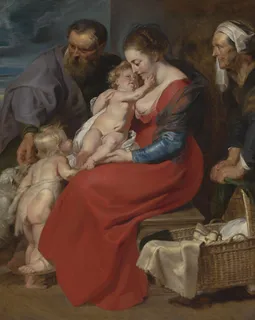 The Holy Family with Saints Elizabeth and John the BaptistPeter Paul Rubensc. 1615
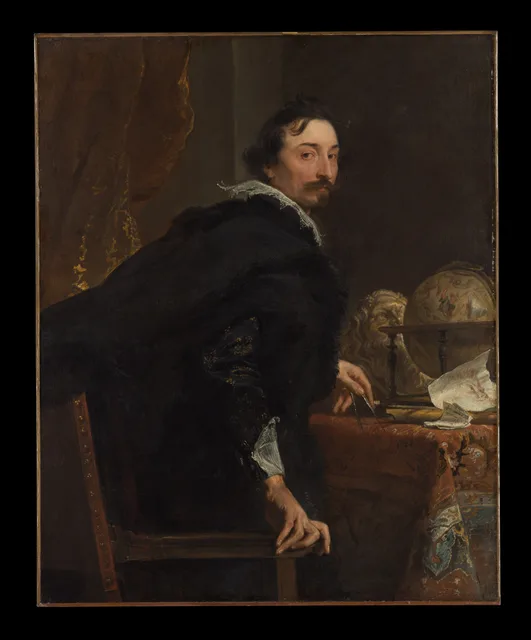 Lucas van Uffel (died 1637)Anthony van Dyckca. 1622
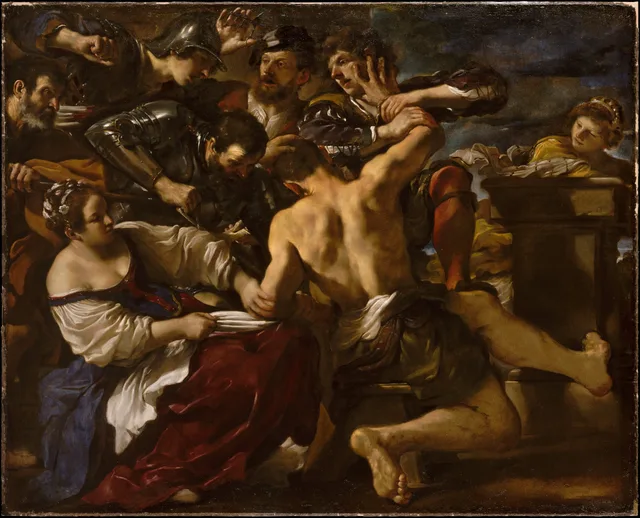 Samson Captured by the PhilistinesGuercino1619
Too good to keep to yourself
This painting,
for someone who comes to mind
They open it at full size
and see every brushstroke.
About this work
- Artist
- Velázquez · 1599–1660
- Date
- 1622–23
- Medium
- Oil on canvas
- Size
- 123.2 × 132.7 cm
- Collection
- The Metropolitan Museum of Art
- Image
- Original long edge 3538px · shown at 2560px
- Original
- View on the museum's website ↗