Pyeongye

Painters · 15th century
Filippino Lippi
1457–1504
The son of a painter-friar, raised in the workshop of his father's own pupil Botticelli, who went on to cover chapel walls in Florence and Rome with stories.
Scenes from a life
The life of Filippino Lippi,
scene by scene
- 1469Spoleto
Scaffolding stands against the curved apse of the cathedral in Spoleto, a hill town in Umbria. The Florentine painter Fra Filippo Lippi has been painting the life of the Virgin there. That autumn he dies in the town, leaving behind a son of about twelve, Filippino.
The boy's birth had been a scandal from the start. His father was a friar, and his mother, Lucrezia Buti, had been living in a convent in Prato. The cathedral frescoes his father left unfinished were completed by Fra Diamante, the assistant who had worked beside him for years.
- 1472Florence
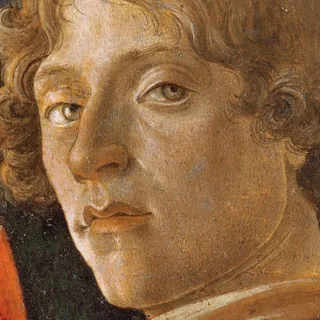
The Company of Saint Luke, the painters' confraternity of Florence, writes up its register. Filippino's name is in it, noted as being with Sandro Botticelli. A boy of about fifteen was working in Botticelli's shop.
Botticelli had learned to paint from Filippino's father. Now the master's son was learning in the pupil's workshop.
- 1481–84Florence
Filippino walks into the Brancacci Chapel in the church of the Carmine. Some fifty years earlier, Masaccio had left its frescoes unfinished. Filippino painted in the missing scenes and completed the chapel.
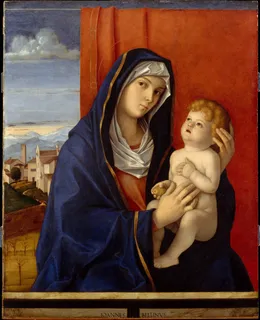
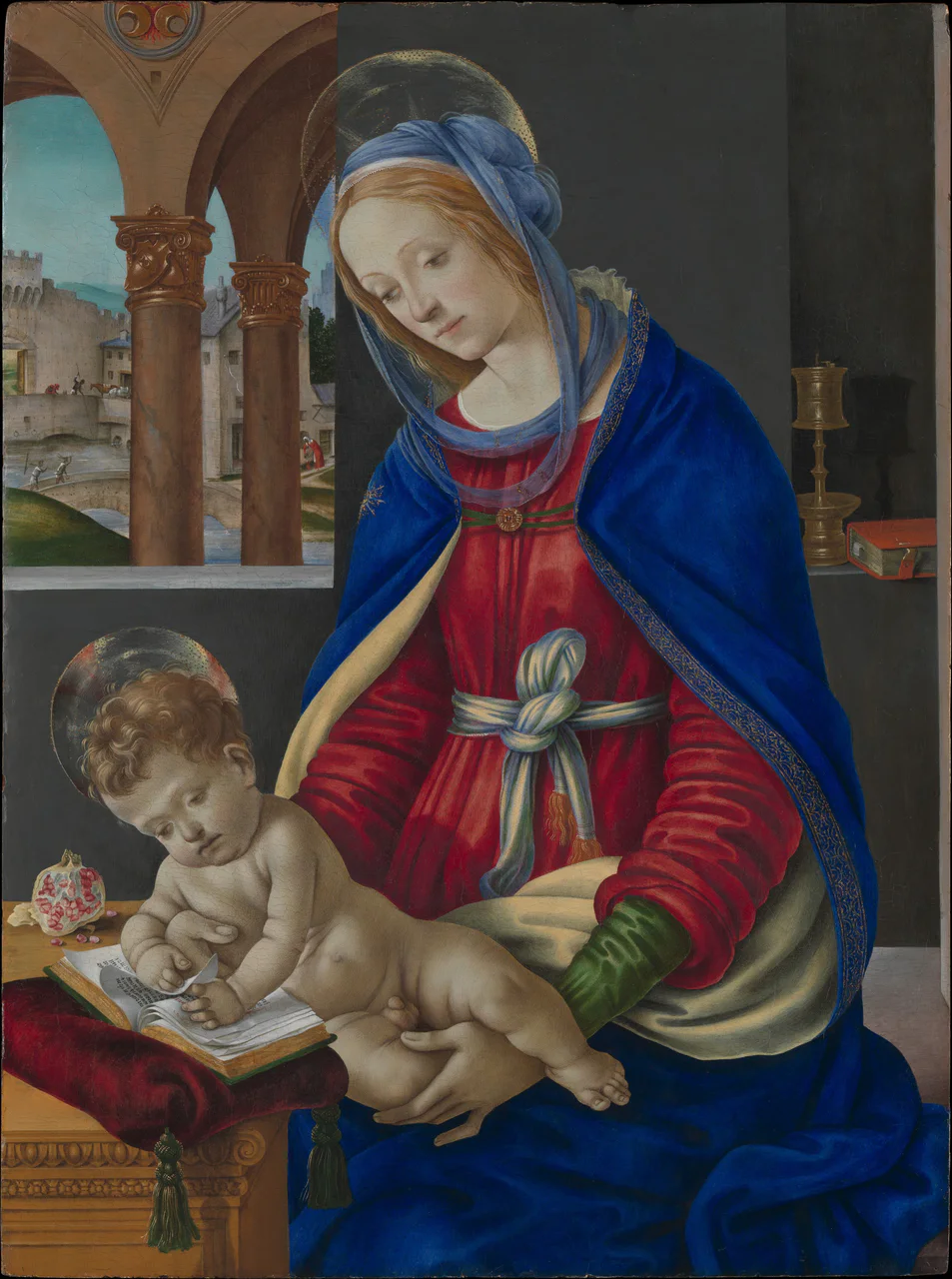
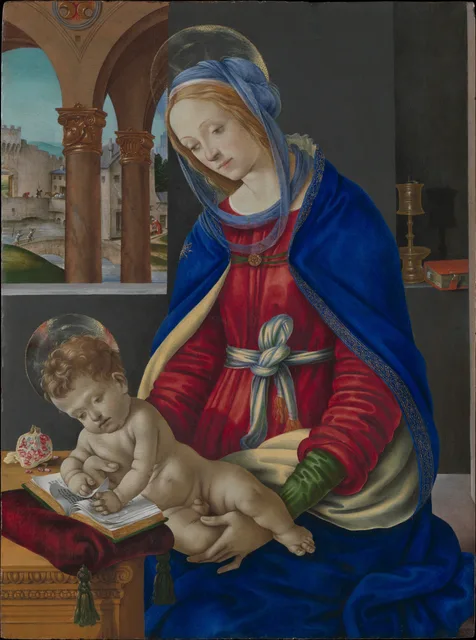
Around the same time the banker Filippo Strozzi ordered a Madonna and Child from him. Look at the top of the arch in the upper left: the crescent moons there are the Strozzi family emblem. The Virgin, in red with a deep blue mantle, holds the baby in both hands while he leans over an open book on a red cushion and turns a page.
 Painted around this timeMadonna and Child
- 1487Florence
Filippo Strozzi comes back to Filippino with a bigger job. He signs a contract for frescoes in the Strozzi family chapel in the church of Santa Maria Novella. It was a major commission from one of the richest men in Florence.
But the chapel would take years. Filippino was soon called away to Rome. Strozzi died in 1491 without seeing his chapel finished, and the frescoes were completed only in 1502.
- 1488Rome
Lorenzo de' Medici recommends Filippino to Cardinal Oliviero Carafa of Naples. The cardinal wants his chapel in the Roman church of Santa Maria sopra Minerva painted. Records show Filippino at work in Rome by late August 1488.
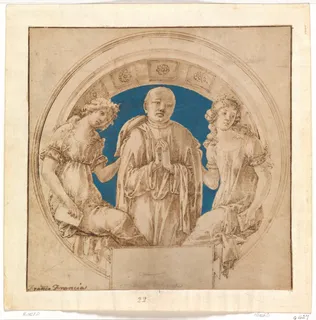
Lorenzo had arranged a new tomb monument in Spoleto cathedral for Fra Filippo, and his son Filippino designed it. The Latin epitaph was written by Lorenzo's poet friend Angelo Poliziano. In the town where he had lost his father, the son gave him a proper grave.
- 1504Florence
In January 1504 the government of Florence calls painters and sculptors together to decide where to place Michelangelo's huge marble David. Filippino is there, alongside men such as Leonardo da Vinci and Botticelli. The minutes of what each man said still survive.
Three months later, in April, Filippino died at about forty-seven. Giorgio Vasari, writing his lives of the artists about half a century later, recorded that the shops along the Via de' Servi all closed as his funeral passed.
People around them
- Fra Filippo Lippihis father, a friar and a celebrated Florentine painter.
- Lucrezia Butihis mother, who had lived in a convent in Prato.
- Sandro Botticellihis father's pupil, in whose workshop the young Filippino worked.
- Filippo Strozzithe Florentine banker who ordered the Madonna and Child and the family chapel frescoes.
- Lorenzo de' Medicithe Florentine leader who recommended Filippino to Cardinal Carafa and arranged his father's tomb.
- Oliviero Carafathe cardinal who hired Filippino to paint his chapel in Rome.
Works
Paintings by
Filippino Lippi on Pyeongye
More paintings by this artist will be added.