 Pyeongye
Artwork · 18th century · Canaletto
LeoTurn on Magnifier at the lower right and move slowly across the painting.
Full screen opens it edge to edge.Tap the painting to fill the screen.
Spread two fingers to look closer.
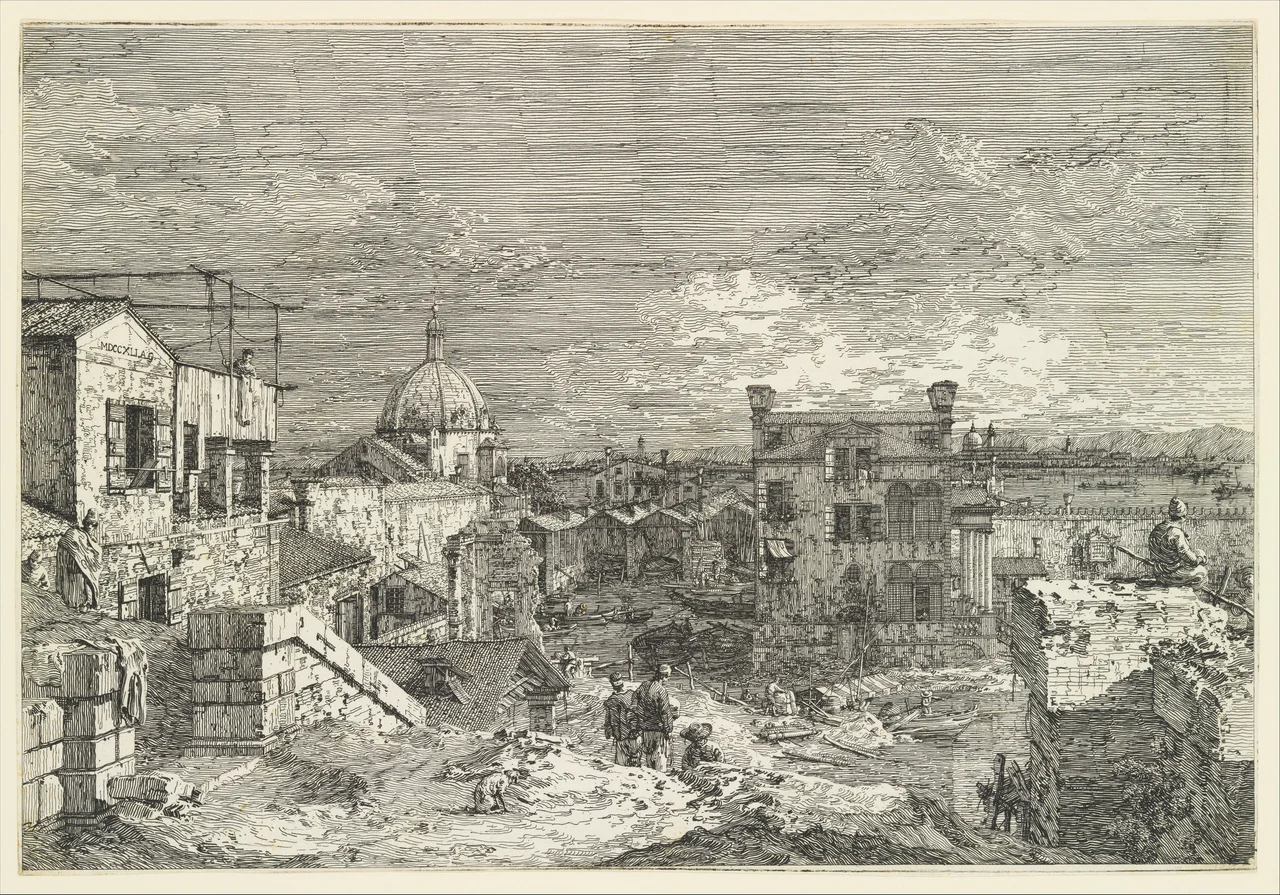
Imaginary View of Venice, houses at left with figures on terraces, a domed church at center in the background, boats and boat-sheds below, and a seated man observing from a wall at right in the foreground, from "Views" (Vedute altre prese da i luoghi altre ideate da Antonio Canal)
Canaletto1741Etching; undivided plate, only state30 × 43.7 cm
At a glance
- Weathered houses with a rooftop terrace, a domed church, boat sheds, and a man perched on a wall all come together in one view of Venice.
- The Venetian painter Canaletto etched it on copper in 1741. The year is written in Roman numerals on one of the houses.
- It belongs to a series that mixes real places with invented ones. Using nothing but fine lines, he made sunlight and shade, water and sky.
Reading the picture
5 places to look closer
Tap a number on the painting to jump to its note, or a close-up to see that spot in the whole picture.
Zoom in on the gable of the house at the left. Carved into it are the letters MDCCXLI A.C. That is 1741 in Roman numerals, plus the initials of the artist, Antonio Canal. He hid his signature and date on a wall inside the picture.
Look at the wooden terrace on top of that house. Someone leans out over the railing, and a cloth hangs over the rail. Poles and ropes crisscross above. In crowded Venice, people built terraces like this on their roofs to catch the air and dry their laundry.
Zoom in on the dome left of center. Its surface is ribbed and covered with fine horizontal lines, and a small lantern tower rises on top. Below it, tiled roofs step down like stairs. It is the kind of church dome that punctuates the Venetian skyline.
Drop down to the water in the middle. Under roofed sheds, boats sit upside down or tilted on their sides. Small boats with people aboard float in front. This is a working yard where boats are repaired and stored.
Look at the far right, where a man sits on a broken wall. He wears a pointed cap, has a long pole beside him, and sits with his back to us. He is a spectator, looking out over the scene along with us.
When it was painted
In 1741 Canaletto turned forty-four. He had made his name painting views of Venice, and his buyers were mostly British travelers. The man who connected him with them was Joseph Smith, an English merchant and collector living in Venice.
In the early 1740s Canaletto also picked up the etching needle. In etching, the artist draws lines through a coating on a copper plate, and acid bites them into the metal. Over several years he made thirty-one etchings, published as a set around 1744. They make up nearly all of his work as a printmaker.
The title plate of the set dedicates the prints to Joseph Smith, Consul of His Britannic Majesty. Smith became British consul in Venice in 1744. The title says that some views were taken from real places and others were invented. This scene is one of the invented ones, built from pieces of what you might see in Venice.
In 1746, soon after the prints appeared, Canaletto moved to London and spent years painting English views. In 1762 Smith sold his collection of Canaletto's paintings and prints to King George III. They remain in the British Royal Collection today.
The Met's record notes that this impression was printed from the undivided plate. It entered the museum in 1973. Look again at the man on the wall at the right. He is gazing out over a Venice that looks completely real and exists nowhere at all.
The painter
Canaletto
1697–1768
When painting this, the artist was about 44 years old
All paintings by Canaletto →More by the same painter
Questions to think about
- Look for itHow many boats can you find hidden around the water and the sheds?
- Why?Why do you think Canaletto mixed real and invented places instead of drawing Venice exactly as it was?
- What about you?Travel photos today are often edited or combined to look better than reality. When is it fine to show a place as more beautiful than it really is, and when does it become misleading?
Same period
Painted around the same time,
somewhere else
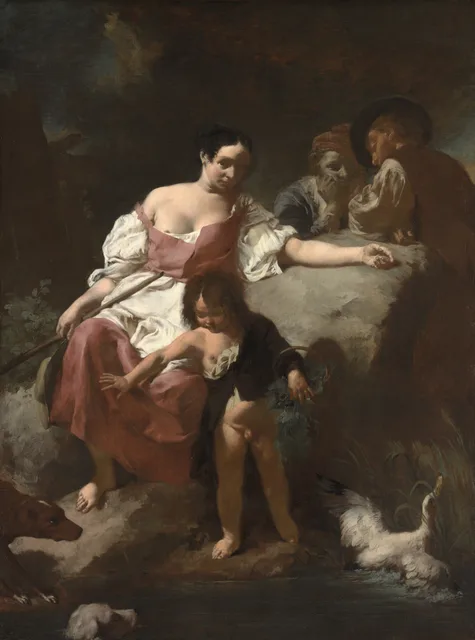 Pastoral SceneGiovanni Battista Piazzetta1740
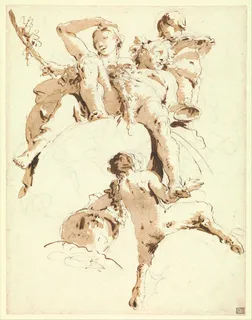 Bacchus and AriadneGiovanni Battista Tiepoloca. 1740
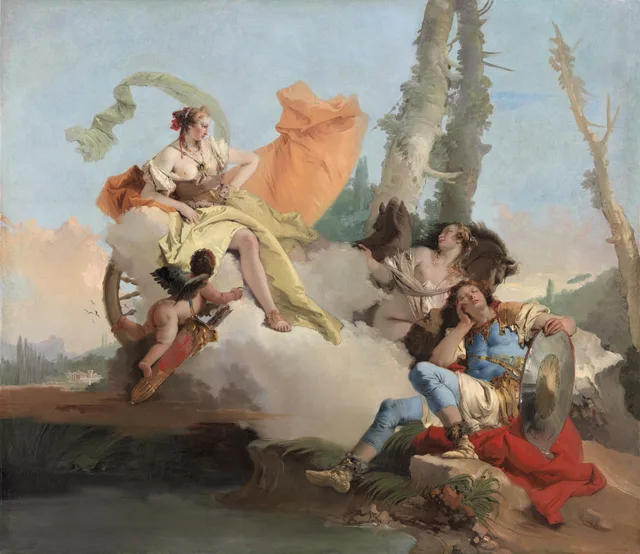 Armida Encounters the Sleeping RinaldoGiovanni Battista Tiepoloc. 1742–45
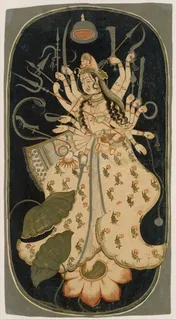 Mahadevi, the Great GoddessUnknown artist · India (Rajasthan, Bikaner)ca. 1725
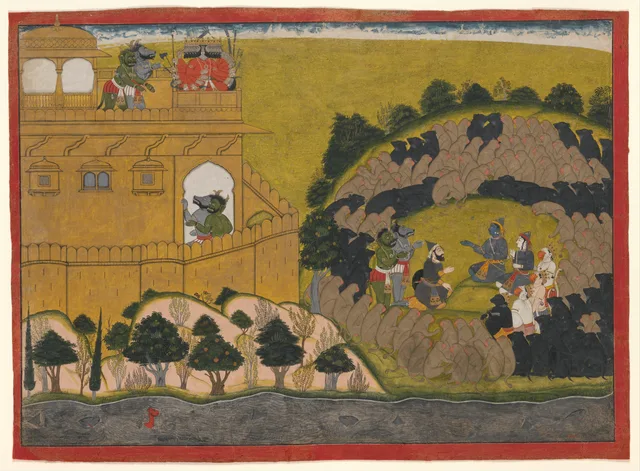 Rama Releases the Demon Spies Shuka and Sarana: Folio from the Siege of Lanka seriesManakuca. 1725
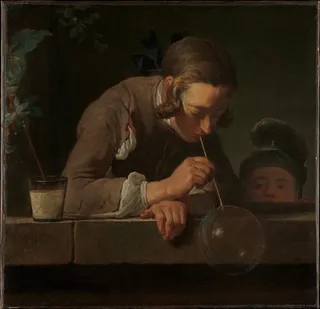 Soap BubblesJean Siméon Chardinca. 1733–34
Too good to keep to yourself
This painting,
for someone who comes to mind
They open it at full size
and see every brushstroke.
About this work
- Artist
- Canaletto · 1697–1768
- Date
- 1741
- Medium
- Etching; undivided plate, only state
- Size
- 30 × 43.7 cm
- Collection
- The Metropolitan Museum of Art
- Image
- Original long edge 3909px · shown at 2560px
- Original
- View on the museum's website ↗