 Pyeongye
Artwork · 18th century · Giovanni Battista Tiepolo
LeoTurn on Magnifier at the lower right and move slowly across the painting.
Full screen opens it edge to edge.Tap the painting to fill the screen.
Spread two fingers to look closer.
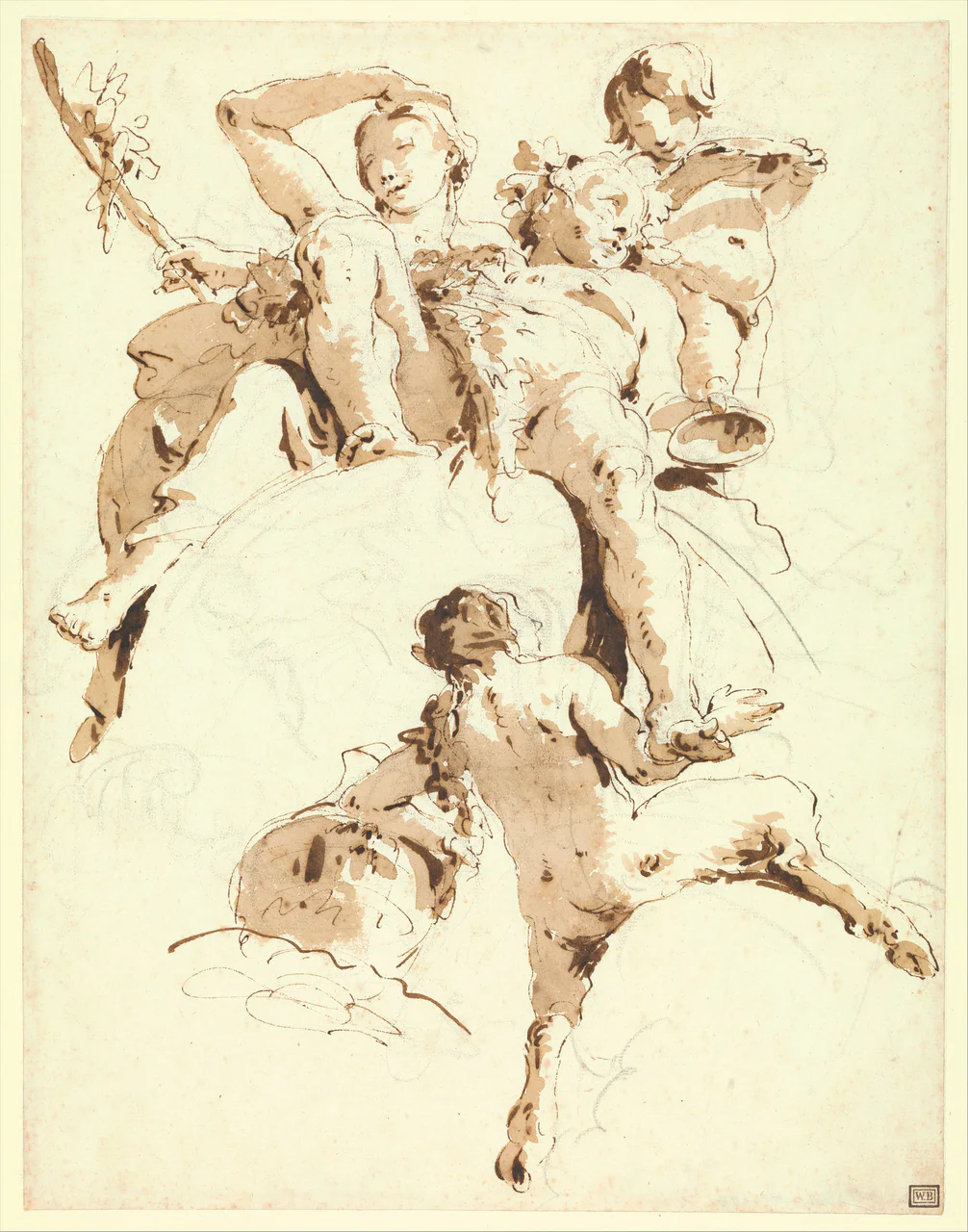
Bacchus and Ariadne
Giovanni Battista Tiepoloca. 1740Pen and brown ink, brown wash, over black chalk.31.2 × 24.3 cm
At a glance
- A tangle of figures floating on clouds, drawn for the story of Bacchus, the god of wine, and Ariadne, a princess of Crete.
- The Venetian painter Giovanni Battista Tiepolo made it around 1740 in pen and brown ink with a brown wash.
- Fast lines, puddles of ink, and patches of bare paper are all he needed to make light and the weight of bodies.
Reading the picture
5 places to look closer
Tap a number on the painting to jump to its note, or a close-up to see that spot in the whole picture.
Zoom in on the face at top center. One arm rests over the head, the eyes are shut, and the head tips back. Each eye is a single short curve. The cheeks and forehead are left as bare paper, so light seems to land right there.
Look to the right, at the head ringed with leaves. Tiepolo dabbed the split leaf shapes in pale brown. A crown of grape leaves is how painters let you know you are looking at Bacchus. He did not draw each leaf. He pressed the brush down a few times and the wreath was done.
Go up to the top left corner. A long pole slants up, with curly lines winding around it. They look like a leafy vine. A staff wrapped in leaves like this turns up again and again in pictures about Bacchus.
On the right, find the round bowl held in a hand. Its rim is one thin pen line, and the inside is a single dark pool of ink. With just a pen and a brush, he shows the bowl hanging from the hand with real weight.
Drop down to the body of the lower figure. The belly and chest fold upward, as if we were looking up at it from below. Now check the empty paper beside it. Faint gray chalk lines are still there, the first sketch Tiepolo laid in before he touched ink.
When it was painted
In 1740 Tiepolo was forty-four. That year he was in Milan, painting the ceiling of a long gallery in the Palazzo Clerici with the chariot of the Sun racing across the sky. Back in Venice, another ceiling was waiting for him, in the Scuola Grande dei Carmini, the meeting house of a Carmelite confraternity.
His household was a full one. In 1719 he had married Cecilia Guardi, whose brothers Gian Antonio and Francesco were painters too. Their son Giovanni Domenico, born in 1727, was about thirteen now, and he would soon be working in his father's studio.
Tiepolo's fame as a ceiling painter spread far beyond Venice. In 1750 he took his sons Domenico and Lorenzo to Würzburg in Germany to paint the ceilings of the prince-bishop's palace. In 1762 King Charles III of Spain called him to Madrid to paint ceilings in the royal palace.
In Madrid, the painter Anton Raphael Mengs, champion of a cooler, classical style, enjoyed strong royal favor. Tiepolo never went home. He died in Madrid in 1770, and for a while afterward his bright, airy skies fell out of fashion.
Much later this sheet belonged to the New York banker Robert Lehman, and it came to the Metropolitan Museum in 1975 with the rest of his collection. In the bottom right corner there is a small square stamp with the letters W.B., a mark left by someone the sheet passed through.
Now look again at the sleeping face at the top. With a few presses of the brush, a painter in his forties dropped light onto it. In the years ahead the same hand would be filling the ceilings of great European palaces with sky.
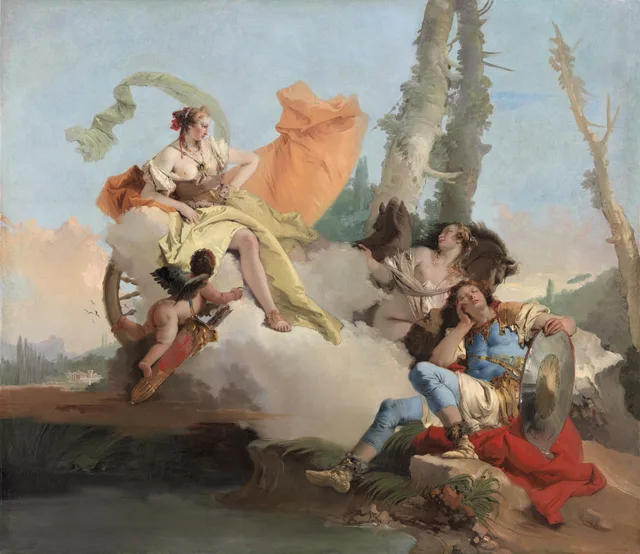
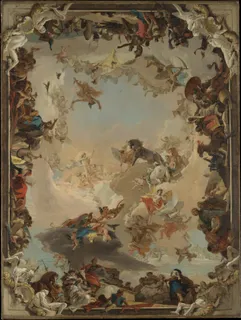
More by the same painter
Questions to think about
- Look for itHow many bare feet can you find in the drawing?
- Why?Why do you think Tiepolo left so much of the faces and bodies as plain white paper?
- What about you?Ariadne was abandoned by one man and started a new life with another. When someone we know has been betrayed and is trying to start over, what is actually helpful to say to them?
Same period
Painted around the same time,
somewhere else
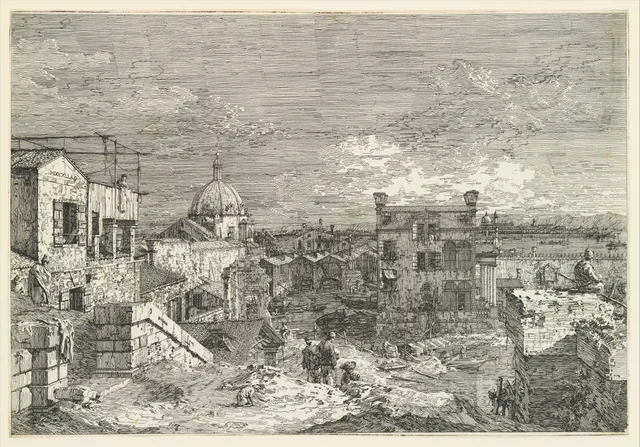 Imaginary View of Venice, houses at left with figures on terraces, a domed church at center in the background, boats and boat-sheds below, and a seated man observing from a wall at right in the foreground, from "Views" (Vedute altre prese da i luoghi altre ideate da Antonio Canal)Canaletto1741
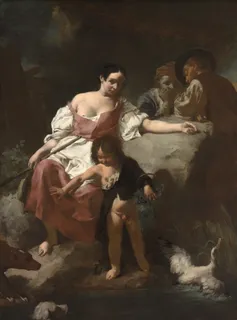 Pastoral SceneGiovanni Battista Piazzetta1740
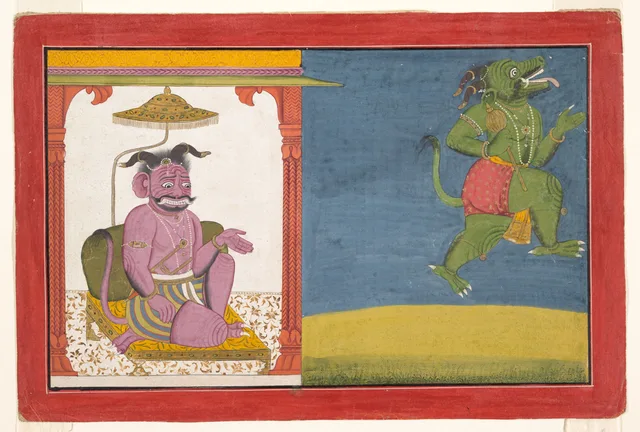 The Demon Hiranyaksha Departs the Demon Palace: Folio from a Bhagavata Purana SeriesUnknown artist · Northern India, Guler, Himachal Pradeshca. 1740
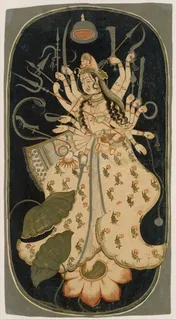 Mahadevi, the Great GoddessUnknown artist · India (Rajasthan, Bikaner)ca. 1725
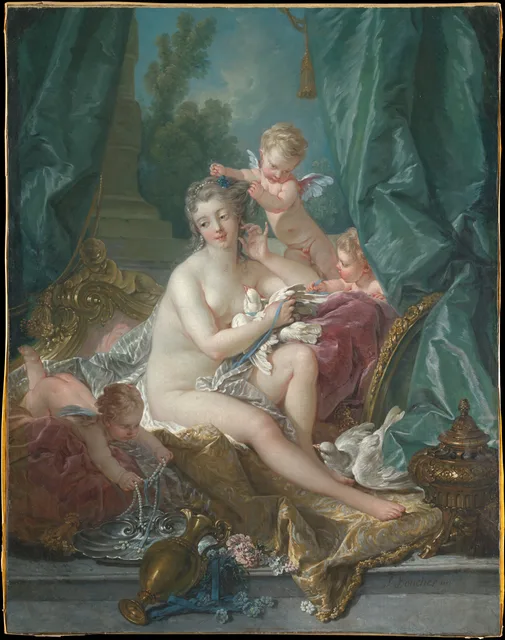 The Toilette of VenusFrançois Boucher1751
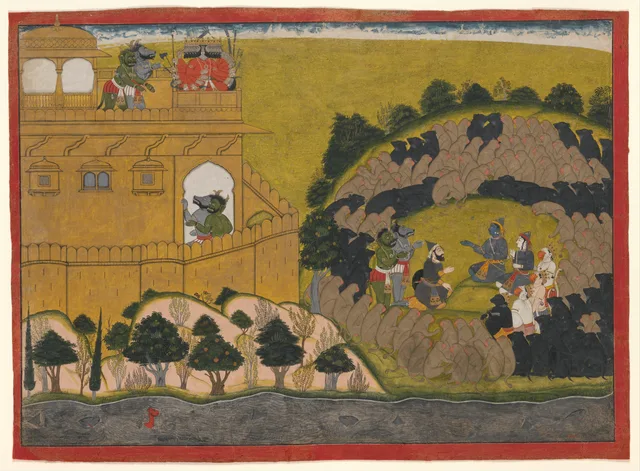 Rama Releases the Demon Spies Shuka and Sarana: Folio from the Siege of Lanka seriesManakuca. 1725
Too good to keep to yourself
This painting,
for someone who comes to mind
They open it at full size
and see every brushstroke.
About this work
- Artist
- Giovanni Battista Tiepolo · 1696–1770
- Date
- ca. 1740
- Medium
- Pen and brown ink, brown wash, over black chalk.
- Size
- 31.2 × 24.3 cm
- Collection
- The Metropolitan Museum of Art
- Image
- Original long edge 3857px · shown at 2560px
- Original
- View on the museum's website ↗