 Pyeongye
At a glance
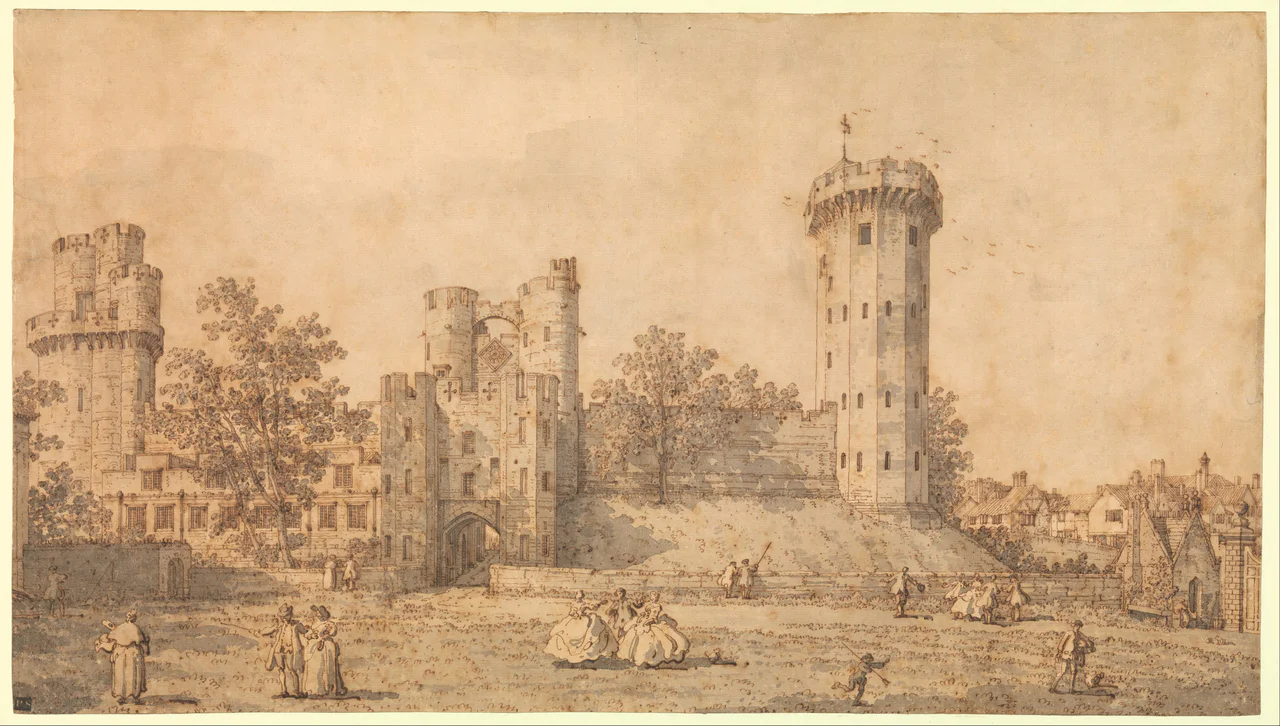
- The east front of Warwick Castle in England, seen from the grass outside the walls. Tall towers rise at left and right, with the gatehouse in between.
- The Venetian artist Canaletto drew it in 1752, during his years in England, in pen and brown ink with thin gray wash.
- Every stone in the walls looks measured with a ruler, but the people on the lawn are dashed off in a few flicks of the pen.
Reading the picture
5 places to look closer
Tap a number on the painting to jump to its note, or a close-up to see that spot in the whole picture.
Zoom in on the top of the tall tower at the right. Battlements run around it like teeth, and below them a row of stone brackets sticks out. A weathervane rises from the roof. Little birds circle the tower, each one a short hooked stroke.
Look at the gatehouse in the middle. Above the pointed archway, windows and walls rise in layers, and narrow cross-shaped slits are cut into the stone. Higher up hangs a diamond-shaped panel. Thin gray wash, brushed on lightly, separates the sunny faces of the walls from the shady ones.
Come down to the lawn at the bottom center. Women in wide, puffed-out skirts stand with a man. Each skirt is just a few round lines and one sweep of gray. The darker gray under their feet becomes a shadow, so they stand firmly on the grass.
Zoom in on the two men in front of the wall. One raises a long stick and points upward. The other stands close beside him. They look like visitors who have come to see the castle.
At the very bottom, find the child running on his own. He carries a long pole with a forked end over his shoulder and kicks one foot up behind him. In front of the huge castle, this small figure makes the whole scene feel alive.
When it was painted
By 1752 Canaletto was in his fifties and living in London, far from his native Venice. He had started out working alongside his father, Bernardo Canal, a painter of theater scenery. His nickname, Canaletto, means little Canal, to tell him apart from his father. He went on to win fame with views of Venice that British travelers loved to bring home.
In Venice his key link to those buyers was Joseph Smith, an English merchant who later became the British consul there. Smith's own large group of Canalettos passed to King George III in 1762. But in the 1740s, war in Europe cut the flow of visitors to Venice. So in 1746 Canaletto followed his customers to London.
There an odd rumor spread. Some said his English pictures fell short of his Venetian ones, so this could not be the real Canaletto. He answered by placing a newspaper advertisement inviting the public to his lodgings to see a new painting for themselves.
One client who came back to him again and again was Lord Brooke, owner of Warwick Castle. Brooke had hired the landscape designer Lancelot Brown, known as Capability Brown, to rework the grounds around the castle. Canaletto pictured Warwick from many angles in both paintings and drawings. This sheet came to the Metropolitan Museum in 1975 with the Robert Lehman Collection.
Canaletto went home to Venice around 1755 and died there in 1768. Look again at the stones of the castle wall, drawn one by one. The skill that Londoners once doubted is right there on the page.
The painter
Canaletto
1697–1768
When painting this, the artist was about 55 years old
All paintings by Canaletto →More by the same painter
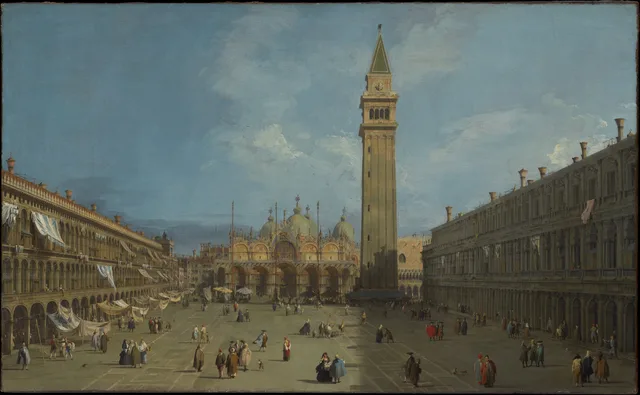 Piazza San Marcolate 1720s
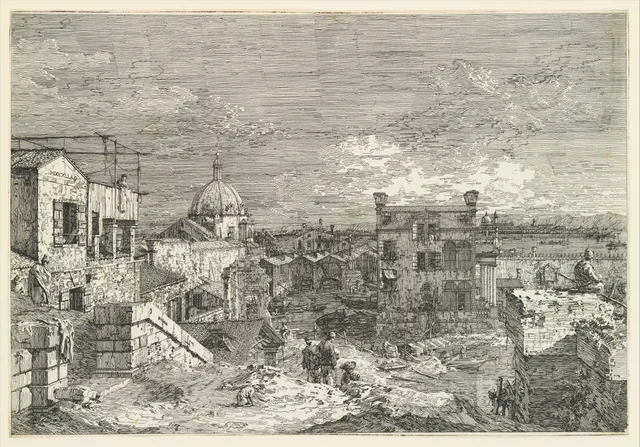 Imaginary View of Venice, houses at left with figures on terraces, a domed church at center in the background, boats and boat-sheds below, and a seated man observing from a wall at right in the foreground, from "Views" (Vedute altre prese da i luoghi altre ideate da Antonio Canal)1741
Questions to think about
- Look for itHow many birds can you count flying around the tower on the right?
- Why?Why do you think Canaletto drew the castle so carefully and the people so lightly?
- What about you?When his customers stopped coming, Canaletto moved to another country to find new ones. How should we treat people who come to our country today looking for work?
Same period
Painted around the same time,
somewhere else
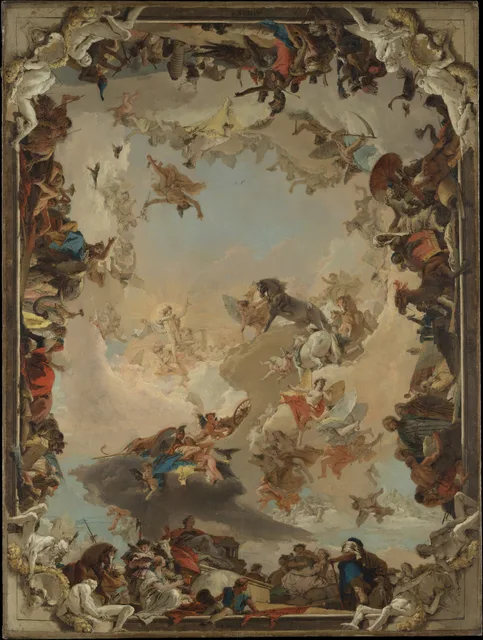 Allegory of the Planets and ContinentsGiovanni Battista Tiepolo1752
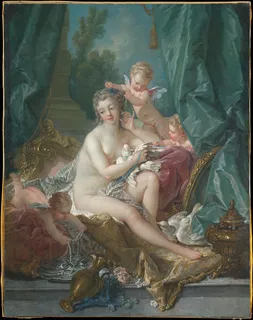 The Toilette of VenusFrançois Boucher1751
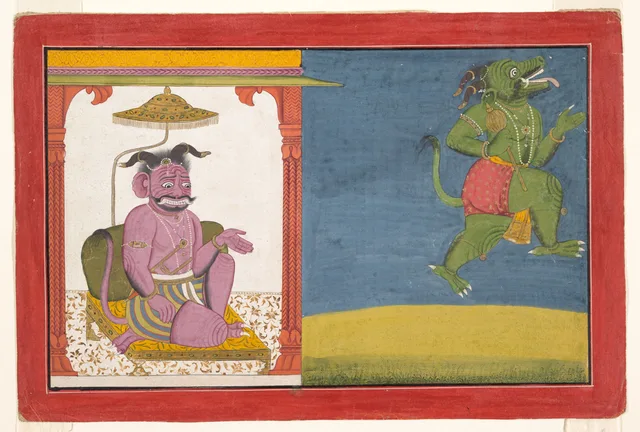 The Demon Hiranyaksha Departs the Demon Palace: Folio from a Bhagavata Purana SeriesUnknown artist · Northern India, Guler, Himachal Pradeshca. 1740
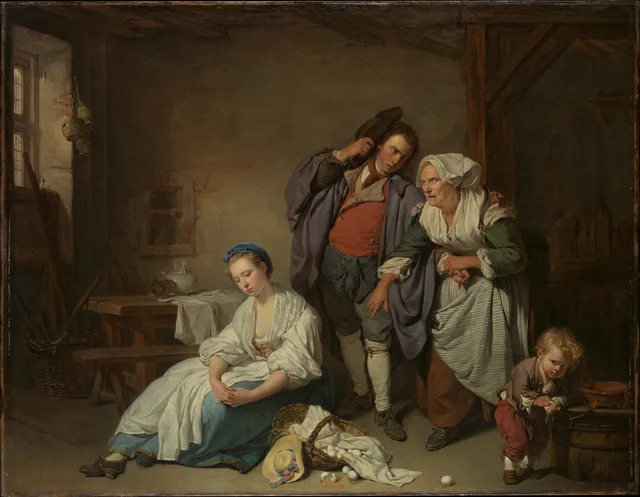 Broken EggsJean-Baptiste Greuze1756
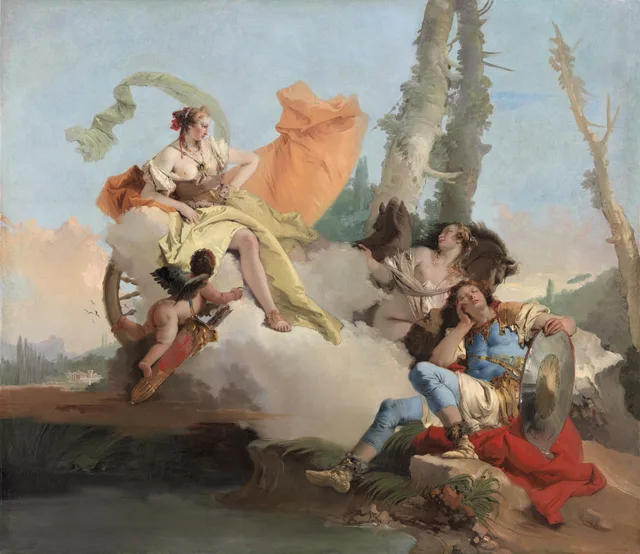 Armida Encounters the Sleeping RinaldoGiovanni Battista Tiepoloc. 1742–45
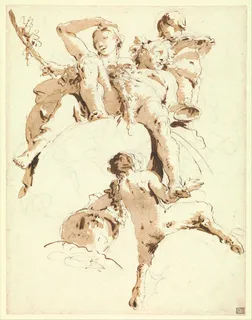 Bacchus and AriadneGiovanni Battista Tiepoloca. 1740
Too good to keep to yourself
This painting,
for someone who comes to mind
They open it at full size
and see every brushstroke.
About this work
- Artist
- Canaletto · 1697–1768
- Date
- 1752
- Medium
- Pen and brown ink, gray wash
- Size
- 31.6 × 56.2 cm
- Collection
- The Metropolitan Museum of Art
- Image
- Original long edge 3919px · shown at 2560px
- Original
- View on the museum's website ↗