 Pyeongye
Artwork · 18th century · Francesco Guardi
LeoTurn on Magnifier at the lower right and move slowly across the painting.
Full screen opens it edge to edge.Tap the painting to fill the screen.
Spread two fingers to look closer.
At a glance
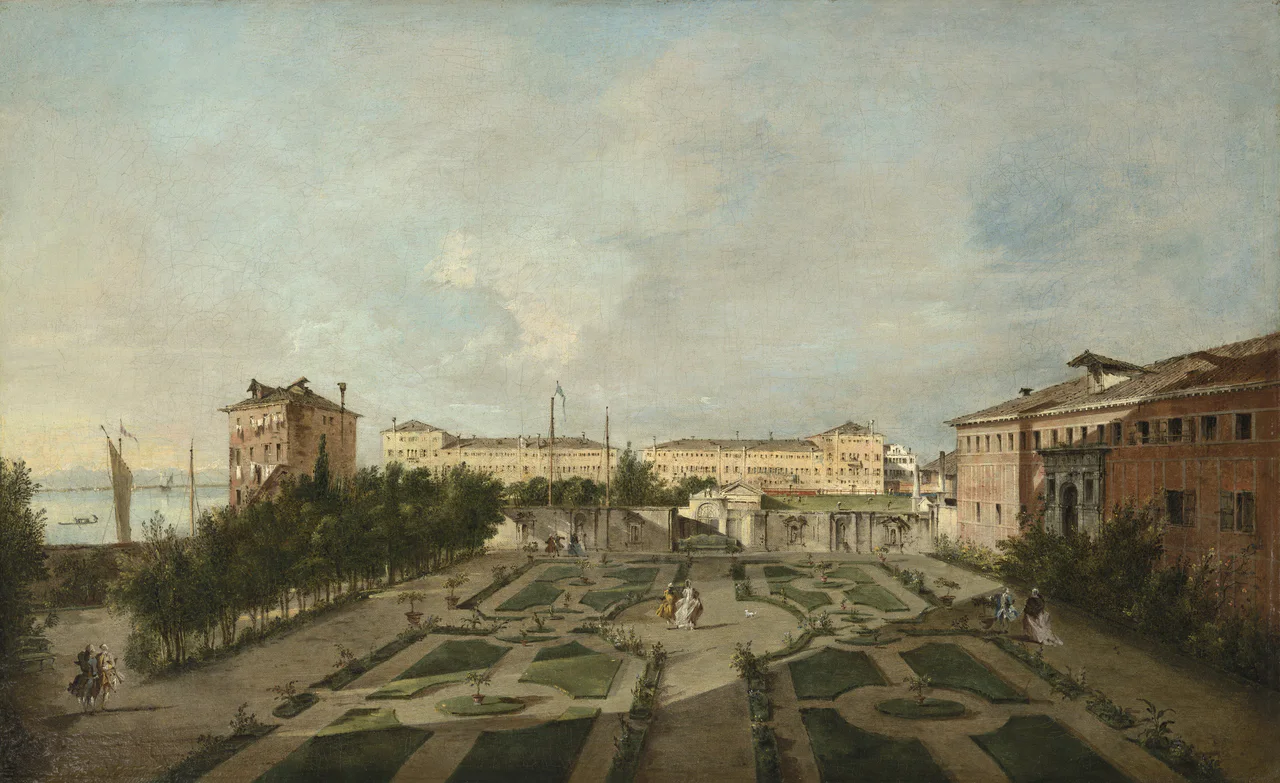
- A formal garden laid out in geometric beds behind a Venetian palace, with well-dressed couples strolling its paths.
- The Venetian painter Francesco Guardi painted it in the late 1770s.
- Instead of canals and churches, it shows a private garden in a crowded city, a subject Guardi almost never painted.
Reading the picture
5 places to look closer
Tap a number on the painting to jump to its note, or a close-up to see that spot in the whole picture.
Zoom in on the couple in the middle of the garden. A figure in a yellow coat walks beside a woman in a white gown, and short shadows slant away from their feet. The folds of the dress are just a few quick dabs of white paint. Off to the right, a small white dog trots along.
Look past the wall at the far end of the garden. Tiny people are scattered across a green lawn. The Art Institute of Chicago says a ball game is going on back there. The players are smaller than a fingernail, yet you can see their arms and legs flung out.
Zoom in on the far left, where the lagoon shows between the trees. A long gondola glides across the calm water. On the horizon, islands and buildings stretch out in a thin band. The sea right next to a garden is pure Venice.
Find the two gentlemen in the lower left. One wears a yellow waistcoat, and the other has his back to us, leaning in as if they are deep in conversation. Their faces are only a few dots, but the way their shoulders nearly touch tells you they are talking.
Follow the shadow that cuts diagonally across the bottom of the garden. The museum explains that it is cast by a building we cannot see, standing on our side of the picture. The flower beds inside the shadow are dark, while the path beyond and the palace wall glow in the sun.
When it was painted
In the late 1770s, Guardi was about sixty-five. He had grown up in a Venetian family of painters and had run the family workshop with his older brother. His sister Cecilia married Giovanni Battista Tiepolo, the famous Venetian painter.
Guardi's city views sold well to travelers from all over Europe. But the man who ordered this painting was not just passing through. He was John Strange, the British Resident, Britain's official representative, living in Venice. The Art Institute explains that Strange commissioned an unusual set of four views from Guardi, and two of them show Strange's own villa on the mainland. What tie he had to this palace is still unknown.
Even at this stage, Guardi was far from celebrated. He was admitted to the Venetian Academy of Fine Arts only in 1784, when he was past seventy, and then as a painter of perspective views. In 1782 the Venetian government hired him to record major civic events, such as the visit of Pope Pius VI.
Guardi died in Venice on New Year's Day, 1793. This painting came to the Art Institute of Chicago in 1991.
Look again at the couple in the middle of the garden. With a few touches of light on a white gown, the old painter caught the feeling of a stroll in the afternoon sun.
More by the same painter
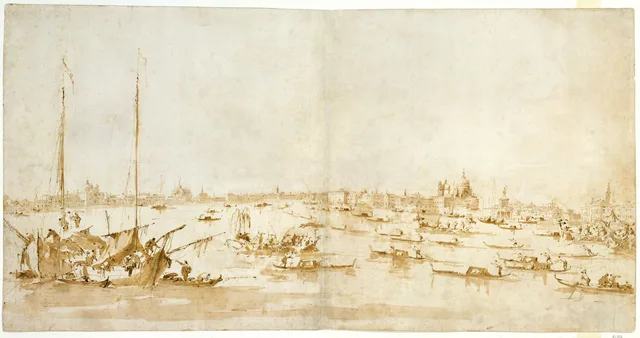
Questions to think about
- Look for itHow many little potted trees can you find set among the flower beds?
- Why?Why do you think Guardi covered the bottom of the picture with a big shadow?
- What about you?In crowded Venice, a large garden was a rare luxury. In cities packed with apartment buildings today, how much green space should be open for everyone to rest in?
Same period
Painted around the same time,
somewhere else
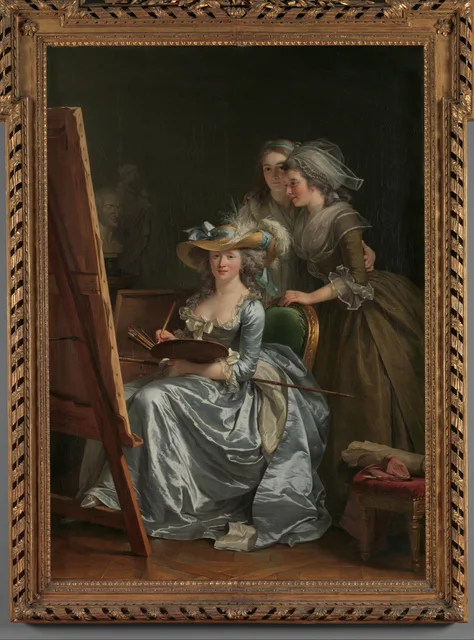 Self-Portrait with Two Pupils, Marie Gabrielle Capet (1761–1818) and Marie Marguerite Carraux de Rosemond (1765–1788)Adélaïde Labille-Guiard1785
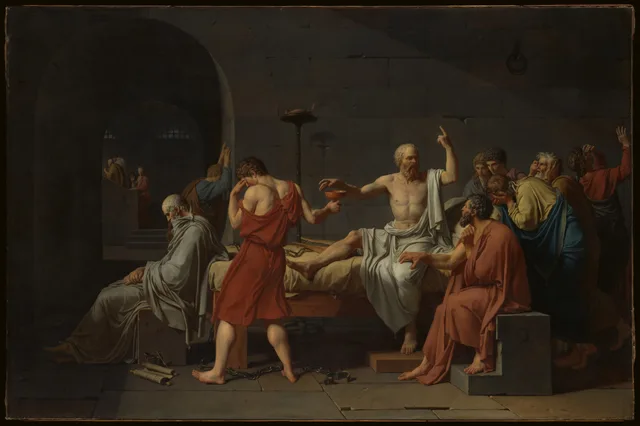 The Death of SocratesJacques Louis David1787
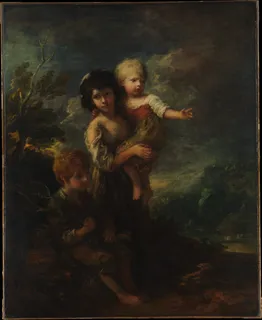 Cottage Children (The Wood Gatherers)Thomas Gainsborough1787
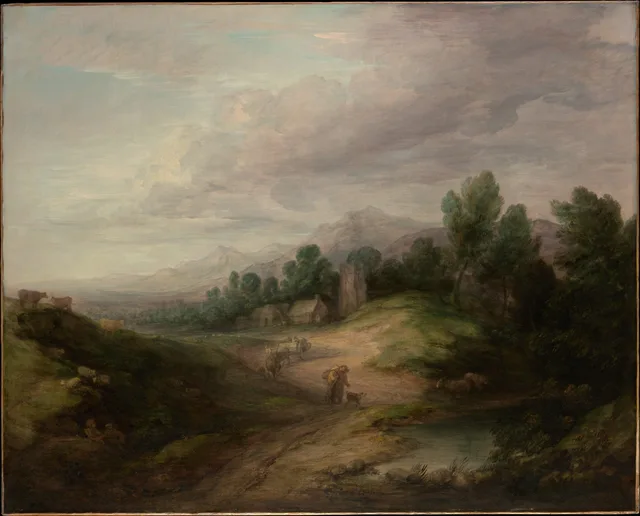 Wooded Upland LandscapeThomas Gainsboroughprobably 1783
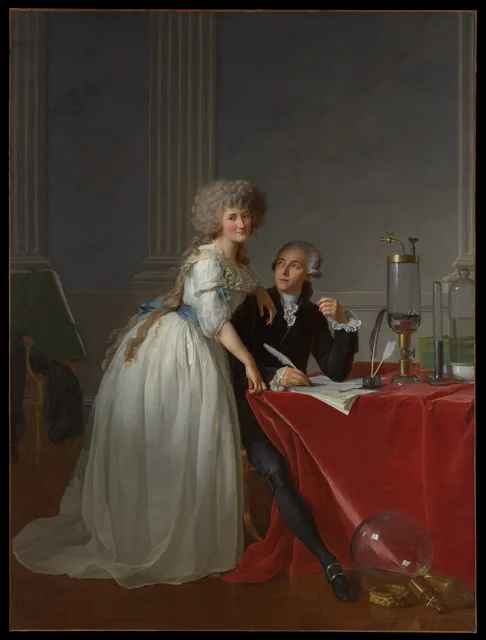 Antoine Laurent Lavoisier (1743–1794) and Marie Anne Lavoisier (Marie Anne Pierrette Paulze, 1758–1836)Jacques Louis David1788
 Queen CharlotteThomas Gainsborough1788
Too good to keep to yourself
This painting,
for someone who comes to mind
They open it at full size
and see every brushstroke.
About this work
- Artist
- Francesco Guardi · 1712–1793
- Date
- Late 1770s
- Medium
- Oil on canvas
- Size
- 48 × 78 cm
- Culture
- Italy
- Collection
- The Art Institute of Chicago
- Image
- Original long edge 8807px · shown at 2560px
- Original
- View on the museum's website ↗