 Pyeongye
Artwork · 18th century · Thomas Gainsborough
LeoTurn on Magnifier at the lower right and move slowly across the painting.
Full screen opens it edge to edge.Tap the painting to fill the screen.
Spread two fingers to look closer.
At a glance
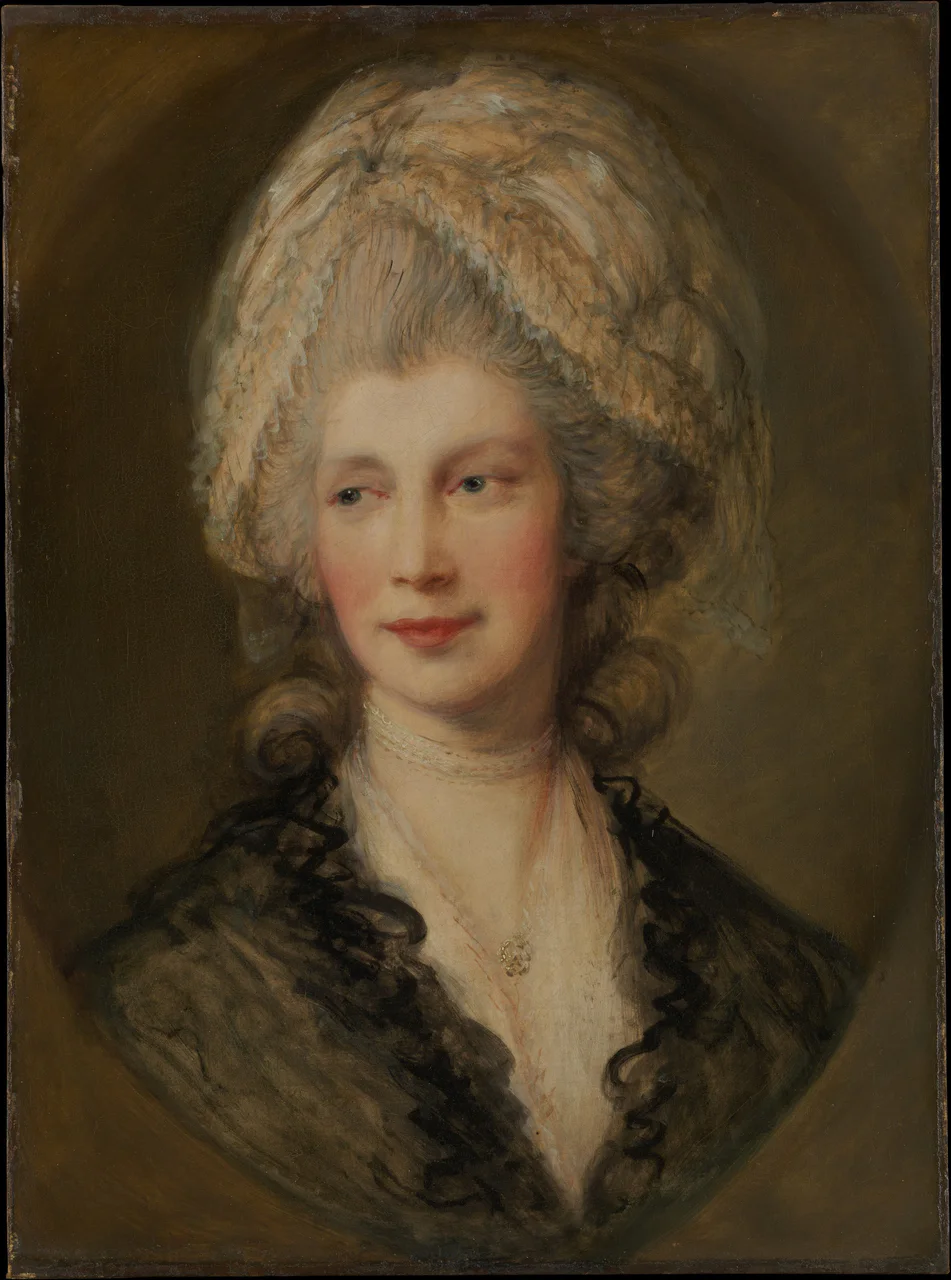
- Queen Charlotte of Britain, shown from the chest up inside a dark painted oval, wears her hair piled high under a white lace cap.
- The Met describes it as Thomas Gainsborough's own replica of the portrait of the queen he painted at Windsor Castle in 1782.
- Up close the paint is a scatter of loose strokes. Step back and they pull together into lace, pearls, and silk.
Reading the picture
5 places to look closer
Tap a number on the painting to jump to its note, or a close-up to see that spot in the whole picture.
Start with her face. Her gray-blue eyes do not meet ours. They slide off toward the left side of the picture. A light pink sits on her cheeks, and her lips are a clear, bright red. The corners of her mouth lift a little, as if someone just said something worth hearing.
Zoom in on the cap. Gainsborough did not paint a single thread of lace. He swept brown, gray, and white paint around in loose curls. Close up it looks like smoke. From a few steps away it becomes airy fabric and powdered hair.
Look at the band around her neck. Rows of tiny white and red dots run across it. Instead of drawing each pearl as a round bead, he tapped in points of paint and let them sparkle.
Follow the thin line down the middle of her chest to its end. A small jewel hangs there. It is only a few drops of white and a few brown dabs, yet it reads as a stone catching the light.
Now look at the black lace over her left shoulder, on our right. Gainsborough scribbled wavy black lines with a loaded brush to make the frilled edge. The brown ground showing through gives the feel of thin layers of fabric.
When it was painted
In September 1782, Gainsborough was fifty-five and a much sought-after portrait painter in London, living in a grand house on Pall Mall. That autumn he went to Windsor Castle. His job was to paint the king, George III, the thirty-eight-year-old Queen Charlotte, and thirteen of their children, each in a separate oval. There were fifteen portraits in all, and the Royal Collection believes the queen probably commissioned them.
It was a sad autumn at Windsor. The youngest prince, Alfred, had died that August, before his second birthday. Yet the series includes his portrait too. Royal records say Gainsborough painted it from remembrance.
The next spring, the fifteen ovals went to the Royal Academy exhibition. In an April 1783 letter, Gainsborough gave careful directions: hang them in three rows of five, at eye level. The Met explains that when those instructions were ignored, it led to his withdrawal from the Academy's exhibitions. Afterward the portraits hung in the queen's rooms at Buckingham House.
This canvas is a second version of the queen's portrait, painted by Gainsborough himself. It later joined the collection of the American banker Jules Bache and came to the Metropolitan Museum with his collection in 1949.
Look at her eyes once more. Gainsborough caught that sideways glance, a queen turning for just a moment, in a few thin strokes of paint.
More by the same painter
Questions to think about
- Look for itCan you count how many rows of white and red dots make up her necklace?
- Why?Why do you think Gainsborough left the lace and jewels as loose strokes instead of painting every detail?
- What about you?Gainsborough walked away from an exhibition over how his paintings were hung. When something you made is shown in a way you did not want, how far should you insist on doing it your way?
Same period
Painted around the same time,
somewhere else
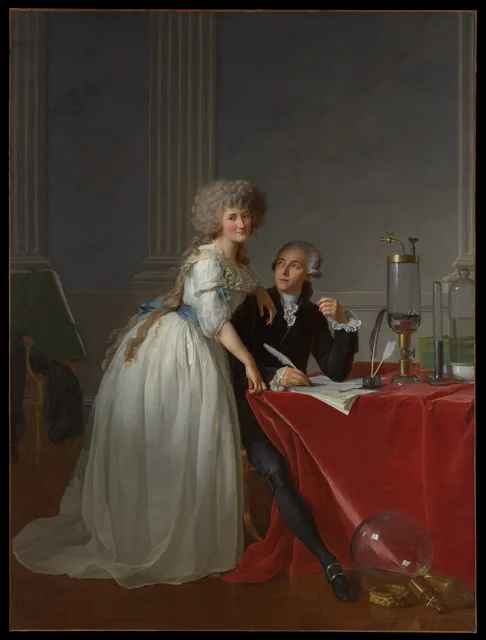 Antoine Laurent Lavoisier (1743–1794) and Marie Anne Lavoisier (Marie Anne Pierrette Paulze, 1758–1836)Jacques Louis David1788
 Condesa de Altamira and Her Daughter, María AgustinaGoya1787–88
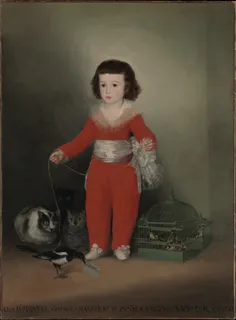 Manuel Osorio Manrique de Zuñiga (1784–1792)Goya1787–88
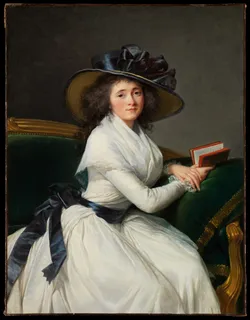 Comtesse de la Châtre (Marie Charlotte Louise Perrette Aglaé Bontemps, 1762–1848)Elisabeth Louise Vigée Le Brun1789
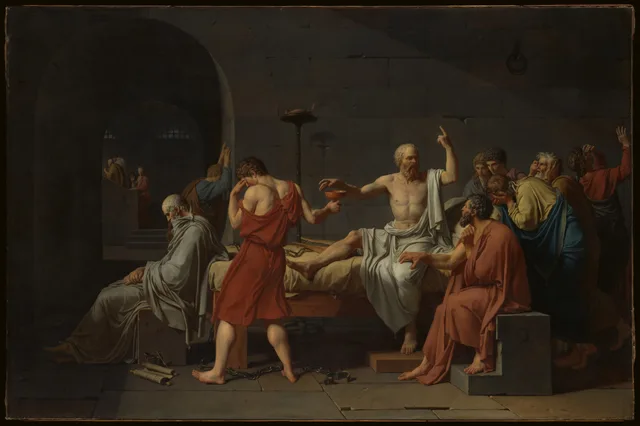 The Death of SocratesJacques Louis David1787
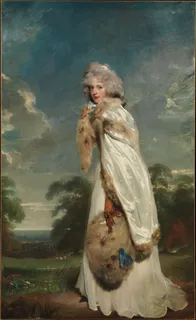 Elizabeth Farren (born about 1759, died 1829), Later Countess of DerbySir Thomas Lawrence1790
Too good to keep to yourself
This painting,
for someone who comes to mind
They open it at full size
and see every brushstroke.
About this work
- Artist
- Thomas Gainsborough · 1727–1788
- Date
- 1788
- Medium
- Oil on canvas
- Size
- 60.3 × 44.5 cm
- Collection
- The Metropolitan Museum of Art
- Image
- Original long edge 3868px · shown at 2560px
- Original
- View on the museum's website ↗