 Pyeongye
Artwork · 18th century · Thomas Gainsborough
LeoTurn on Magnifier at the lower right and move slowly across the painting.
Full screen opens it edge to edge.Tap the painting to fill the screen.
Spread two fingers to look closer.
At a glance
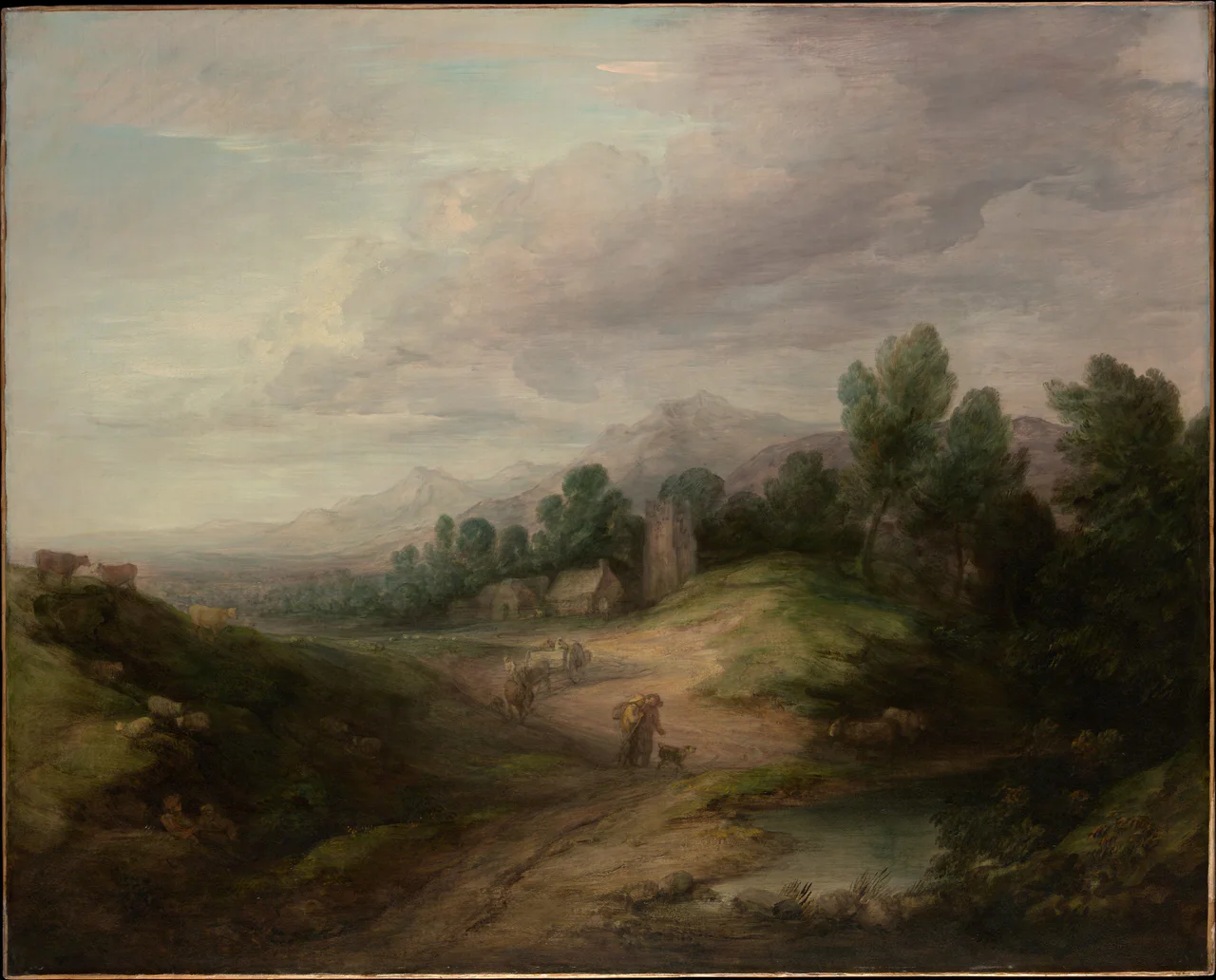
- A dirt road winds through woods past an old tower and thatched cottages, with mountains in the distance and people, cows, sheep, and a dog along the way.
- Thomas Gainsborough probably painted it in 1783. It is a big canvas, almost five feet wide.
- It is not a real place. Gainsborough invented it, so it shows the countryside he carried around in his head.
Reading the picture
5 places to look closer
Tap a number on the painting to jump to its note, or a close-up to see that spot in the whole picture.
Zoom in on the top of the hill at the left. Two cows stand nose to nose, and a pale third cow grazes a little lower down. Behind them, misty fields and mountains fade away. The cows tell you how high this hill really is.
Find the square tower among the trees in the middle. Its top is broken and ragged, like a ruin. In front of it, a thatched cottage with a sloping roof half hides behind the leaves. Neither the tower nor the cottage has a crisp outline. Gainsborough rubbed in browns and grays and let them blur.
Follow the road down a little and you will meet a cart. A horse pulls a two-wheeled wagon with someone sitting on top. The wheel is a single curved line, and the horse's legs are just a few drags of the brush.
Now come to the middle of the road. A traveler with a bundle on their back and a walking stick moves along beside a second figure, while a dog trots ahead with its head up. They stand on the brightest strip of ground in the whole picture, so your eye drifts straight to them.
Look at the pool in the lower right. A little sky light glows on the dark water, and a few reed heads poke up at the edge, each made with a flick of the brush tip. The rocks and grass in front are pressed down into shadow, which makes the far mountains look brighter.
When it was painted
In the summer of 1783, Gainsborough, then fifty-six, set out with a friend from Suffolk for the Lake District in the northwest of England. Back in London he was busy painting the royal family and the aristocracy. The Met believes he painted this landscape soon after he came home from that trip.
But this is not a portrait of any spot in the Lakes. According to the Met, the scene is imaginary, and it and the chalk sketch it grew from were probably composed in his London studio. That chalk sketch survives in the collection at Corsham Court in Wiltshire.
Portraits paid the bills, but landscape was Gainsborough's love. In a letter to his friend, the musician William Jackson, he said he was sick of portraits and longed to take his viola da gamba off to some village and paint landscapes instead.
He also had an unusual way of building a landscape indoors. In 1788, the year Gainsborough died, Joshua Reynolds, president of the Royal Academy, described it in a lecture. Gainsborough would arrange broken stones, dried plants, and bits of mirror on a table, then paint them enlarged into rocks, trees, and water.
The painting came to the Metropolitan Museum in 1906. Look again at the pool in the lower right. With Reynolds's story in mind, that glint of sky on the water looks a little like a piece of mirror set down on a tabletop.
More by the same painter
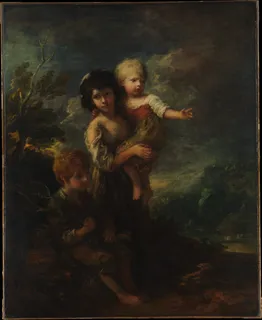
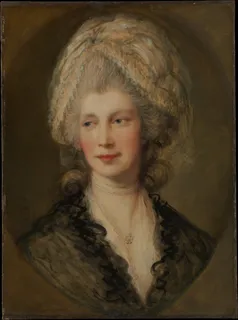
Questions to think about
- Look for itBesides the people and the dog on the road, how many animals can you find hidden in the picture?
- Why?Why might Gainsborough have invented a landscape instead of painting the Lake District he had just seen?
- What about you?Gainsborough earned his living with portraits but longed to paint landscapes. When the work that pays and the work you love are different, how do you keep room for both?
Same period
Painted around the same time,
somewhere else
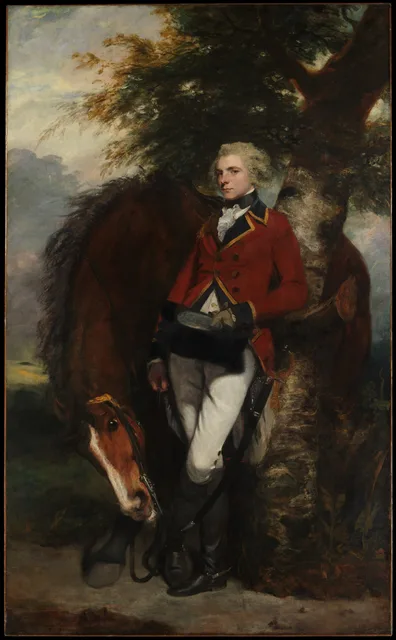 Captain George K. H. Coussmaker (1759–1801)Sir Joshua Reynolds1782
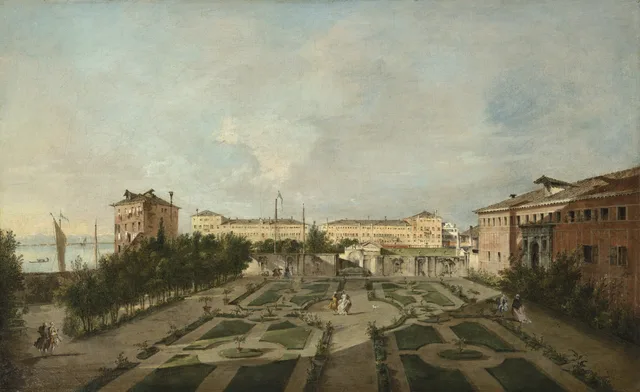 The Garden of Palazzo Contarini dal ZaffoFrancesco GuardiLate 1770s
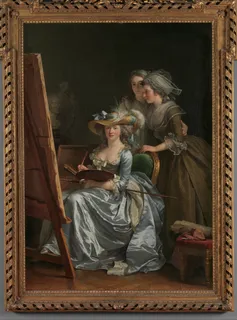 Self-Portrait with Two Pupils, Marie Gabrielle Capet (1761–1818) and Marie Marguerite Carraux de Rosemond (1765–1788)Adélaïde Labille-Guiard1785
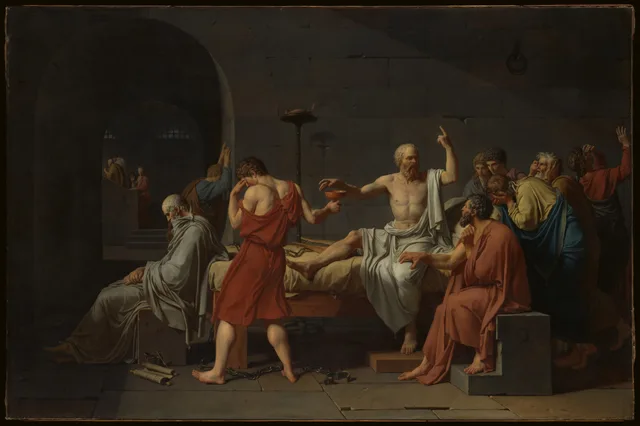 The Death of SocratesJacques Louis David1787
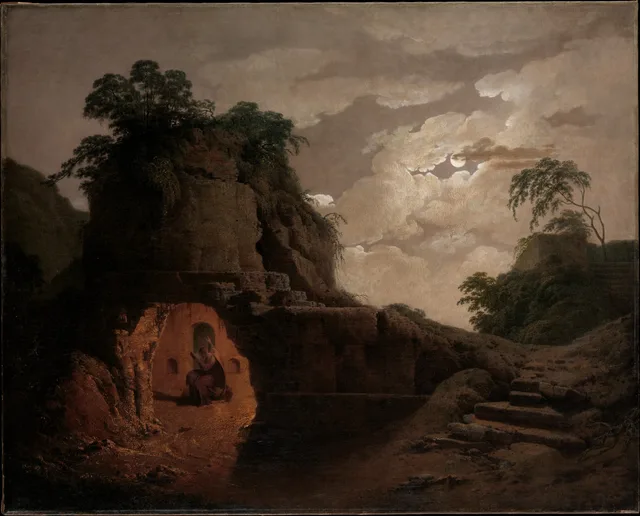 Virgil's Tomb by Moonlight, with Silius Italicus DeclaimingJoseph Wright1779
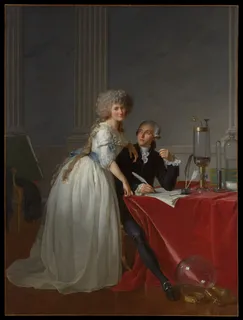 Antoine Laurent Lavoisier (1743–1794) and Marie Anne Lavoisier (Marie Anne Pierrette Paulze, 1758–1836)Jacques Louis David1788
Too good to keep to yourself
This painting,
for someone who comes to mind
They open it at full size
and see every brushstroke.
About this work
- Artist
- Thomas Gainsborough · 1727–1788
- Date
- probably 1783
- Medium
- Oil on canvas
- Size
- 120.3 × 147.6 cm
- Collection
- The Metropolitan Museum of Art
- Image
- Original long edge 3865px · shown at 2560px
- Original
- View on the museum's website ↗