 Pyeongye
Artwork · 19th century · Gustave Moreau
LeoTurn on Magnifier at the lower right and move slowly across the painting.
Full screen opens it edge to edge.Tap the painting to fill the screen.
Spread two fingers to look closer.
At a glance
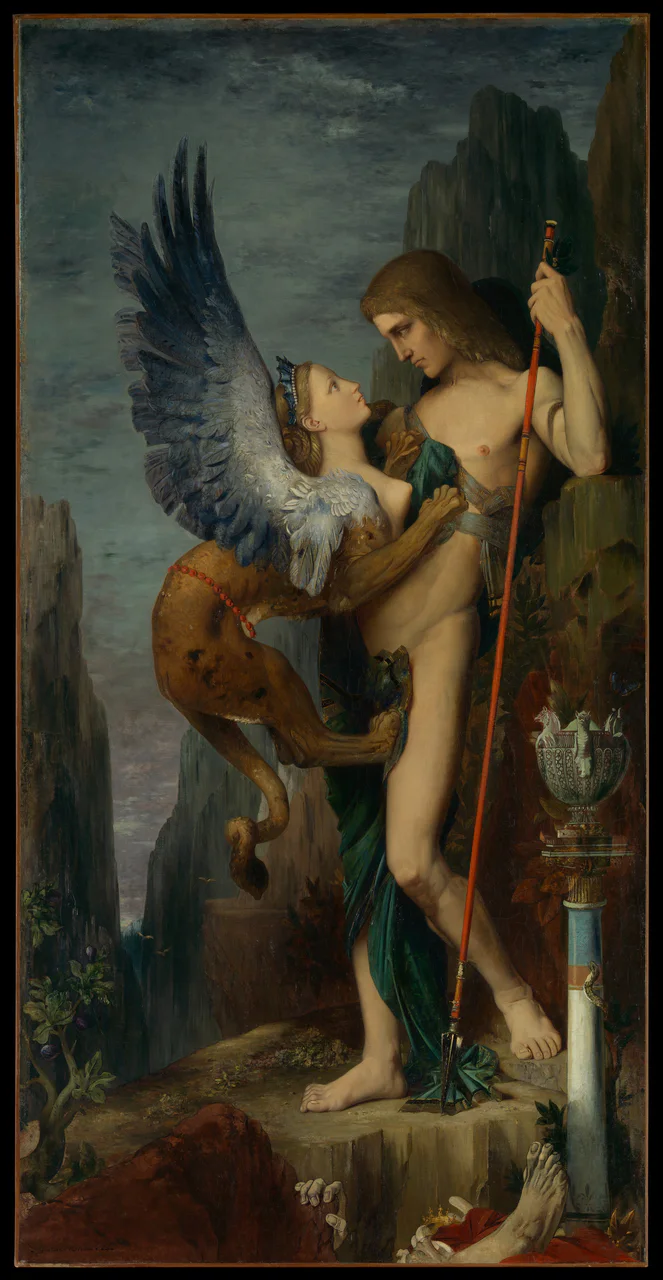
- On a rocky mountain pass, a winged Sphinx clings to the chest of the young Oedipus and stares straight up into his face.
- The French painter Gustave Moreau made it in 1864, on a canvas more than six and a half feet tall.
- Nobody has won yet. Moreau freezes the moment in the few inches between two faces.
Reading the picture
5 places to look closer
Tap a number on the painting to jump to its note, or a close-up to see that spot in the whole picture.
Zoom in on the two faces. The Sphinx, wearing a crown of pearls and blue points, tips her head back to look up. Oedipus lowers his eyes and holds her gaze. Their faces are very close, yet he looks calm, neither shocked nor afraid.
Follow the Sphinx's legs downward. One lion's paw presses against Oedipus's chest, and a hind paw grips his thigh. She has a lion's body, a woman's face and breasts, and bluish feathered wings on her back.
Now look at the very bottom. A hand and a foot stick out from between the rocks. On a red cloth lies a small gold crown. These are the remains of travelers who could not answer the riddle. Even a crowned king did not escape this place.
Zoom in on the vase on the column at the right. Its rim is decorated with the heads of winged monsters. In the dark background just above, a blue butterfly is hiding.
Look below at the white column. A snake with gold markings is wrapped around it and climbing upward, its head raised and its mouth open. Among all the beautiful objects, dangerous things are tucked away one by one.
When it was painted
In 1864, Gustave Moreau was thirty-eight and still not well known. That spring he sent this canvas, more than six and a half feet tall, to the Paris Salon. It changed his career.
He was born in Paris, the son of an architect. As a young man he competed for the Prix de Rome, the prize that sent young French artists to study in Rome, and did not win it. From 1857 he spent about two years in Italy copying the old masters, and there he became close to the young Edgar Degas.
The story comes from Greek myth. On the road to Thebes, the Sphinx asked travelers what walks on four legs in the morning, two at noon, and three in the evening, and she devoured anyone who failed. When Oedipus answered that it was a human being, she threw herself to her death. Jean-Auguste-Dominique Ingres had painted the scene about half a century earlier, but Moreau pressed the two bodies much closer together.
At the Salon the picture won a medal, and Prince Napoléon, a cousin of Emperor Napoleon III, bought it. Late in life Moreau taught at the École des Beaux-Arts, where his students included Henri Matisse and Georges Rouault, and his Paris house is now the Musée Gustave Moreau. This painting came to The Met in 1920 as a bequest from William H. Herriman.
Now look at Oedipus's hand. He grips a long red spear, but he does not raise it. This fight will be won with an answer, not a weapon.
The painter
Gustave Moreau
1826–1898
When painting this, the artist was about 38 years old
All paintings by Gustave Moreau →More by the same painter
Questions to think about
- Look for itCan you find the fallen gold crown at the bottom of the picture?
- Why?Why do you think Moreau chose a quiet moment of staring instead of the moment the Sphinx attacks?
- What about you?Oedipus got through the danger with an answer, not with force. Do you believe the hard problems we face today can be solved by thinking rather than by power?
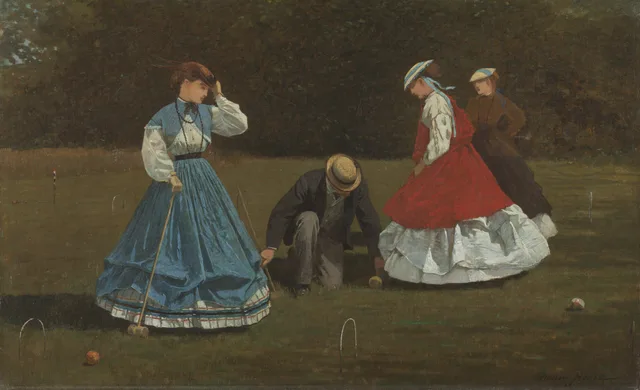
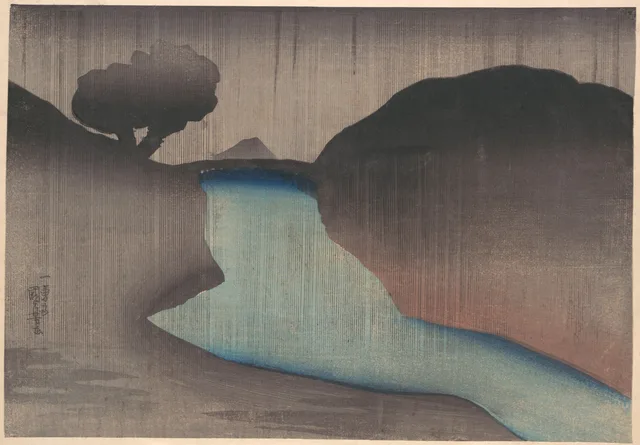
Same period
Painted around the same time,
somewhere else
Too good to keep to yourself
This painting,
for someone who comes to mind
They open it at full size
and see every brushstroke.
About this work
- Artist
- Gustave Moreau · 1826–1898
- Date
- 1864
- Medium
- Oil on canvas
- Size
- 206.4 × 104.8 cm
- Collection
- The Metropolitan Museum of Art
- Image
- Original long edge 4000px · shown at 2560px
- Original
- View on the museum's website ↗