 Pyeongye
Artwork · 18th century · Sir Joshua Reynolds
LeoTurn on Magnifier at the lower right and move slowly across the painting.
Full screen opens it edge to edge.Tap the painting to fill the screen.
Spread two fingers to look closer.
At a glance
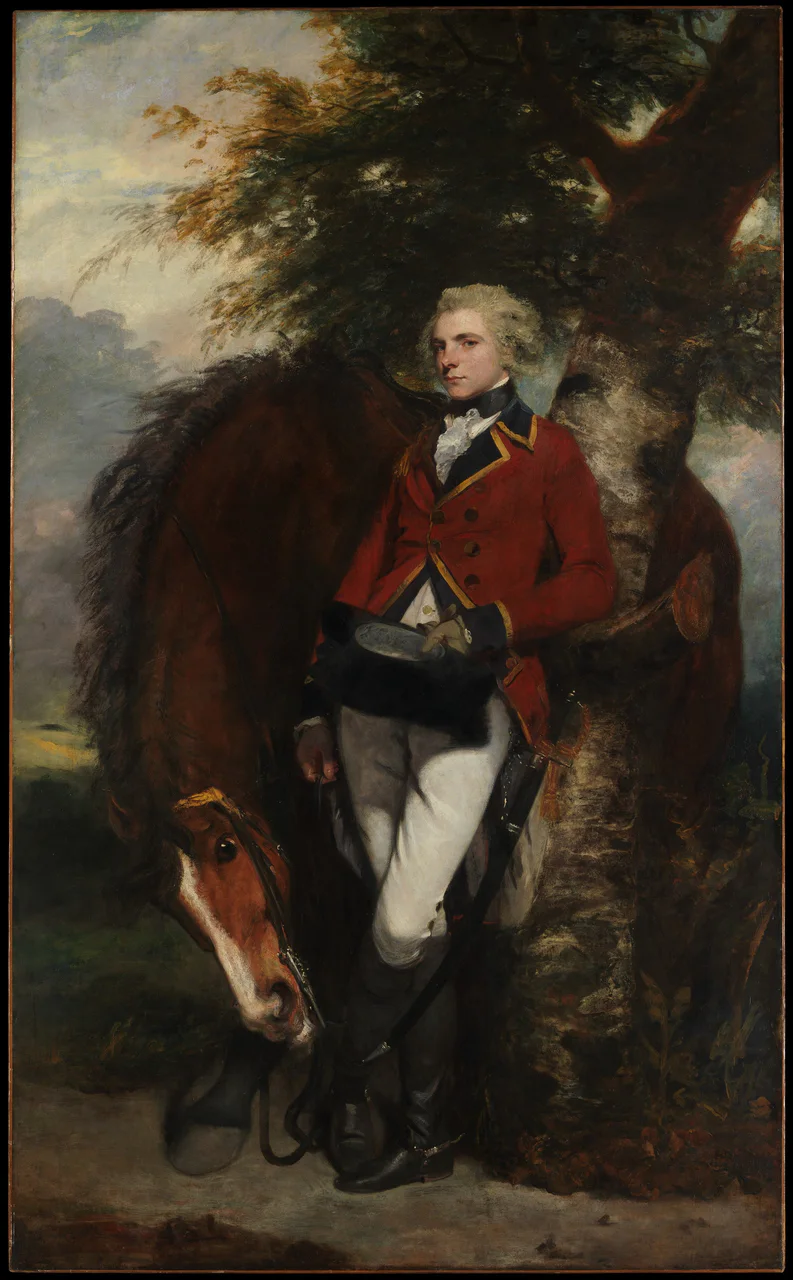
- A young officer in a red coat leans against a tree with his legs crossed, while his horse bows its head deeply beside him.
- Joshua Reynolds painted this portrait in 1782, when Captain George Coussmaker was in his early twenties.
- The canvas is nearly eight feet tall and shows man and horse from head to hoof, so standing in front of it feels like meeting the officer in the woods.
Reading the picture
4 places to look closer
Tap a number on the painting to jump to its note, or a close-up to see that spot in the whole picture.
Zoom in on his face. His powdered hair is puffed up and pale, and a crumpled white lace frill sits at his throat. The collar of his red coat is dark blue edged with gold braid. He tilts his head slightly and looks at us out of the corner of his eye.
Look at his hands in front of his waist. He holds a black hat upside down, and its lining shines like silver. Over the hat lies a pair of light brown gloves he has just pulled off. He looks like a man who has only just stepped down from the saddle.
Zoom in on the horse's face at the lower left. A white stripe runs from its forehead down to its nose, and a small point of light gleams in its large eye. The metal fittings of the bridle glint beside its nose. The horse waits quietly beside its owner with its head lowered.
Look down at his feet. Black riding boots come up to just below the knee, and a spur is fixed to the heel. The shine on the leather is made with only a few quick strokes of the brush.
When it was painted
In February 1782, a young Guards officer walked into Reynolds's painting rooms on Leicester Fields in London. George Coussmaker was in his early twenties. He had joined the First Regiment of Foot Guards in 1776, still a teenager, and had been made a captain two years later.
The painter who greeted him was fifty-eight. Reynolds had been the first president of the Royal Academy since it opened in 1768, and for years he had lectured its students on the art of painting. He wanted portraits to carry the dignity of the old masters. Commissions from aristocrats and officers kept him constantly busy.
Even so, this commission stands out. Reynolds's own appointment books show that Coussmaker came to sit for him twenty-one times between February 9 and April 16. For a painter that much in demand, it was an unusually long run. The horse came in for sittings of its own, too.
Later that year Reynolds suffered a mild stroke, but he recovered and went back to work. In 1784 he became Principal Painter in Ordinary to the King. He lost the sight of his left eye in 1789, gave up painting, and died in 1792.
Coussmaker rose to lieutenant colonel and died in 1801, in his early forties. The portrait later went to the American collector William K. Vanderbilt, and it came to the Metropolitan Museum through his bequest in 1920.
Now look again at the horse at the lower left, with its head bowed and its eye catching the light. That is the same animal that stood patiently in a London studio, sitting after sitting, just like its owner.
The painter
Sir Joshua Reynolds
1723–1792
When painting this, the artist was about 59 years old
All paintings by Sir Joshua Reynolds →More by the same painter
Questions to think about
- Look for itCan you find the black sword scabbard and the gold tassel hanging to the right of his white breeches, in front of the tree trunk?
- Why?Why do you think Reynolds showed a soldier relaxing against a tree instead of in action?
- What about you?This officer is remembered as calm and stylish. When you choose a profile picture today, how close is the version of you that you want others to see to the way you really are?
Same period
Painted around the same time,
somewhere else
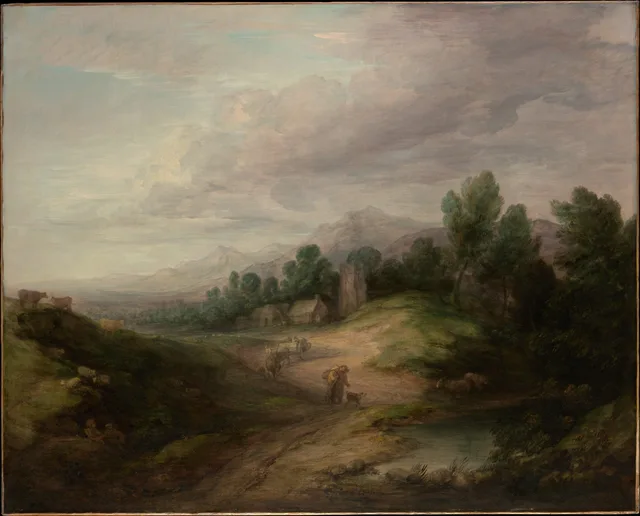 Wooded Upland LandscapeThomas Gainsboroughprobably 1783
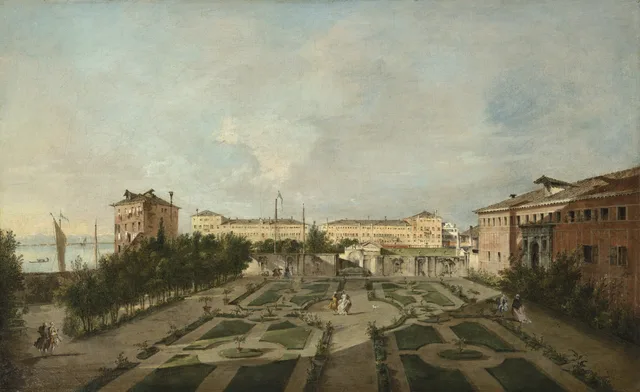 The Garden of Palazzo Contarini dal ZaffoFrancesco GuardiLate 1770s
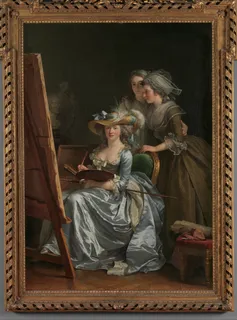 Self-Portrait with Two Pupils, Marie Gabrielle Capet (1761–1818) and Marie Marguerite Carraux de Rosemond (1765–1788)Adélaïde Labille-Guiard1785
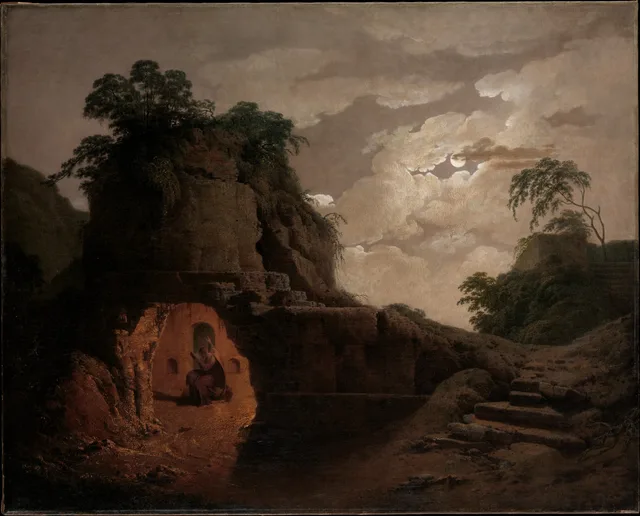 Virgil's Tomb by Moonlight, with Silius Italicus DeclaimingJoseph Wright1779
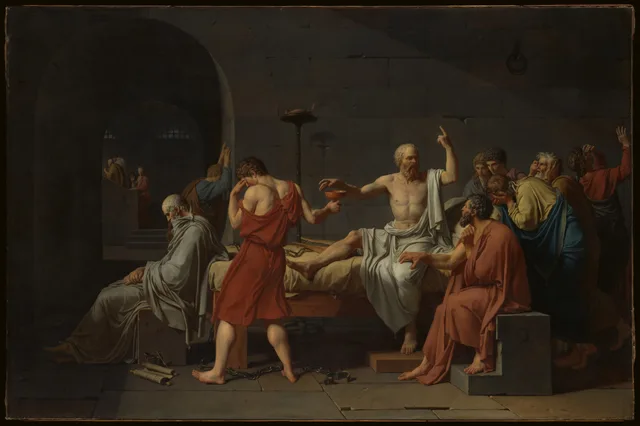 The Death of SocratesJacques Louis David1787
 Cottage Children (The Wood Gatherers)Thomas Gainsborough1787
Too good to keep to yourself
This painting,
for someone who comes to mind
They open it at full size
and see every brushstroke.
About this work
- Artist
- Sir Joshua Reynolds · 1723–1792
- Date
- 1782
- Medium
- Oil on canvas
- Size
- 238.1 × 145.4 cm
- Collection
- The Metropolitan Museum of Art
- Image
- Original long edge 3866px · shown at 2560px
- Original
- View on the museum's website ↗