 Pyeongye
Artwork · 18th century · Giovanni Domenico Tiepolo
LeoTurn on Magnifier at the lower right and move slowly across the painting.
Full screen opens it edge to edge.Tap the painting to fill the screen.
Spread two fingers to look closer.
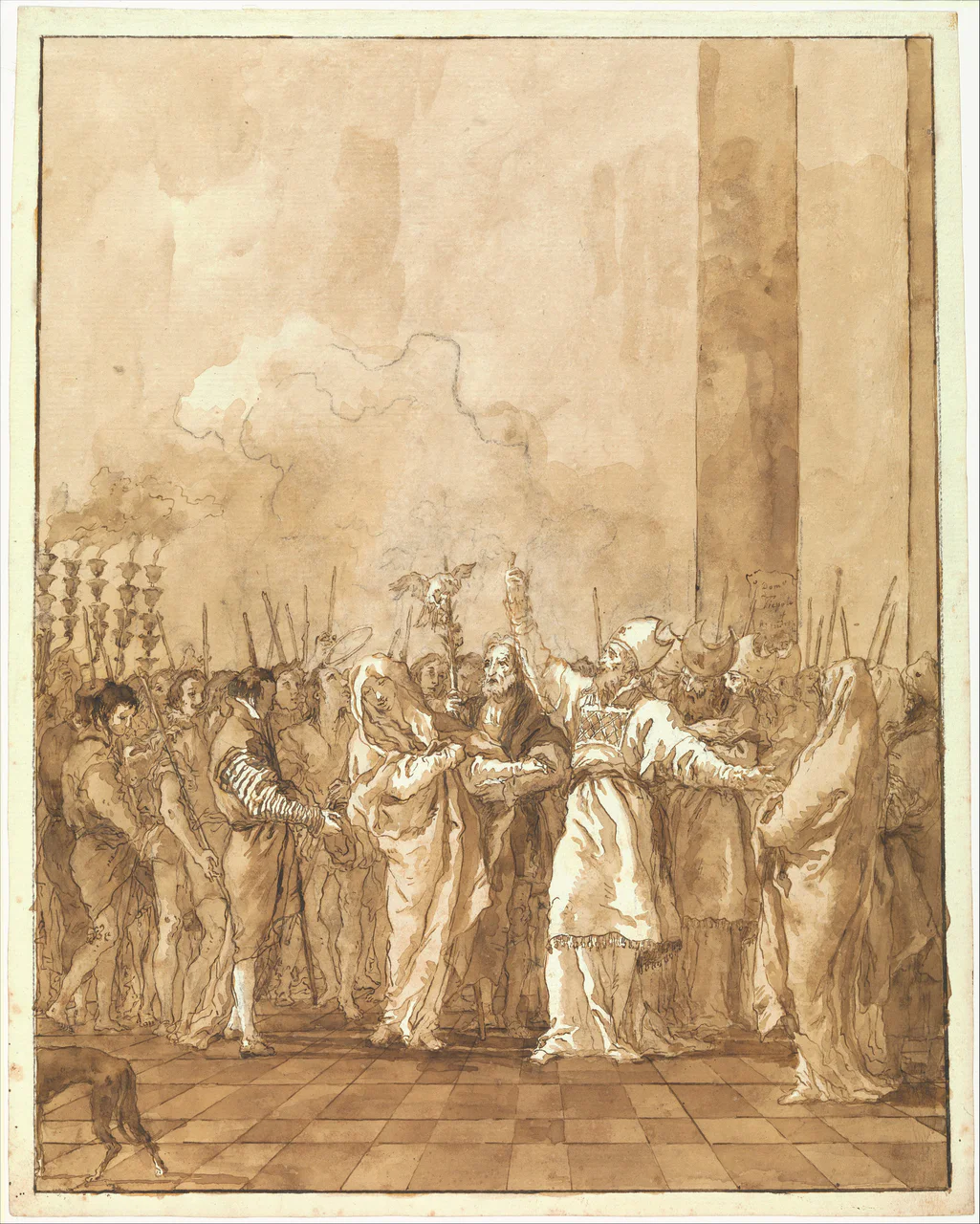
The Betrothal of the Virgin
Giovanni Domenico Tiepoloca. 1770Pen and brown ink, brown wash, over black chalk.48.3 × 38.6 cm
At a glance
- In a crowded temple, the young Mary and the elderly Joseph join hands before the high priest to be betrothed.
- The Venetian artist Giovanni Domenico Tiepolo drew it around 1770 in pen and brown ink on paper.
- There is no color at all. Dozens of people, smoke, and light come from one brown ink, thick or watered down.
Reading the picture
5 places to look closer
Tap a number on the painting to jump to its note, or a close-up to see that spot in the whole picture.
Begin with the hands at the center. Mary bows her head. White-bearded Joseph leans in. Around their joined hands, Tiepolo left the paper bare, with no wash at all. So the place where the two meet shines out from the brown.
Follow the tall pole rising above their heads. At the top, a dove spreads its wings. An old legend says that each suitor for Mary brought a staff to the temple. Only Joseph's staff burst into flower, and a dove came down to rest on it. That sign chose him as her husband.
On the right, the high priest wears a tall headdress and flings one arm toward the sky. A panel with a crisscross pattern covers his chest, and fringe hangs from the hem of his robe. A handful of pen lines and a pale wash are enough to make the heavy cloth fold and fall.
Now look to the upper left. Cup-shaped vessels are stacked in tiers on long poles, and smoke curls up from the top ones. The smoke drifts into the clouds and fills the temple with a hazy glow.
Finally, check the bottom left edge. A dog stands there, tail hanging. It has nothing to do with the ceremony. That small, ordinary animal makes the holy moment feel like something happening among real people.
When it was painted
Madrid, spring 1770. Domenico Tiepolo, now in his early forties, has just lost his father, Giovanni Battista Tiepolo. The father was the famous Venetian painter of ceilings and walls. The son had worked at his side since he was young.
Father and son had traveled far together. In the early 1750s they painted frescoes in the bishop's palace at Würzburg in Germany. In 1762 they went to Spain with Domenico's younger brother Lorenzo, to paint ceilings in the royal palace in Madrid. The father died there, still at work in Spain.
After his father's death, Domenico went home to Venice, and this drawing dates from around that time. He first sketched loosely in black chalk. Then he drew over it in pen and brown ink and brushed on a thin brown wash. The faint gray squiggles left in the sky are the chalk underneath.
Domenico lived and worked for more than thirty years after that. Late in life he covered the walls of the family villa with scenes of Punchinello, the hook-nosed clown of Italian comedy, and those frescoes now hang in Ca' Rezzonico in Venice. He also drew the clown's whole life story in more than a hundred pen drawings.
In the twentieth century this sheet was acquired by the American collector Robert Lehman. Lehman built one of the largest private collections of Domenico's drawings, and his collection came to the Metropolitan Museum of Art in 1975. Look again beside the column on the right. There is the signature, Dom.o Tiepolo, his own first name shortened in front of the family name he shared with his father.
More by the same painter
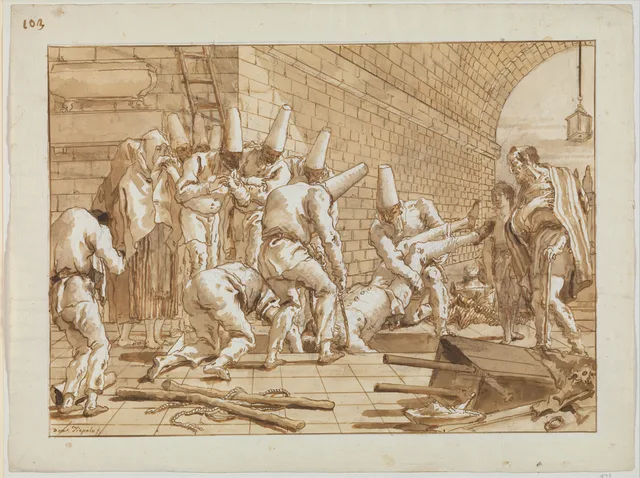
Questions to think about
- Look for itIn this big crowd, how many people are looking somewhere other than the ceremony?
- Why?Why would Tiepolo put a dog in the corner of such a solemn scene?
- What about you?Here a sign on a staff decided Mary's husband. Today, how much say should family or society have when someone chooses a partner?
Same period
Painted around the same time,
somewhere else
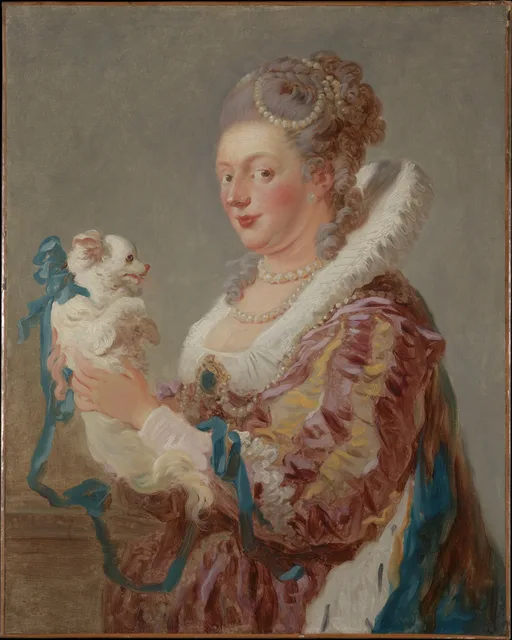 Marie Emilie Coignet de Courson (1716–1806) with a DogJean Honoré Fragonardca. 1769
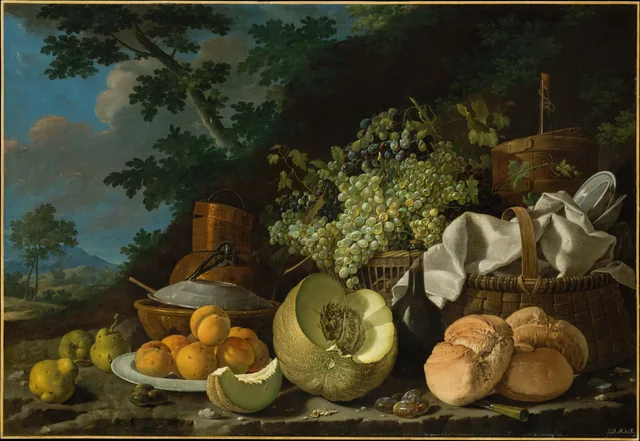 The Afternoon Meal (La Merienda)Luis Meléndezca. 1772
 Night Rain at the Double-Shelf Stand, from the series Eight Parlor Views (Zashiki hakkei)Suzuki Harunobuca. 1766
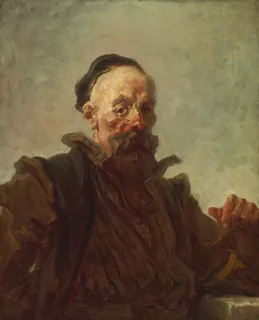 Portrait of a Man in CostumeJean Honoré Fragonardc. 1767–68
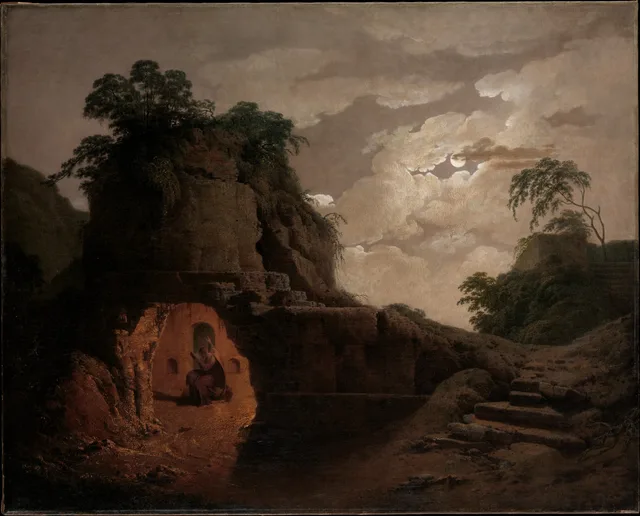 Virgil's Tomb by Moonlight, with Silius Italicus DeclaimingJoseph Wright1779
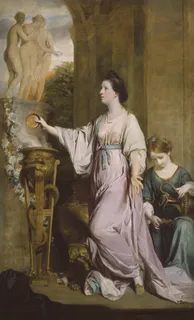 Lady Sarah Bunbury Sacrificing to the GracesSir Joshua Reynolds1763–65
Too good to keep to yourself
This painting,
for someone who comes to mind
They open it at full size
and see every brushstroke.
About this work
- Artist
- Giovanni Domenico Tiepolo · 1727–1804
- Date
- ca. 1770
- Medium
- Pen and brown ink, brown wash, over black chalk.
- Size
- 48.3 × 38.6 cm
- Collection
- The Metropolitan Museum of Art
- Image
- Original long edge 3866px · shown at 2560px
- Original
- View on the museum's website ↗