Pyeongye

Painters · 19th century
Claude Monet
1840–1926
A French painter who painted the same haystacks and the same pond again and again, in changing hours and weather, to follow how light transforms what we see.
Scenes from a life
The life of Claude Monet,
scene by scene
- 1858Le Havre
Claude was born in Paris in 1840 but grew up in Le Havre, a port town on the Normandy coast. As a teenager he earned pocket money selling caricatures that poked fun at local people. In the shop where they were displayed, he met the landscape painter Eugène Boudin. Boudin took the boy outdoors and showed him how to paint the sky and the sea while looking right at them.
- 1869La Grenouillère
At La Grenouillère, a bathing spot on the Seine, two young painters set up their easels side by side: Monet and Renoir. Both were short of money, and both were trying to catch the light flickering on the water by painting the same view together. Monet broke the ripples into short, thick dabs of paint. The next year he married Camille Doncieux, who had long been his model.
- 1874Paris
In the spring of 1874, artists working outside the Salon put on their own exhibition. Monet showed Impression, Sunrise, a view of Le Havre harbor in the early morning. A critic mocked the title and called the whole group Impressionists. The name meant as a joke stuck, and it became their name.
- 1877Paris
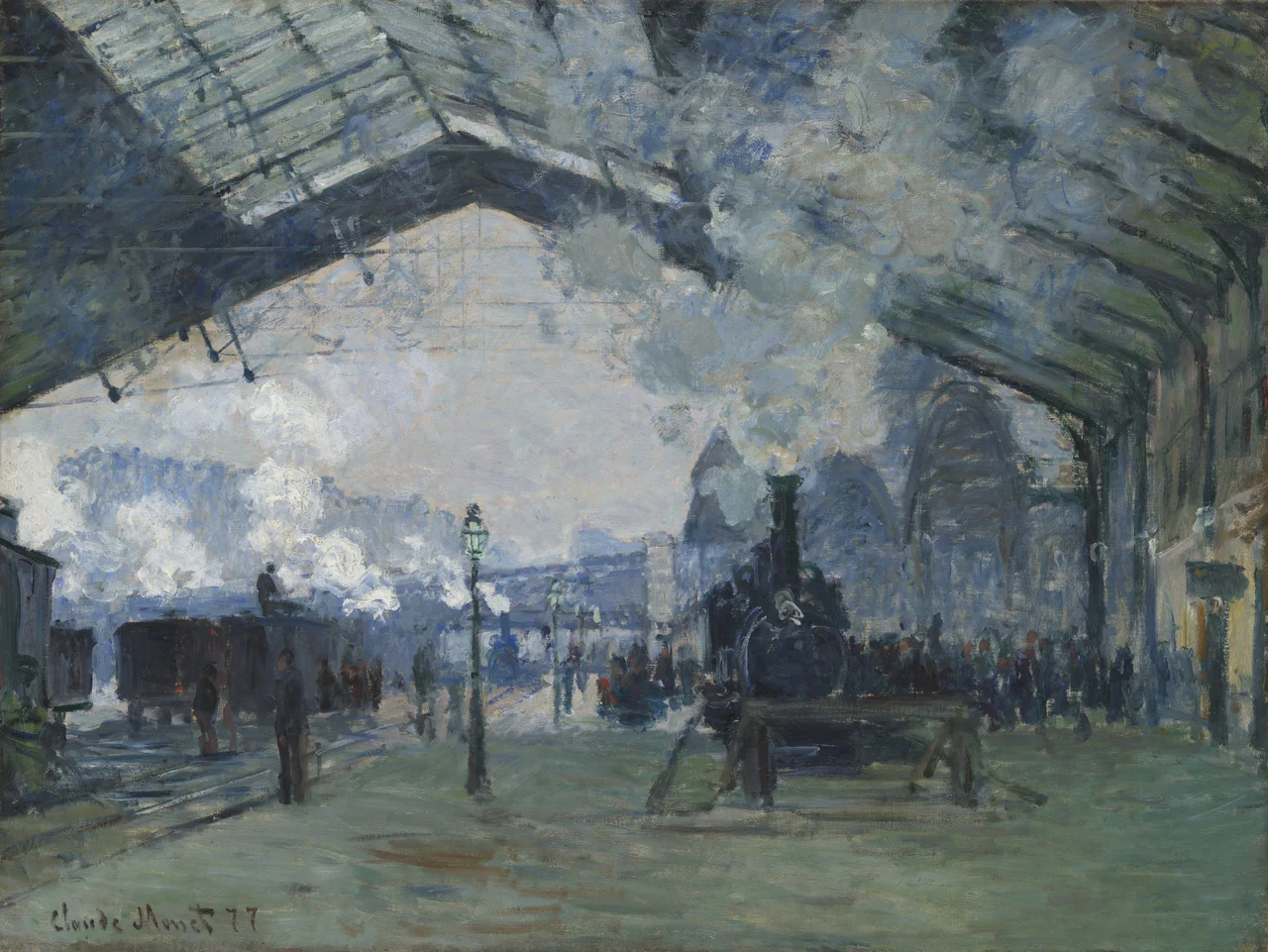
Monet stepped under the glass-and-iron roof of the Gare Saint-Lazare in Paris and painted the station twelve times. He showed eight of those canvases at the third Impressionist exhibition that year. In Arrival of the Normandy Train, Gare Saint-Lazare, smoke from the locomotive gets trapped under the roof and billows outward, while daylight from the glass panels cuts through it. Look at the lower left corner: the signature ends with the year, 77.
 Painted around this timeArrival of the Normandy Train, Gare Saint-Lazare
- 1879Vétheuil
In Vétheuil, a village on the Seine, Camille died at thirty-two. Monet was left with two young sons. In these hard years he shared a household with the Hoschedé family. Alice Hoschedé later became his second wife.
- 1891Paris
In 1883 Monet rented a house in Giverny, a village west of Paris, and in 1890 he bought it. In the field right by the house stood stacks of wheat fifteen to twenty feet tall. He set up several easels in the field and switched canvases as the light changed. In May 1891, fifteen of these paintings hung side by side in one small room at the Durand-Ruel gallery in Paris, and the show was a huge success. In Stacks of Wheat (End of Summer), look at the long blue shadows stretching from the two stacks. The sun is low in the sky.
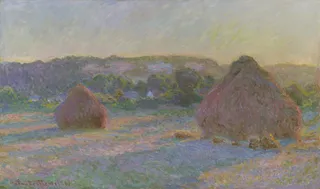 Painted around this timeStacks of Wheat (End of Summer)
- 1906Giverny
In 1893, Monet dug a pond beside his house and planted water lilies. For the next twenty-some years this water garden was his main subject, and he made around 250 paintings of water lilies. Water Lilies from 1906 is nearly square. There is no shore and no sky, only the surface of the water. What floats in the middle of the blue is a reflection of trees and clouds. The lily pads gather at the lower left and upper right, opening a watery path between them.
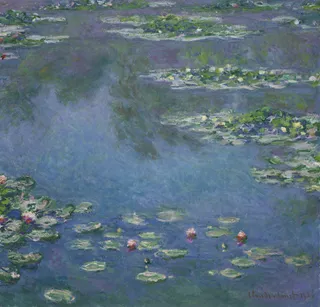 Painted around this timeWater Lilies
- 1926Giverny
In old age, cataracts made it hard for Monet to see color properly. He had an operation in 1923 and kept painting afterward. He decided to give a set of enormous water lily murals to the French state, to be installed at the Musée de l'Orangerie in Paris. Monet died at Giverny in December 1926, at eighty-six. The following year the murals went on view in two oval rooms at the Orangerie.
People around them
- Eugène Boudinthe landscape painter who showed the teenage Monet how to paint outdoors in Le Havre.
- Pierre-Auguste Renoira friend who painted beside him at La Grenouillère when both were young.
- Camille Doncieuxhis first wife and the model for many of his pictures, who died in 1879.
- Alice Hoschedéthe mother of the family he lived with after Camille's death, who became his second wife in 1892.
- Paul Durand-Ruelthe dealer who bought and exhibited the Impressionists' work and staged the 1891 haystack show.
- Georges Clemenceauan old friend and former French prime minister who helped arrange the gift of the water lily murals to the state.
Works
Paintings by
Claude Monet on Pyeongye
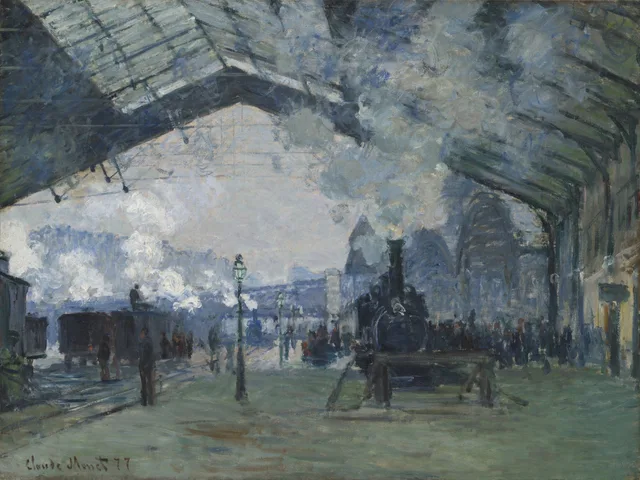 Arrival of the Normandy Train, Gare Saint-Lazare1877
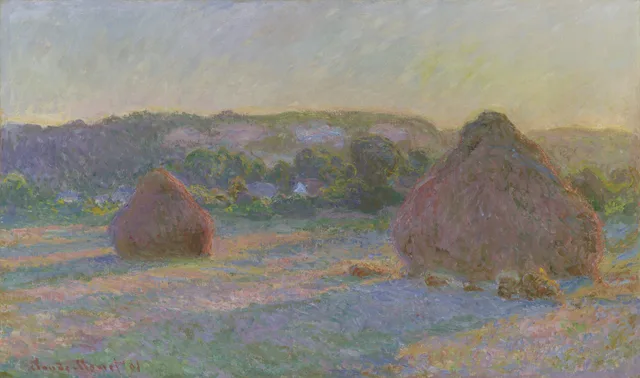 Stacks of Wheat (End of Summer)1890–91
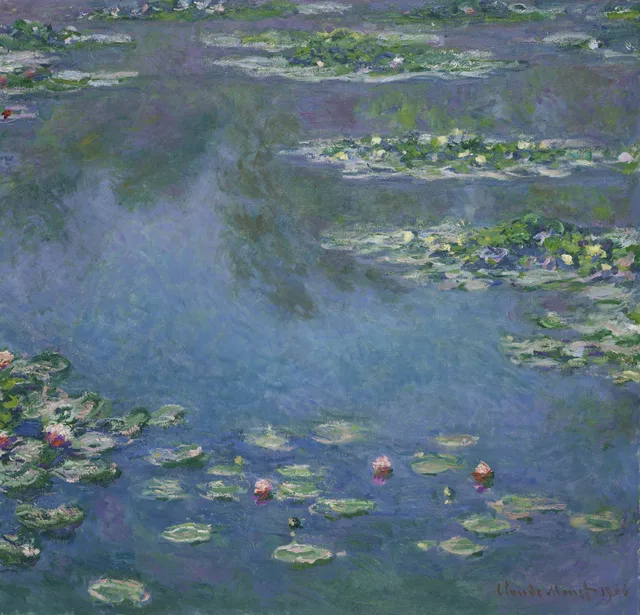 Water Lilies1906
Hidden stories in Claude Monet's paintings
Contemporaries