 Pyeongye
Artwork · 19th century · Claude Monet
LeoTurn on Magnifier at the lower right and move slowly across the painting.
Full screen opens it edge to edge.Tap the painting to fill the screen.
Spread two fingers to look closer.
At a glance
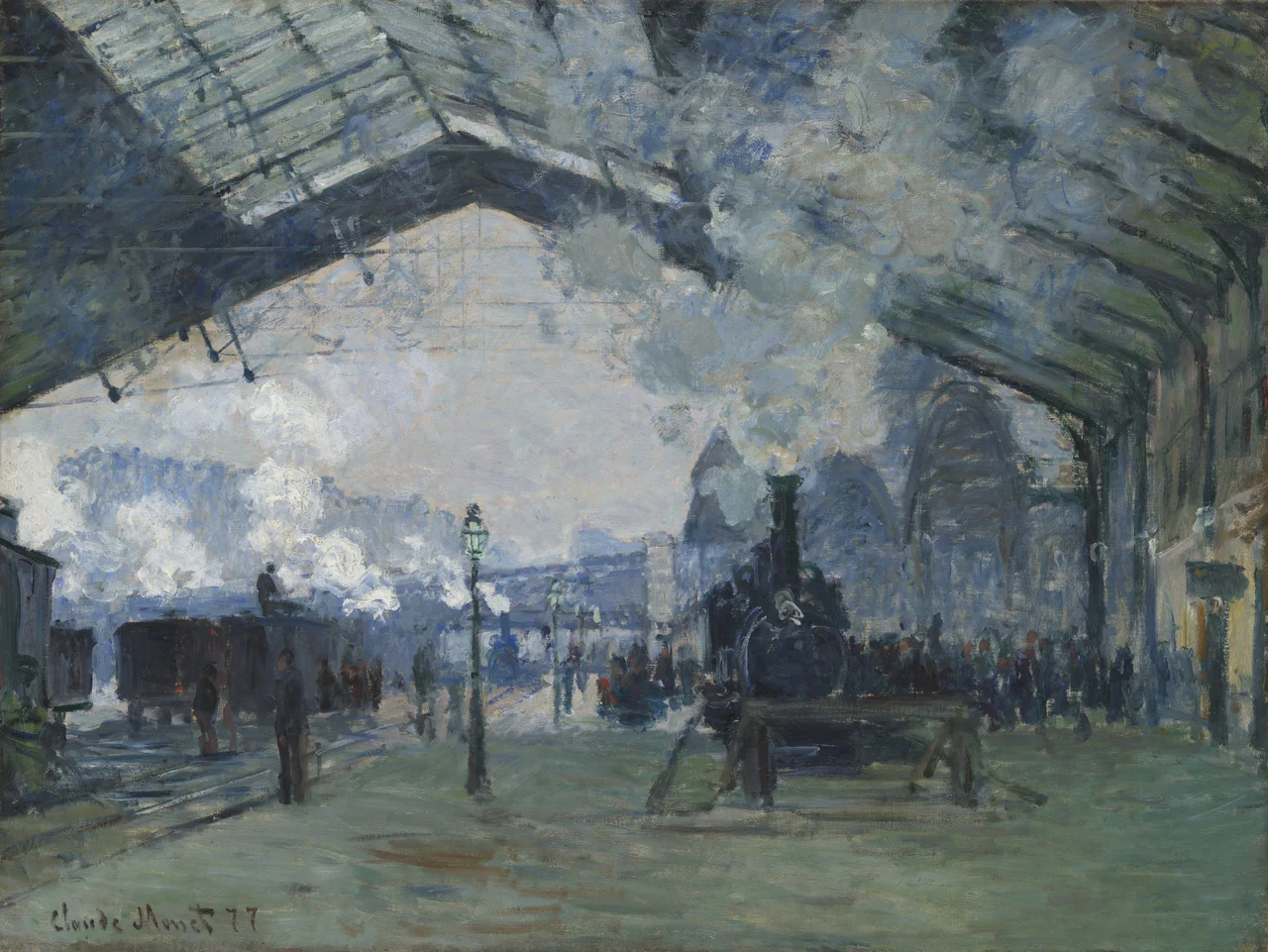
- A train from Normandy steams into the Gare Saint-Lazare in Paris, under the station's glass roof.
- The French painter Claude Monet painted it in 1877.
- It is one of twelve known paintings Monet made of this station, and with them he began his habit of painting the same subject again and again.
Reading the picture
5 places to look closer
Tap a number on the painting to jump to its note, or a close-up to see that spot in the whole picture.
Zoom in on the roof at the upper left. Slanted strokes stack up side by side to make panes of glass, and dark lines of iron cut across them. Sky light shows through the grays and pale greens. A huge shed of iron and glass like this was a new kind of building in the Paris of the time.
Look at the black locomotive right of center. Its round front and smokestack are laid in as a dark blue-black mass. One quick swipe of white on the front makes a flash of light, like escaping steam. The wheels and rails are not sharp at all, yet you can feel a heavy iron machine bearing down on you.
Zoom in on the lamppost in the middle. A greenish lamp sits on top of the post, and white steam billows up behind it. The steam is made of thick lumps of white paint. The Art Institute of Chicago explains that Monet was drawn to the mix of steam trapped under this roof and daylight pouring through its glass.
Look at the people on the platform at the right. Each person is a single tall brushstroke. Dabs of orange sit on top of them like faces or hats. Passengers just off the train and people waiting for them crowd together in one bustling mass.
Zoom in on the lower left corner. On the platform floor you can read the signature Claude Monet 77. The 77 is short for 1877.
When it was painted
In January 1877, Monet, then thirty-six, rented a small room on the rue Moncey, near the Gare Saint-Lazare. His home was in Argenteuil, a village on the Seine west of Paris, but he wanted a base in the city so he could paint the station. His fellow painter and supporter Gustave Caillebotte paid the rent.
The station was familiar ground for Monet. It was the starting point for trains between Paris and Normandy. Monet had grown up in Normandy, and in the 1860s he had learned to paint outdoors there. Trains to the villages west of Paris that the Impressionists loved to visit left from here as well.
Monet finished eight of his station paintings in time for the third Impressionist exhibition, held that April on the rue Le Peletier in Paris. The Art Institute believes they probably hung together in the same room. This painting appears in that exhibition's catalogue as number 97.
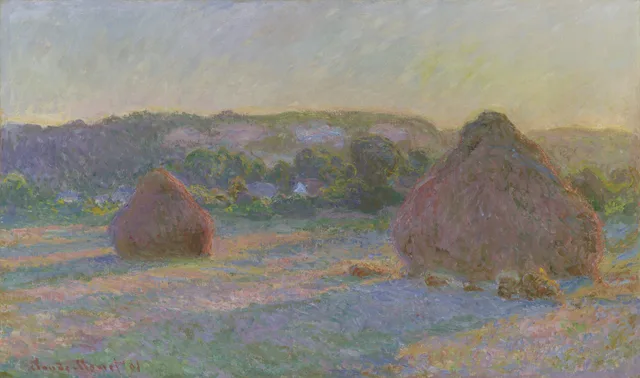
The station pictures were also Monet's last attempt to capture city life. After them he turned almost entirely to landscape, and he went on painting series of the same subject under changing light and weather. His famous stacks of wheat, also at the Art Institute, are paintings of that kind.
This painting came to the Art Institute of Chicago in 1933 with the collection of the Chicago collectors Martin A. Ryerson and his wife. Look again at the white steam under the roof. The painter gave as much paint to that drifting steam, caught between iron and glass, as he gave to the train itself.
The painter
Claude Monet
1840–1926
When painting this, the artist was about 37 years old
All paintings by Claude Monet →More by the same painter
Hidden stories in this painting
Questions to think about
- Look for itCan you find the buildings standing outside, beyond the roof?
- Why?Why do you think Monet half buried the locomotive in steam instead of painting it sharply?
- What about you?A hundred and fifty years ago, a train station was the newest, noisiest face of the city. Where is that face in your city today, and what would you want to paint there?
Same period
Painted around the same time,
somewhere else
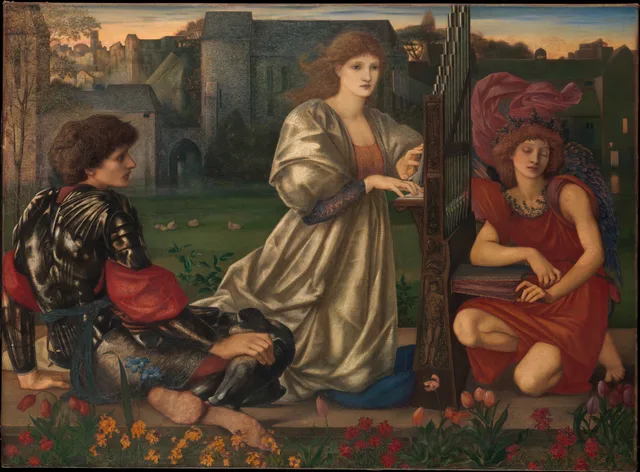 The Love SongSir Edward Burne-Jones1868–77
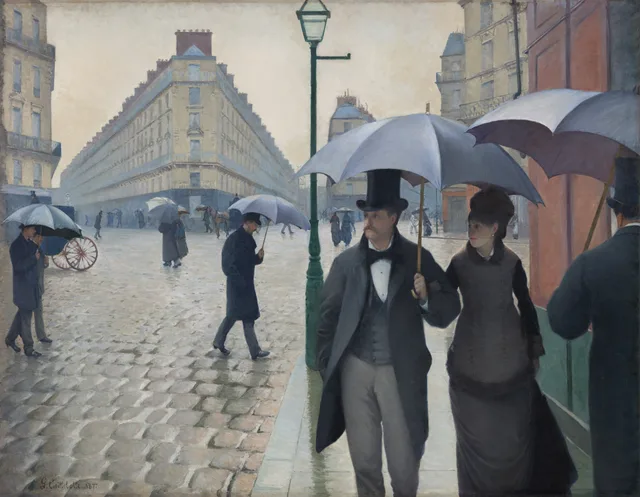 Paris Street; Rainy DayGustave Caillebotte1877
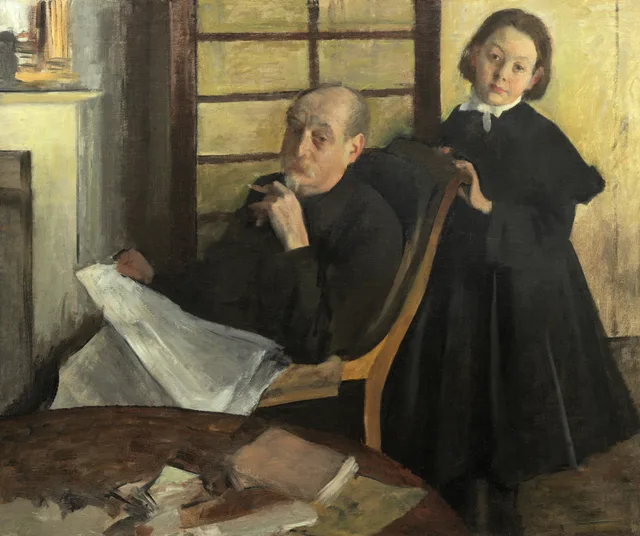 Henri Degas and His Niece Lucie Degas (The Artist's Uncle and Cousin)Edgar Degas1875–76
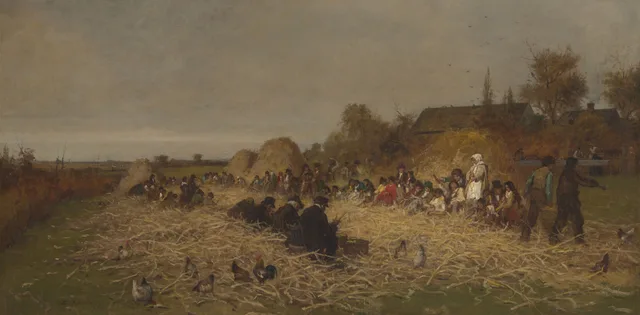 Husking Bee, Island of NantucketEastman Johnson1876
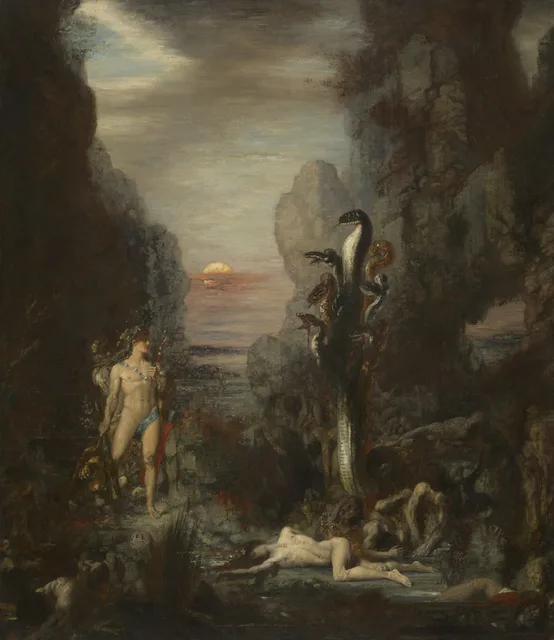 Hercules and the Lernaean HydraGustave Moreau1875–76
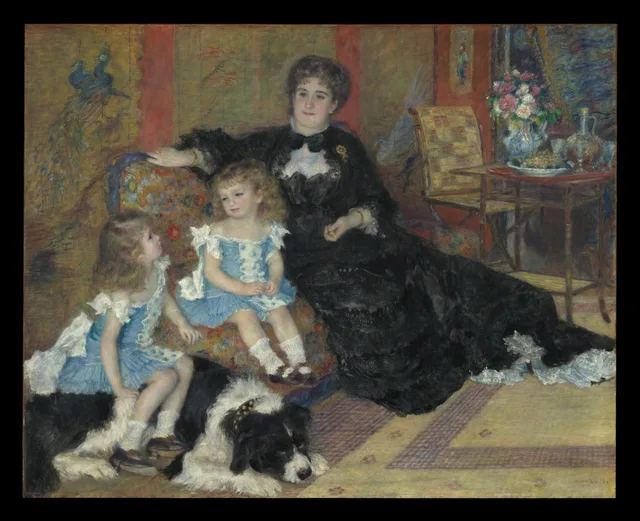 Madame Georges Charpentier (Marguerite-Louise Lemonnier, 1848–1904) and Her Children, Georgette-Berthe (1872–1945) and Paul-Emile-Charles (1875–1895)Auguste Renoir1878
Too good to keep to yourself
This painting,
for someone who comes to mind
They open it at full size
and see every brushstroke.
About this work
- Artist
- Claude Monet · 1840–1926
- Date
- 1877
- Medium
- Oil on canvas
- Size
- 60.3 × 80.2 cm
- Culture
- France
- Collection
- The Art Institute of Chicago
- Image
- Original long edge 6786px · shown at 2560px
- Original
- View on the museum's website ↗