Pyeongye
Painters · 17th century
Anthony van Dyck
1599–1641
A portrait painter who learned his trade in Antwerp beside Rubens, traveled through Italy, and in London painted the faces of the English royal family.
Scenes from a life
The life of Anthony van Dyck,
scene by scene
- 1609Antwerp
A ten-year-old boy named Anthony is entered in the books of the Antwerp painters' guild. The record says he is now the pupil of the painter Hendrick van Balen. His father, Frans, was a wealthy silk merchant. His mother had died two years before.
The boy moved fast. In February 1618, before his nineteenth birthday, he was made a master in the same guild. He could now run a workshop of his own.
- 1620Antwerp
In March 1620 Rubens signed a contract with the Jesuit church in Antwerp. He agreed to provide thirty-nine paintings for its ceilings. The contract said Rubens would make the small oil sketches, and the large canvases would be painted by van Dyck and other pupils.
So a twenty-one-year-old was named in his master's contract. Sadly, the whole ceiling was lost when fire swept through the church in 1718.
- 1621London
In the autumn of 1620 van Dyck crossed the sea to London. In February 1621 King James I paid him 100 pounds for a special service to the king. Nobody knows what that service was.
He did not stay long. In October 1621 he left Antwerp for Italy, and for the next six years he moved from city to city there.
- 1622Rome
In the summer of 1622 an English adventurer arrived in Rome with his wife. Sir Robert Shirley was traveling Europe as an envoy of Shah Abbas of Persia, and Teresia was at his side. Van Dyck painted them both, Sir Robert full-length in Persian dress.
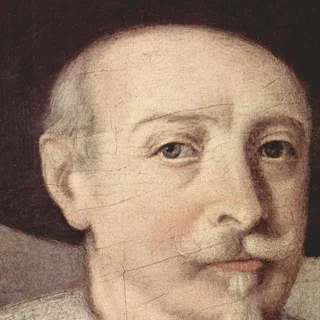
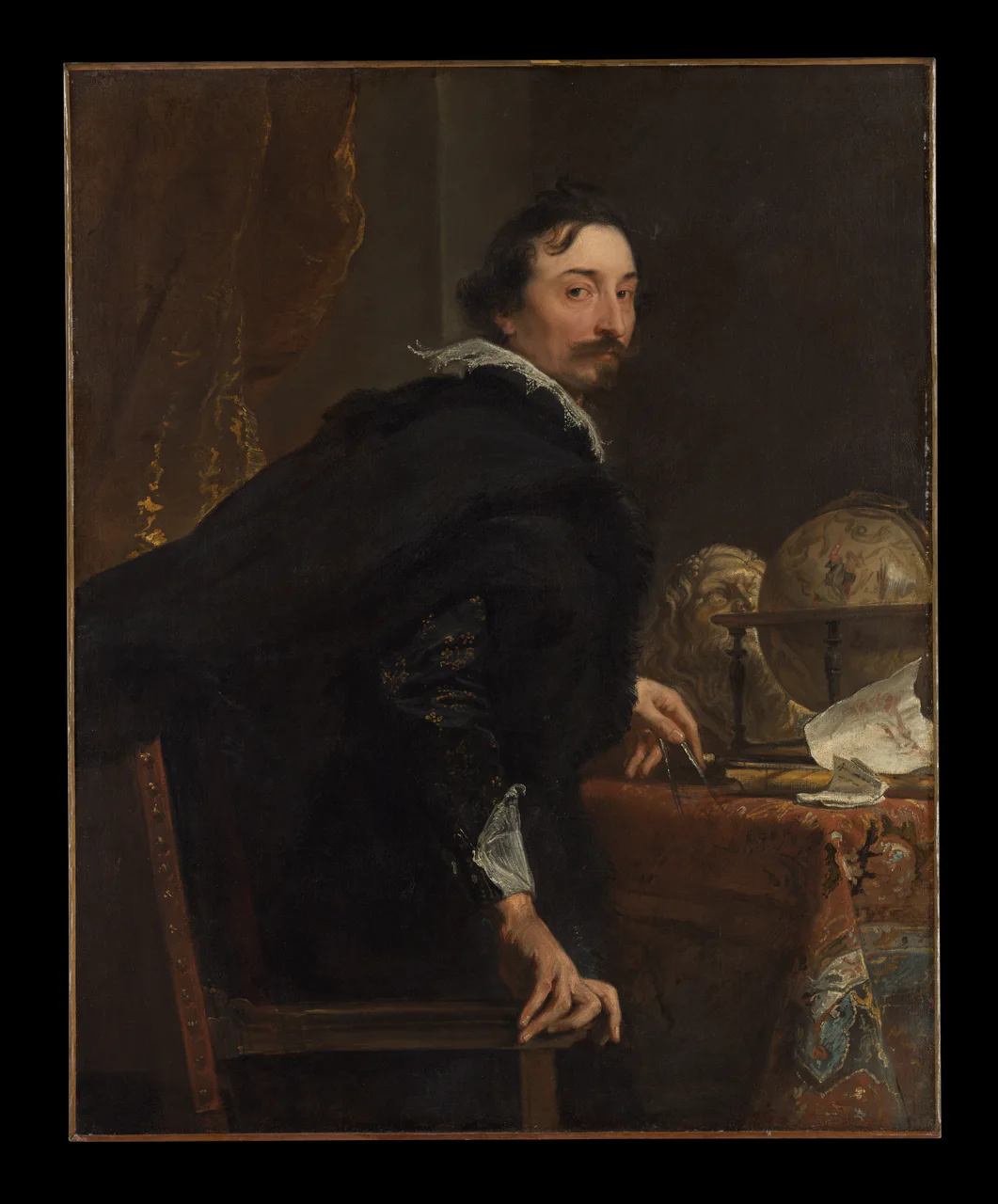
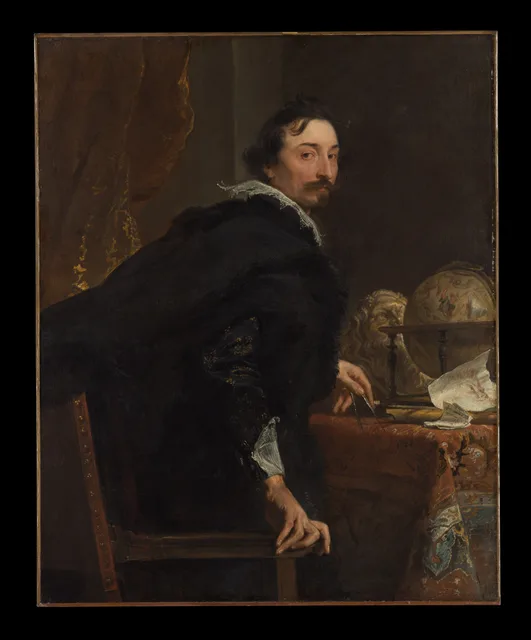
His small sketchbook still holds quick pen drawings of the couple and their party. Around the same time, in Venice, he painted Lucas van Uffel, a Flemish merchant who had settled there.
 Painted around this timeLucas van Uffel (died 1637)
- 1624Palermo
On July 12, 1624, the twenty-five-year-old van Dyck paid a visit in Palermo, Sicily. His host was Sofonisba Anguissola, an old painter who had once worked at the Spanish court.
He drew her face in his sketchbook and wrote down beside it what she told him about painting. He noted her age as ninety-six. That year plague spread through Palermo.
- 1632London
In the spring of 1632 van Dyck came back to London. This time Charles I had sent for him. In July the king knighted him and named him principal painter to the king and queen.
A pension of 200 pounds a year came with the post, and a house at Blackfriars by the Thames. He was now Sir Anthony van Dyck.
- 1636London
In 1636 a painting was shipped to the sculptor Gian Lorenzo Bernini in Rome. On one canvas van Dyck had painted Charles I three times: from the front, from the left, and from the right. With it, a sculptor who had never seen the king could carve his marble bust.
The bust reached London the next year, but it was lost when Whitehall Palace burned in 1698. In that same year of 1636, van Dyck painted Queen Henrietta Maria in yellow silk.
 Painted around this timeQueen Henrietta Maria
- 1641London
Around 1640 van Dyck married Mary Ruthven, a lady-in-waiting to the queen. In 1641 he went to Paris, but he came back to London very ill.
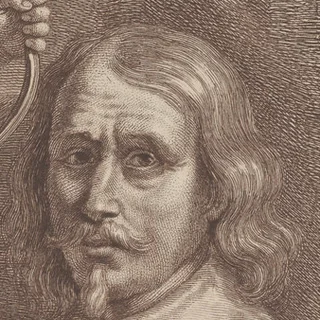
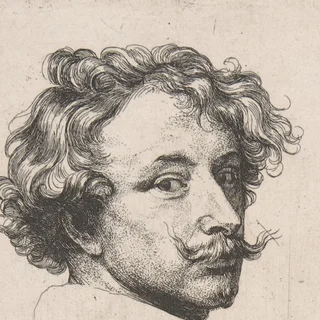
In early December his daughter Justiniana was born. A few days later, on December 9, van Dyck died at his house in Blackfriars at forty-two. He was buried in old St Paul's Cathedral, and his tomb burned with the church in the Great Fire of 1666. The self-portrait he had begun etching on a copper plate lasted much longer.
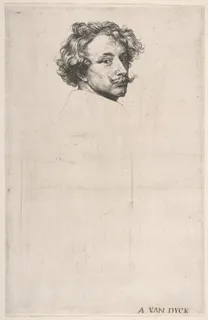 Painted around this timeSelf-Portrait, from "The Iconography"
People around them
- Hendrick van Balenhis first teacher in Antwerp, who took him on at ten.
- Peter Paul Rubensthe older Antwerp master in whose workshop the young van Dyck worked.
- Sofonisba Anguissolathe aged painter he visited in Palermo in 1624.
- Charles Ithe English king who knighted him and made him court painter.
- Mary Ruthvena lady-in-waiting to the queen who became his wife.
Works
Paintings by
Anthony van Dyck on Pyeongye
Contemporaries