 Pyeongye
Artwork · 17th century · Peter Paul Rubens
LeoTurn on Magnifier at the lower right and move slowly across the painting.
Full screen opens it edge to edge.Tap the painting to fill the screen.
Spread two fingers to look closer.
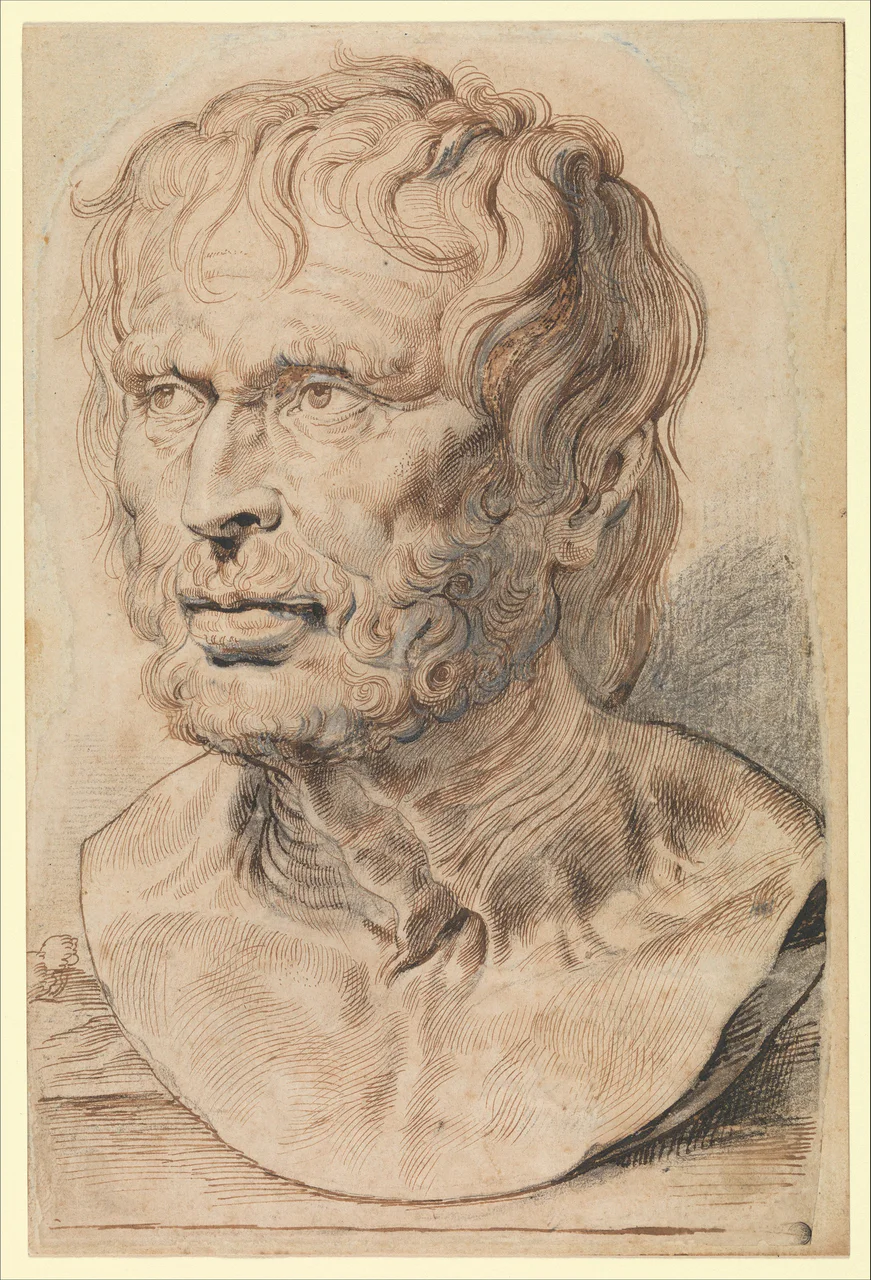
Bust of Pseudo-Seneca
Peter Paul Rubens1600–1626Pen and brown ink over black chalk heightened with white, with brush and gray ink26.5 × 17.7 cm
At a glance
- An ancient marble bust of an old man with wild hair, a ragged beard, and deep wrinkles, copied in pen.
- The Flemish painter Peter Paul Rubens drew it sometime between 1600 and 1626 in pen and brown ink, black chalk, and white.
- You can watch a cold piece of stone turn into a breathing human face under Rubens's pen.
Reading the picture
4 places to look closer
Tap a number on the painting to jump to its note, or a close-up to see that spot in the whole picture.
Zoom in on the brows and eyes. Short pen strokes packed above the brows make the forehead knot into a frown. On the right brow, brown wash and white make the ridge stand out. Rubens even drew in the pupils, so the face seems to glare at something instead of staring blankly like stone.
Look at the slightly open mouth. The gap between the lips is a thick band of dark ink. Around it, a thin layer of gray brushwork lays down shadow. It looks like a mouth catching its breath.
Move up into the hair. Each lock is a bundle of fine curving lines that flow like water. Where the curves crowd together the hair goes dark, and where they spread apart it turns light. The spacing of the lines alone gives the hair its volume.
Zoom in on the chest at the bottom. It is covered with short parallel lines that bend across the skin. Because they curve with the body, the chest seems to swell toward you. The rounded edge at the very bottom is where the sculpted bust is cut off.
When it was painted
In 1600, at twenty-two, Rubens left Antwerp for Italy. He became court painter to Vincenzo Gonzaga, Duke of Mantua, and on two long stays in Rome he drew ancient sculpture. During the second stay he shared a house with his older brother Philip, a scholar.
Philip had studied with Justus Lipsius, the scholar who revived the ideas of Seneca, the Stoic philosopher who had tutored the emperor Nero. Both brothers came to admire Seneca deeply. This face survives in several ancient Roman sculptures, and in their day people took it to be Seneca's. Rubens acquired a marble bust of it in Italy and brought it home.
In 1608 word came that his mother was gravely ill. He hurried back to Antwerp, but she died before he arrived. Then in 1611 Philip died too. Rubens painted The Four Philosophers, showing himself, Philip, and Lipsius together, with this bust in a wall niche behind them. In 1615 an Antwerp edition of Seneca's works prepared by Lipsius included an engraving of the bust based on a design by Rubens.
This sheet still holds an open question. The Met notes the suggestion that Rubens made the black chalk sketch and that an assistant may have added the pen work on top. Its date is given broadly, between 1600 and 1626. The drawing came to the museum in 1975 with the Robert Lehman Collection.
Then, in 1813, a portrait inscribed with Seneca's name turned up. It showed a different man. That is why this face is now called Pseudo-Seneca, the "false Seneca." Look again at the knotted brow the Rubens brothers once took for their hero's.
Questions to think about
- Look for itWhere on the face are the pen lines packed most tightly together?
- Why?Why do you think Rubens drew clear pupils into the eyes of a white marble statue?
- What about you?For centuries people were sure this face was Seneca. What is something we are sure about today that might one day turn out to be wrong?
Same period
Painted around the same time,
somewhere else
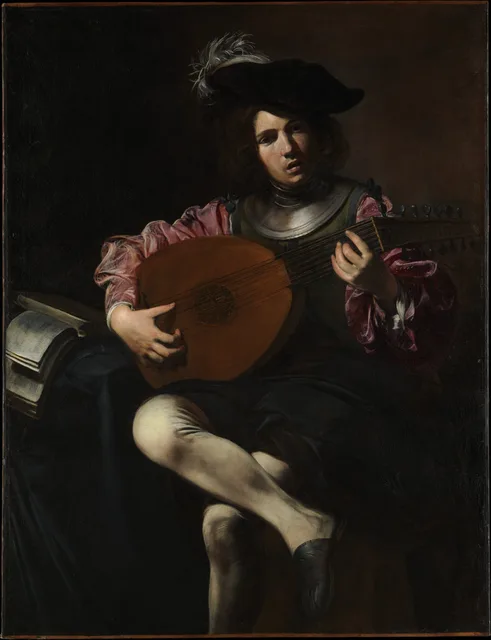 Lute PlayerValentin de Boulogneca. 1625–26
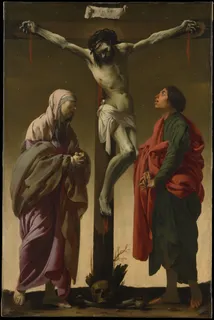 The Crucifixion with the Virgin and Saint JohnHendrick ter Brugghenca. 1624–25
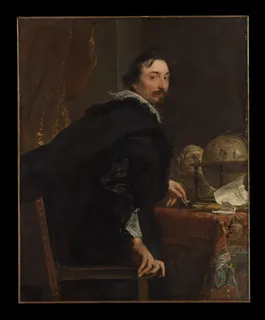 Lucas van Uffel (died 1637)Anthony van Dyckca. 1622
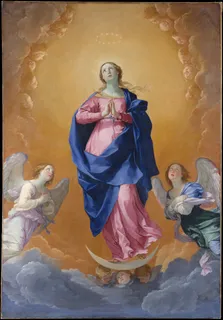 The Immaculate ConceptionGuido Reni1627
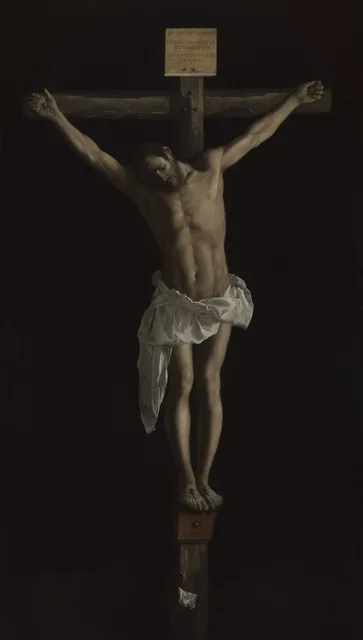 The CrucifixionFrancisco de Zurbarán1627
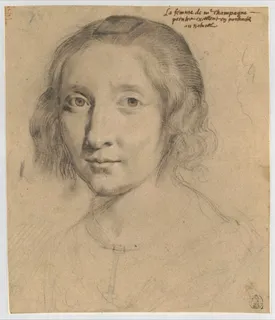 Portrait of Charlotte DuchesnePhilippe de Champaigneca. 1628
Too good to keep to yourself
This painting,
for someone who comes to mind
They open it at full size
and see every brushstroke.
About this work
- Artist
- Peter Paul Rubens · 1577–1640
- Date
- 1600–1626
- Medium
- Pen and brown ink over black chalk heightened with white, with brush and gray ink
- Size
- 26.5 × 17.7 cm
- Collection
- The Metropolitan Museum of Art
- Image
- Original long edge 3871px · shown at 2560px
- Original
- View on the museum's website ↗