Pyeongye
Painters · 17th century
Pieter de Hooch
1629–1684
A bricklayer's son from Rotterdam who painted the sunlight, open doors, and rooms beyond rooms of Dutch homes in Delft and Amsterdam.
Scenes from a life
The life of Pieter de Hooch,
scene by scene
- 1629Rotterdam
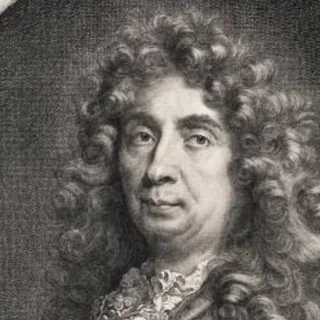
On December 20, 1629, a baby named Pieter was baptized in the Reformed Church in Rotterdam. His father, Hendrick, was a master bricklayer. His mother, Annetge Pieters, was a midwife. One built houses, the other worked in the rooms where children were born. Only one early writer tells us where he trained. In the early 1700s the biographer Arnold Houbraken wrote that de Hooch studied with the landscape painter Nicolaes Berchem, alongside Jacob Ochtervelt, another young painter from Rotterdam. Berchem painted sunny Italian hills, and de Hooch's work looks nothing like them, so scholars today treat this account with care.
- 1652Delft
On August 5, 1652, someone in Delft signed a will. Two painters stood by as witnesses: Pieter de Hooch and Hendrick van der Burch. It is the first time de Hooch's name turns up in Delft.
Two years later, de Hooch married a woman who was most likely van der Burch's sister. So the young painter steps into the record of a new city side by side with his probable future brother-in-law.
- 1653The Hague
In May 1653 a lawsuit came before a court in The Hague. In the papers, de Hooch is called the "painter" and also the "servant" of Justus de la Grange, a cloth merchant. The document does not say what a servant did. Some scholars think he helped with the cloth business. Others think he painted in exchange for room and board.
What is clear is that the merchant owned a lot of his pictures. In 1655, when de la Grange settled a debt with paintings, about ten of them were by de Hooch.
- 1654Delft
In the spring of 1654, de Hooch married Jannetje van der Burch in Delft. In the marriage record, the groom gave his address as Rotterdam. No baptism record survives for the bride, which is why scholars say only that she was probably Hendrick's sister. The couple went on to have children.
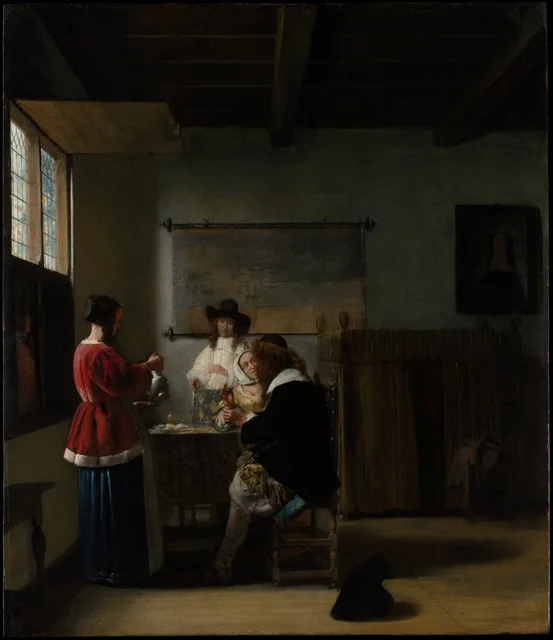
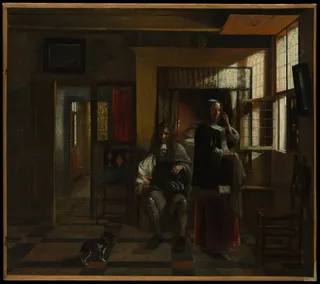
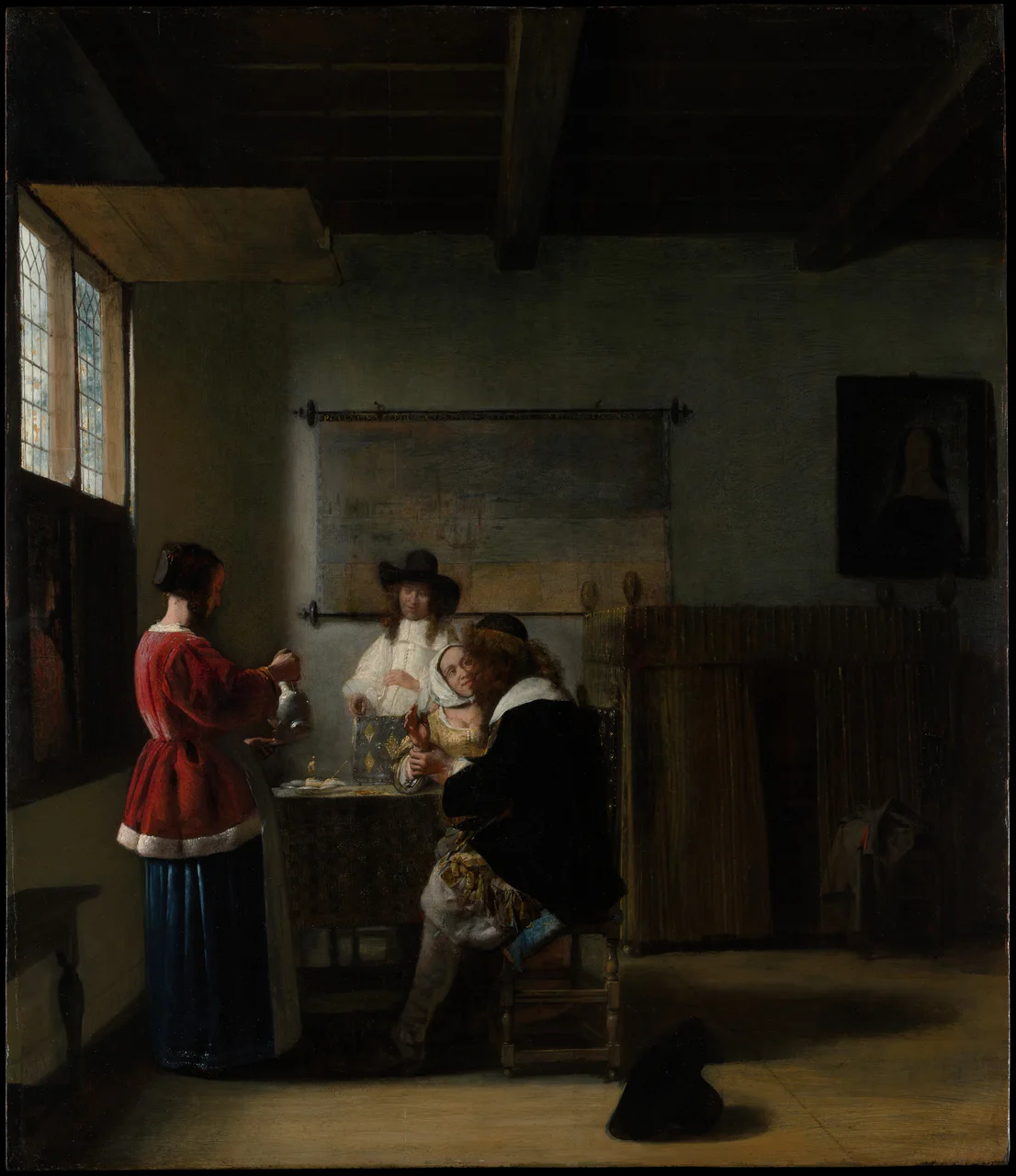
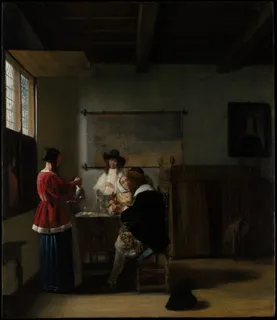
On September 20, 1655, de Hooch joined the painters' guild of Delft. Records show him paying dues in 1656 and 1657 as well. The Visit dates from these Delft years. By the window, a woman in a red jacket tilts a silver jug. At the table, two men and a woman crowd close, and the woman in the white headscarf laughs up at the man beside her. A black hat lies on the floor at lower right.
 Painted around this timeThe Visit
- 1660–61Amsterdam
The family packed up and left Delft for Amsterdam. It happened sometime between mid-1660 and April 1661. Their first recorded address was the Regulierspad, a street outside the Regulierspoort gate, beyond the old city wall. It was a neighborhood where some of the city's poorest people lived.
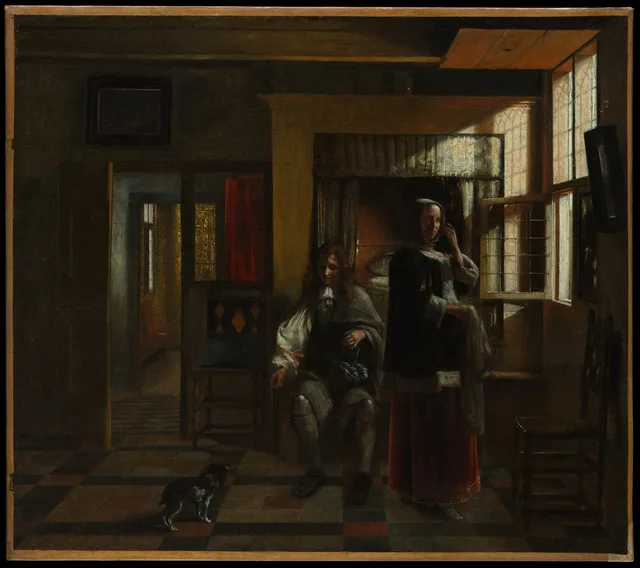
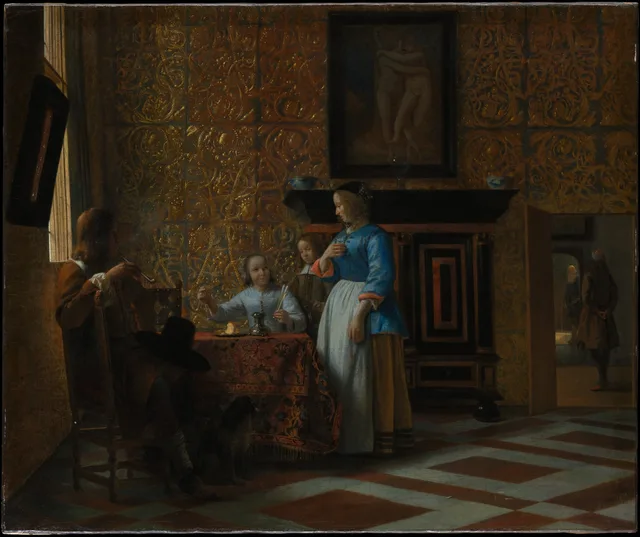
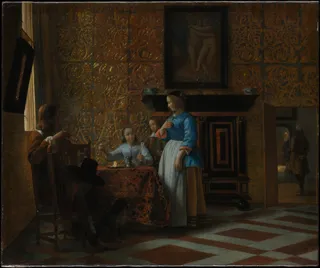
Yet the rooms in his paintings grew larger and grander. In Leisure Time in an Elegant Setting, gilded leather covers the walls and people relax with pipes and glasses. In Interior with a Young Couple, light floods in through an open window on the right. On the left, a doorway opens onto another room with its own bright window. A small dog stands on the checkered floor.
Painted around this timeLeisure Time in an Elegant Setting - 1684Amsterdam
In March 1684, an Amsterdam burial register recorded "Pieter de Hoogh" in the Dolhuys, the city's asylum for the mentally ill. For a long time, people believed this was the painter, dead there at fifty-four.
In 2008 the art historian Frans Grijzenhout looked again at the asylum's records. The man who died there was not the painter but his son, who had the same name. We still do not know when or where the painter himself died.
His pictures scattered, and three of them later came together in New York. The Visit entered the Metropolitan Museum in 1929 with the Havemeyer collection. Leisure Time in an Elegant Setting followed in 1975 with Robert Lehman's collection. Look again at their open doors and windows. A painter whose own ending is lost left a way into the next room.
People around them
- Hendrick van der Burcha Delft painter who witnessed a will with de Hooch in 1652 and was probably his brother-in-law.
- Jannetje van der Burchhis wife, whom he married in Delft in 1654.
- Justus de la Grangea cloth merchant who called de Hooch his painter and servant and owned many of his early works.
- Jacob Ochtervelta painter from Rotterdam who, according to Houbraken, trained with de Hooch under Berchem.
Works