 Pyeongye
Artwork · 18th century · Jean Honoré Fragonard
LeoTurn on Magnifier at the lower right and move slowly across the painting.
Full screen opens it edge to edge.Tap the painting to fill the screen.
Spread two fingers to look closer.
At a glance
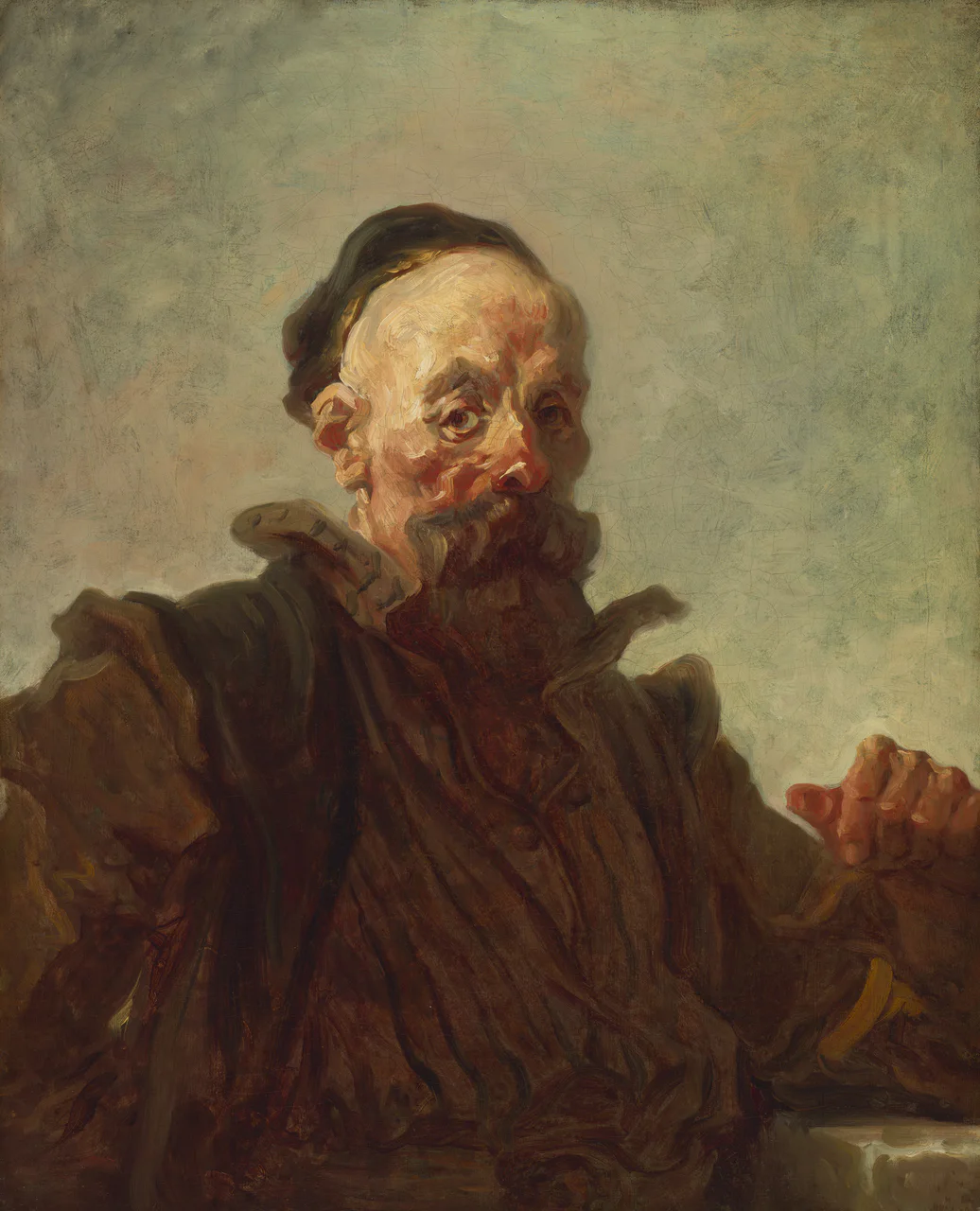
- A man in a black cap and an old-fashioned costume with a wide collar raises one hand and stares straight out at us.
- The French painter Jean Honoré Fragonard painted it in oil on canvas around 1767 to 1768.
- It looks dashed off in a burst of thick, fast brushwork, and it belongs with Fragonard's famous group of "fantasy figures."
Reading the picture
4 places to look closer
Tap a number on the painting to jump to its note, or a close-up to see that spot in the whole picture.
Start with the eyes. Under heavy lids, two large dark pupils look right past the edge of the canvas at you. Up close, the skin around them is a tangle of orange, brown, and pink strokes. Step back and those strokes turn into wrinkles and shadow. One flick of white on the tip of the nose catches the light.
Zoom in on the forehead. Fragonard laid on cream and white paint so thickly that you can follow every pass of the brush. A black cap curves over the top, and a thin line of yellow light runs along its lower edge. This is the brightest patch in the whole picture, so your eye lands here first.
Look at the collar on the left side of his neck. Short brown dabs are scattered across the wide, folded fabric. Fragonard did not paint each stitch or pattern. He just tapped the brush a few times and let the strokes suggest cloth. The Art Institute of Chicago points out that the cut of the beard and the striped garment with its puffed shoulders recall fashions of the early 1600s.
Now go to the far right, where the hand is raised. The knuckles bend, and the hand is painted a brick red. Around the fingers, Fragonard went back in with the pale background color, so the hand seems to push forward out of the wall behind it. Is he about to make a point, or telling someone to wait?
When it was painted
Around 1767, when he painted this man, Fragonard was about thirty-five. Two years earlier, in 1765, he had won entry to the Royal Academy with a huge scene from ancient legend, Coresus Sacrificing Himself to Save Callirhoe. It made his name at the Salon, and the Crown bought it.
Then he turned away from that path. Instead of the grand history paintings the Academy prized, he painted love scenes, landscapes, and light everyday subjects for private collectors. The playwright Charles Collé wrote in his journal that a courtier asked the painter Doyen for a picture of his mistress on a swing, and Doyen said no. Many scholars believe the commission went to Fragonard and became his famous painting The Swing.
In these same years, Fragonard painted a run of half-length figures of friends and patrons dressed in costumes from earlier centuries. Today they are called his fantasy figures. One of them, a portrait dated 1769 in the Louvre, carries an old inscription on the back saying it was painted in one hour.
Nobody knows who the man in this picture is. The Art Institute says he may not be a real person at all, but an imagined type. The museum also notes that Fragonard was looking at a painting of an actor by the Italian Baroque artist Domenico Fetti. In 2012 a sheet of drawings surfaced with eighteen tiny sketches of these figures, many labeled with names, and it gave scholars new clues about who sat for them.
The painting came to the Art Institute of Chicago in 1977. In 2017 it traveled to the National Gallery of Art in Washington to hang beside its relatives in an exhibition of the fantasy figures. Look back at his eyes. His name is lost, but the gaze Fragonard caught in a few strokes is still there.
More by the same painter
Questions to think about
- Look for itHow many short brown dabs can you count on the man's collar?
- Why?Why do you think Fragonard made the face bright and thickly painted, but left the clothes dark and loose?
- What about you?Fragonard dressed his friends up in old costumes to paint them. When people today use filters or costumes in their profile photos, is that still a true picture of who they are?
Same period
Painted around the same time,
somewhere else
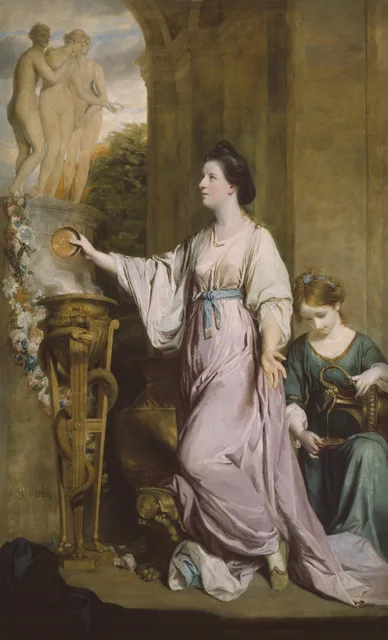 Lady Sarah Bunbury Sacrificing to the GracesSir Joshua Reynolds1763–65
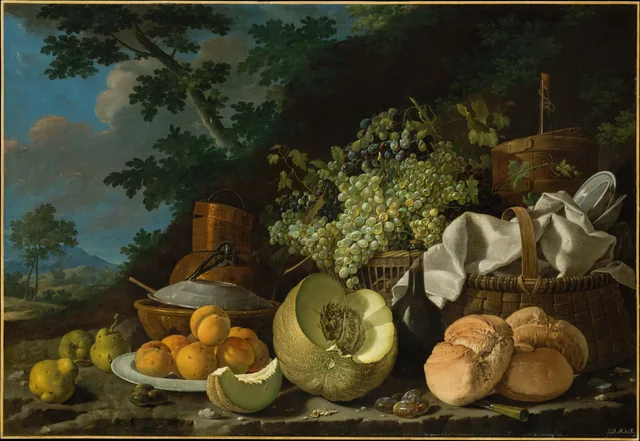 The Afternoon Meal (La Merienda)Luis Meléndezca. 1772
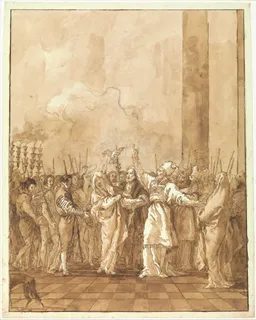 The Betrothal of the VirginGiovanni Domenico Tiepoloca. 1770
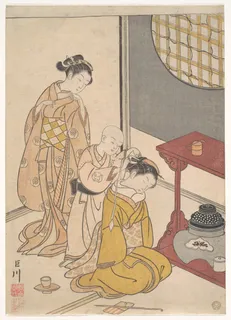 Night Rain at the Double-Shelf Stand, from the series Eight Parlor Views (Zashiki hakkei)Suzuki Harunobuca. 1766
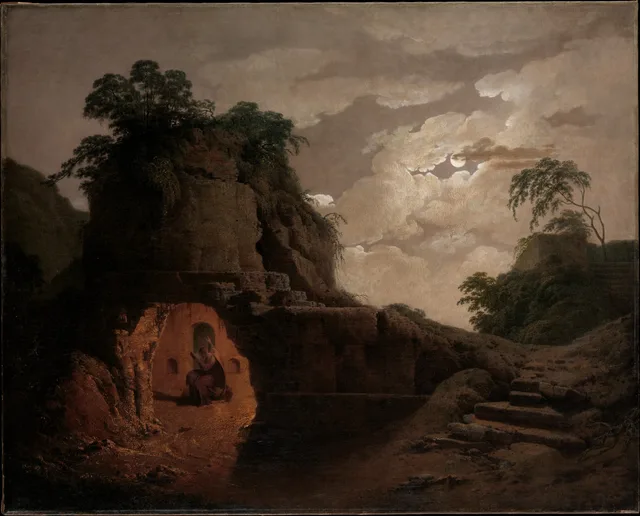 Virgil's Tomb by Moonlight, with Silius Italicus DeclaimingJoseph Wright1779
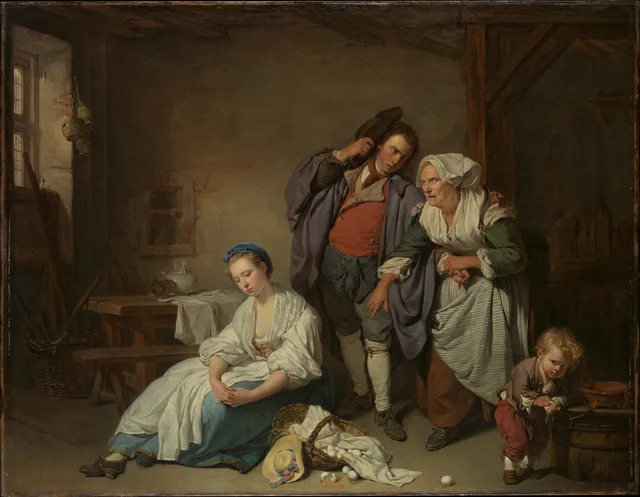 Broken EggsJean-Baptiste Greuze1756
Too good to keep to yourself
This painting,
for someone who comes to mind
They open it at full size
and see every brushstroke.
About this work
- Artist
- Jean Honoré Fragonard · 1732–1806
- Date
- c. 1767–68
- Medium
- Oil on canvas
- Size
- 80.3 × 64.7 cm
- Culture
- France
- Collection
- The Art Institute of Chicago
- Image
- Original long edge 8783px · shown at 2560px
- Original
- View on the museum's website ↗