 Pyeongye
At a glance
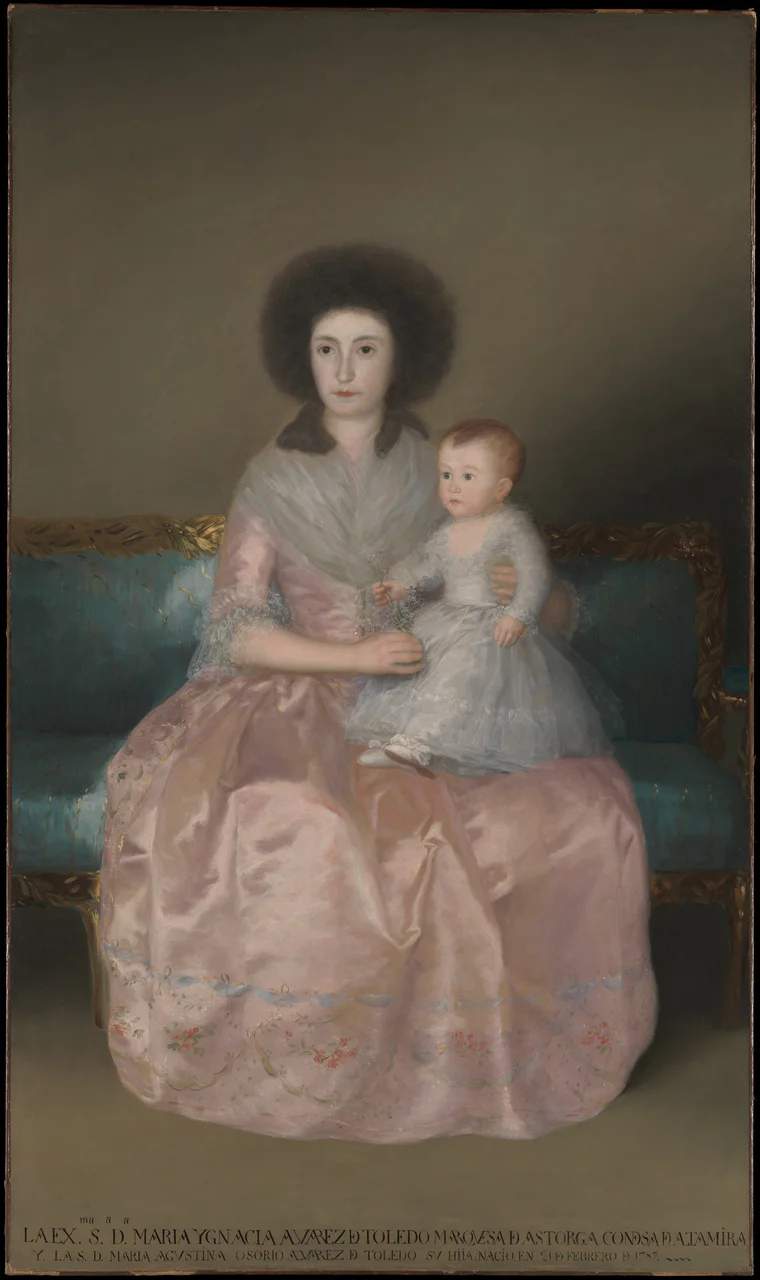
- The Countess of Altamira, in a pink silk gown, sits on a blue sofa with her baby daughter in white on her lap.
- Francisco de Goya painted them in oil on canvas in Madrid in 1787 and 1788.
- A painted inscription at the bottom gives both their names and the baby's birthday, so the picture itself tells us exactly who they are.
Reading the picture
4 places to look closer
Tap a number on the painting to jump to its note, or a close-up to see that spot in the whole picture.
Zoom in on the mother's face. Her hair is teased into a large, rounded cloud around her head, a style fashionable among ladies of the day. Her lips are tinted red, and she looks straight out at us. The ends of her hair fall in dark locks over her shoulders.
Now look at the baby. She holds a little sprig of purple flowers, and a tiny gold earring glints at her ear. Her mother's fingers support her from behind. Goya painted her white dress with soft, blurred strokes, so it looks like layers of sheer fabric.
Zoom in on the hem of the gown. Pale green garlands and red flower sprays decorate the pink silk, and a sky-blue ribbon trim ripples above them. Goya did not paint the embroidery stitch by stitch. A few light touches of the brush do the job.
Read the lettering at the very bottom. The mother is María Ignacia Álvarez de Toledo, Marchioness of Astorga and Countess of Altamira. Her daughter is María Agustina, and the end of the line says she was born on February 21, 1787. So the baby in the picture is only about a year old.
When it was painted
In 1787 Goya was forty-one and very busy in Madrid. A year earlier he had been named a painter to the king, and he was designing large cartoons for the Royal Tapestry Factory. The boy from a small village near Zaragoza had made it close to the court.
Around then the Bank of San Carlos hired him to paint portraits of the men who ran it. One of them was the Count of Altamira. Afterward the count asked Goya to paint his wife and children too.
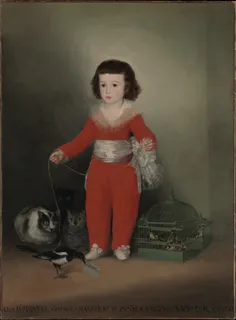
So between 1786 and 1788 Goya made four Altamira portraits. There was the count, painted for the bank, and this picture of the countess and her daughter. There were also the sons, Vicente and Manuel. Manuel, in his red suit, is on this site too.
Sad news followed. Manuel, born in 1784, died in 1792 at the age of eight. Late that same year Goya fell seriously ill, and the illness left him deaf.
The four portraits went their separate ways. In 2014 the Metropolitan Museum brought them together in an exhibition called Goya and the Altamira Family. This one had been at the museum since 1975, when it arrived with the collection of the banker Robert Lehman.
Look again at the baby on her mother's lap, holding her little sprig of flowers. Goya painted her big brother Manuel in the same years. Put the two pictures side by side and you meet the children of one household.
Questions to think about
- Look for itBehind mother and child, can you find the carved gold frame of the blue sofa?
- Why?Why do you think Goya wrote their names, and even the baby's birthday, right into the painting?
- What about you?Today parents take photos to mark a child's first birthday. How close do you think this mother's wish to record the moment, more than two hundred years ago, was to ours?
Same period
Painted around the same time,
somewhere else
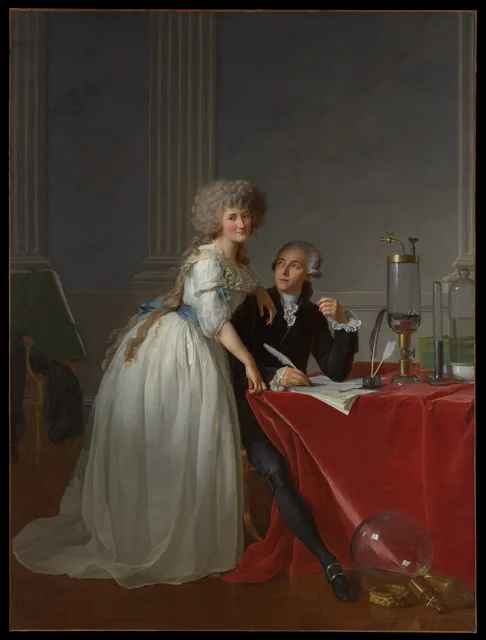 Antoine Laurent Lavoisier (1743–1794) and Marie Anne Lavoisier (Marie Anne Pierrette Paulze, 1758–1836)Jacques Louis David1788
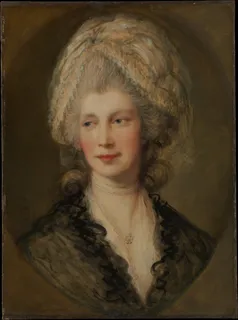 Queen CharlotteThomas Gainsborough1788
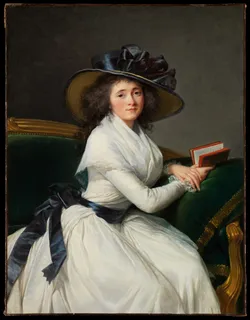 Comtesse de la Châtre (Marie Charlotte Louise Perrette Aglaé Bontemps, 1762–1848)Elisabeth Louise Vigée Le Brun1789
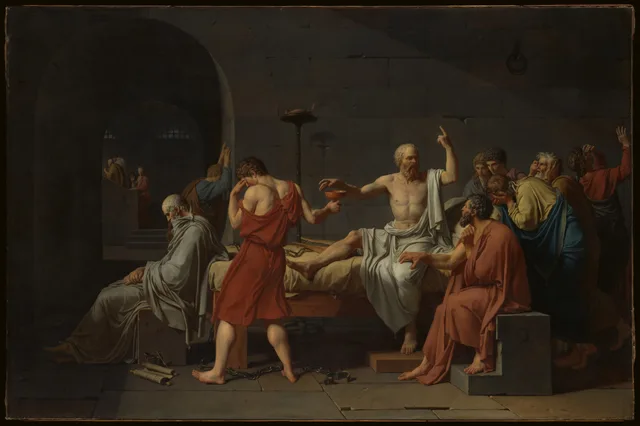 The Death of SocratesJacques Louis David1787
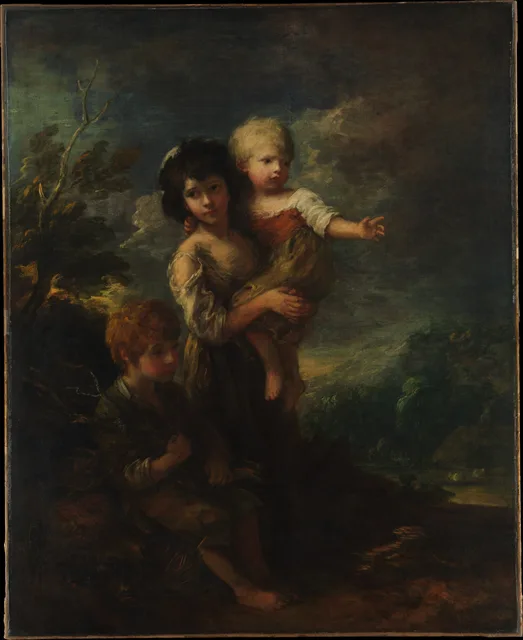 Cottage Children (The Wood Gatherers)Thomas Gainsborough1787
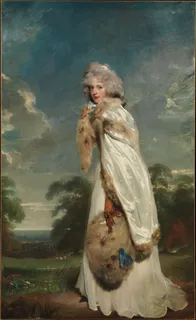 Elizabeth Farren (born about 1759, died 1829), Later Countess of DerbySir Thomas Lawrence1790
Too good to keep to yourself
This painting,
for someone who comes to mind
They open it at full size
and see every brushstroke.
About this work
- Artist
- Goya · 1746–1828
- Date
- 1787–88
- Medium
- Oil on canvas
- Size
- 195 × 115 cm
- Collection
- The Metropolitan Museum of Art
- Image
- Original long edge 3874px · shown at 2560px
- Original
- View on the museum's website ↗