 Pyeongye
Artwork · 19th century · Edouard Manet
LeoTurn on Magnifier at the lower right and move slowly across the painting.
Full screen opens it edge to edge.Tap the painting to fill the screen.
Spread two fingers to look closer.
At a glance
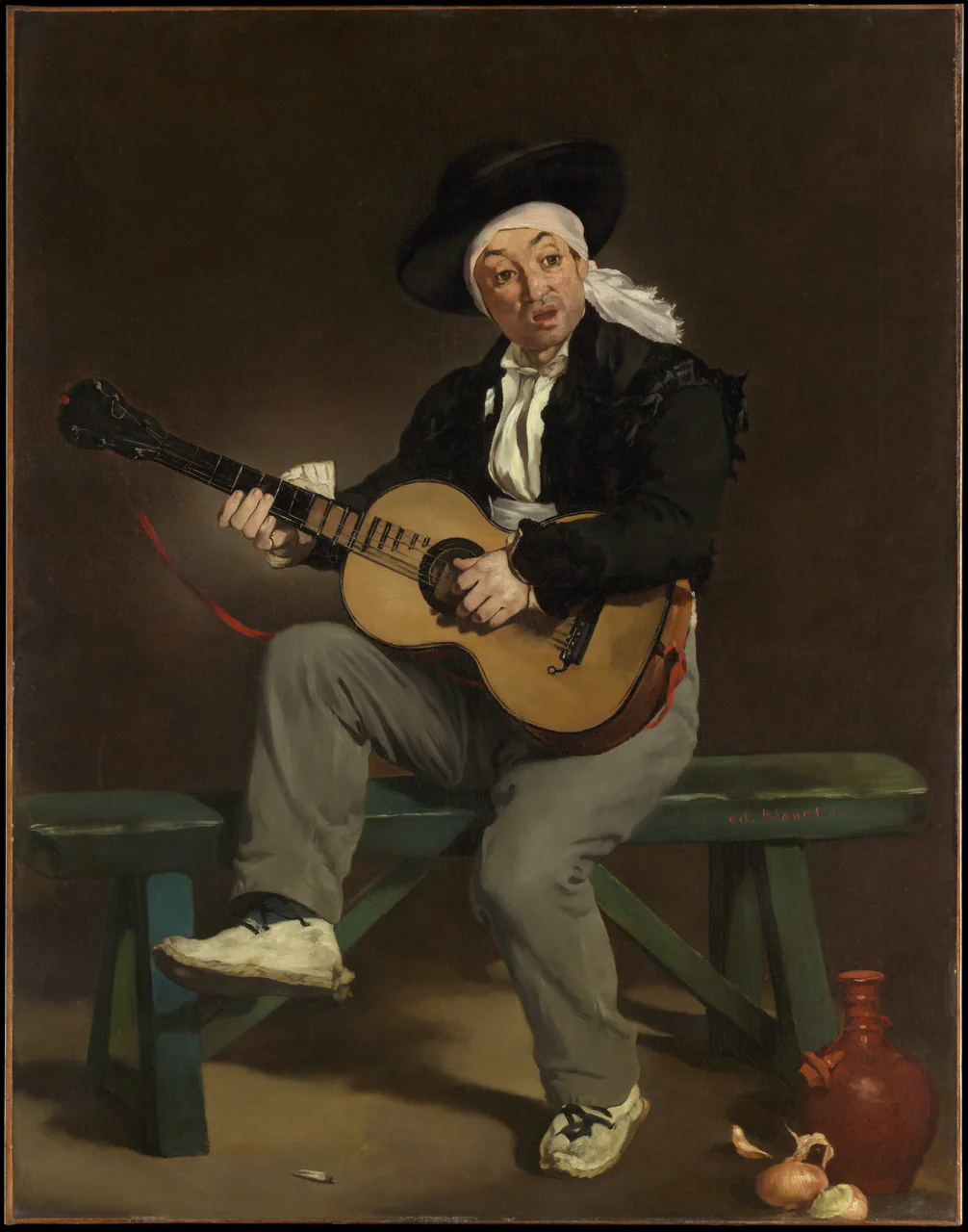
- A man in a black hat and a white head scarf sits on a green bench, strumming a guitar and singing.
- Edouard Manet painted it in oil in 1860, on a canvas nearly five feet tall.
- It was one of the first pictures Manet ever showed at the Paris Salon, so it shows where his public career began.
Reading the picture
4 places to look closer
Tap a number on the painting to jump to its note, or a close-up to see that spot in the whole picture.
Start with the face. His eyebrows are up and his mouth is open in a round O. He is in the middle of a note. One side of his face falls into shadow, and the end of the white scarf sticks out from under the hat and crumples beside his ear.
Now look at his hands on the guitar. The hand pressing the strings on the neck is his right hand. The hand plucking near the sound hole is his left. That is the reverse of the usual right-handed grip. The knuckles are just a few thick strokes of paint, yet from a step back they read as strong, working hands.
Zoom in on the front edge of the bench. In red letters you can read ed. Manet, followed by the year. Instead of signing in an empty corner, Manet wrote his name on an object inside the picture. The bench becomes his name tag.
Drop down to the floor at the lower right. In front of a brown clay jug sit two onions and a clove of garlic. The pale pink and soft green of the onions glow against the dark floor. It is a small still life tucked in beside the singer.
When it was painted
In 1860 Manet was twenty-eight and still unknown. His father, a high official in the Ministry of Justice, had wanted him to study law. Manet chose paint instead and spent six years training in the studio of Thomas Couture. Then his first big try fell flat: in 1859 the Salon jury turned down his Absinthe Drinker.
This picture was his second knock on the Salon's door. Spanish dress and Spanish music were all the rage in Paris, and Manet deeply admired the old Spanish painters Velázquez and Goya. Yet he had never set foot in Spain. He would not make that trip until 1865, so the singer is a model in costume, posed in a Paris studio.
At the Salon of 1861 the jury accepted two of his canvases: this one and a double portrait of his parents. The singer won an honorable mention. The poet and critic Théophile Gautier praised it in print and saw Velázquez and Goya in it.
Younger painters were even more stirred. The writer Fernand Desnoyers, in a book from 1863, described how a group of them, Henri Fantin-Latour and Alphonse Legros among them, went together to call on Manet in his studio. A circle was beginning to gather around him.
Later the canvas crossed the ocean. In 1907 the Paris dealer Durand-Ruel sold it to William Church Osborn of New York, and Osborn gave it to The Metropolitan Museum of Art in 1949.
Now look again at the singer's white shoes. A few broad, quick strokes of white, and they jump right off the dark floor. That is the brushwork of a young painter who had been turned away once and came back.
The painter
Edouard Manet
1832–1883
When painting this, the artist was about 28 years old
All paintings by Edouard Manet →More by the same painter
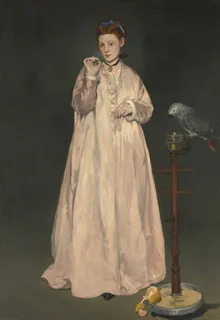
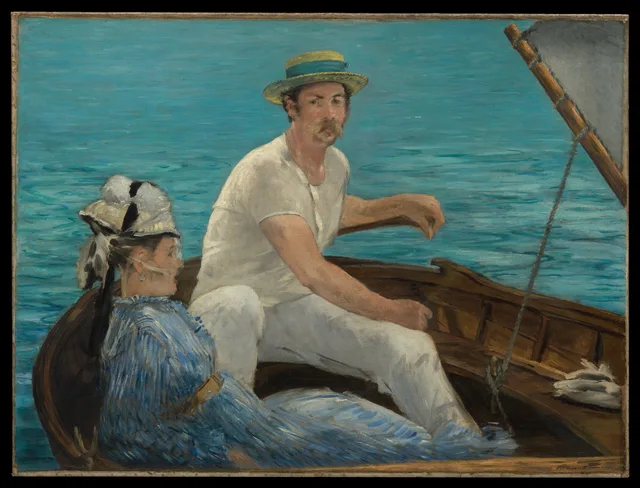
Questions to think about
- Look for itBesides the onions and the garlic, can you find one more small thing lying on the floor?
- Why?Why do you think Manet signed his name on the singer's bench instead of in a corner of the canvas?
- What about you?A painting of a country the artist had never visited won praise. When we borrow another culture's clothes or songs today, where does admiration end and stereotype begin?
Same period
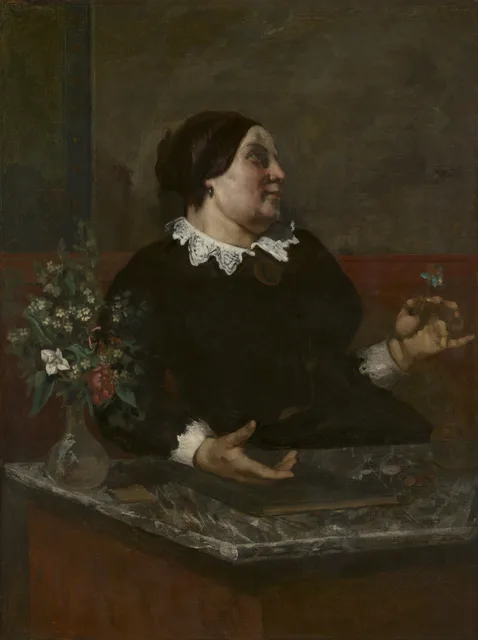
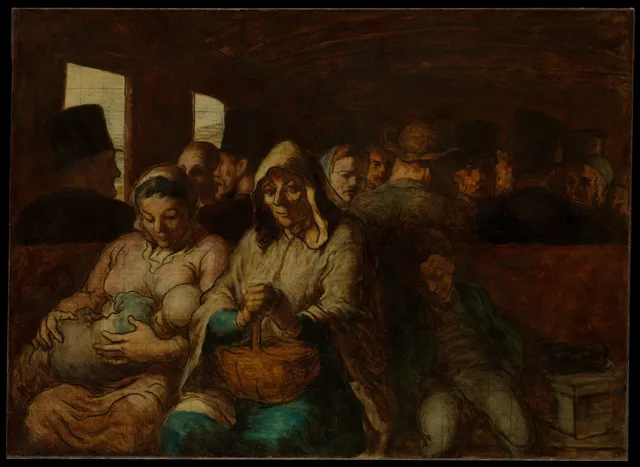
Painted around the same time,
somewhere else

Too good to keep to yourself
This painting,
for someone who comes to mind
They open it at full size
and see every brushstroke.
About this work
- Artist
- Edouard Manet · 1832–1883
- Date
- 1860
- Medium
- Oil on canvas
- Size
- 147.3 × 114.3 cm
- Collection
- The Metropolitan Museum of Art
- Image
- Original long edge 3811px · shown at 2560px
- Original
- View on the museum's website ↗